


Top 11 B2B Market Research Tools for 2026
Discover the top 11 B2B market research tools for 2026. Compare features, pricing, and find the perfect solution for your business needs.
Updated 27 min read

Discover the top 11 B2B market research tools for 2026. Compare features, pricing, and find the perfect solution for your business needs.
B2B market research has evolved from time-consuming surveys and focus groups into a sophisticated ecosystem of AI-powered platforms that deliver verified customer insights in hours, not months. As buying committees grow more complex and digital touchpoints multiply, understanding your target audience's pain points, preferences, and decision-making processes has become critical to competitive success.
Research shows that 56% of B2B companies now use automation and data-driven tools to inform their go-to-market strategies. The right B2B market research tool can help you validate messaging, track brand perception, identify buyer intent, and uncover competitive advantages—all while reducing research costs and accelerating time-to-insight.
To identify the top B2B market research tools for 2026, we evaluated platforms based on data quality and verification standards, speed to insight, integration capabilities with existing tech stacks, research methodology flexibility, pricing transparency, and AI-powered automation features.
We prioritized tools that serve diverse B2B needs—from fast message testing and ICP validation to enterprise-grade customer experience management and sales intelligence.
Our analysis included hands-on platform reviews, pricing comparisons, customer testimonials, and assessment of each tool's ability to deliver actionable insights that directly impact go-to-market strategy, pipeline generation, and competitive positioning.
Tool | Best For | Key Features | Pricing | Free Plan | Platforms |
|---|---|---|---|---|---|
Fast, verified B2B customer research and message testing | Message testing with target ICPs, 70,000+ verified B2B professionals | Yes | Web | ||
Peer-reviewed synthetic user research and message testing | Simulated personas matched to your ICP, 86% theme recall (peer-reviewed) | Yes | Web | ||
Enterprise market research and customer experience management | B2B and B2C research capabilities, Brand perception tracking | $420/month (billed annually) | Yes | Web | |
AI-powered inbound pipeline generation and buyer engagement | AI SDR agent (Piper), Real-time website conversations | No | Web | ||
24/7 automated lead qualification and routing | 24/7 website coverage, Instant lead qualification | No | Web | ||
Goal-setting and performance tracking for sales teams | AI-assisted goal creation, Real-time progress dashboards | Yes | Web | ||
AI-driven account-based marketing and intent data | AI Email Agents, Intent data and scoring | Yes | Web | ||
Project management and research workflow coordination | AI-powered project creation, Workflow automation | Yes | Web, iOS, Android | ||
Phone-verified B2B contact data for EMEA markets | Diamond Data® phone-verified contacts, EMEA market coverage | No | Web | ||
Unified AI CRM for sales and customer intelligence | AI-powered Agentforce agents, 360° customer view | No | Web | ||
All-in-one marketing, sales, and service platform | Smart CRM with unified data, Built-in AI (Breeze) | $15/month (monthly billing) | Yes | Web |
Best for B2B SaaS teams needing fast, verified customer insights
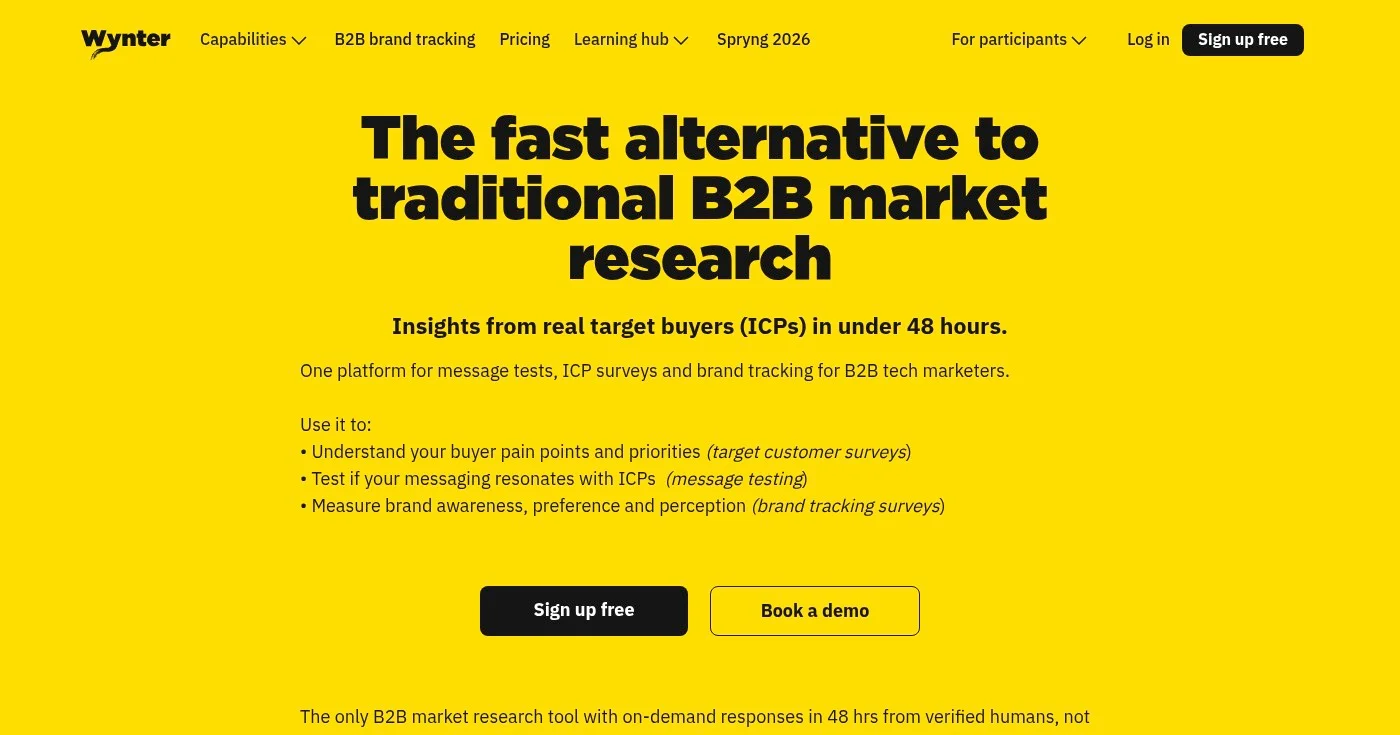
Wynter is an on-demand B2B market research platform that delivers qualitative insights from verified target customers in under 48 hours. Unlike traditional research agencies that take weeks or months, Wynter's self-serve platform connects you directly with a proprietary network of 70,000+ verified B2B professionals to test messaging, validate ICP assumptions, and track brand perception.
Designed specifically for B2B tech marketers, Wynter offers message testing, ICP surveys, and brand tracking tools that help you understand buyer pain points and measure how your messaging resonates with decision-makers. The platform uses LinkedIn verification to ensure participants match your target profile, delivering authentic insights from real buyers rather than synthetic or unverified data.
Wynter's Pro plan starts at $20,000/year, with an Elite plan at $32,000/year for higher volume needs. Pay-as-you-go options are available but cost 50% more per test. For detailed pricing, visit their pricing page.
Best for B2B marketing teams needing peer-reviewed synthetic research at speed
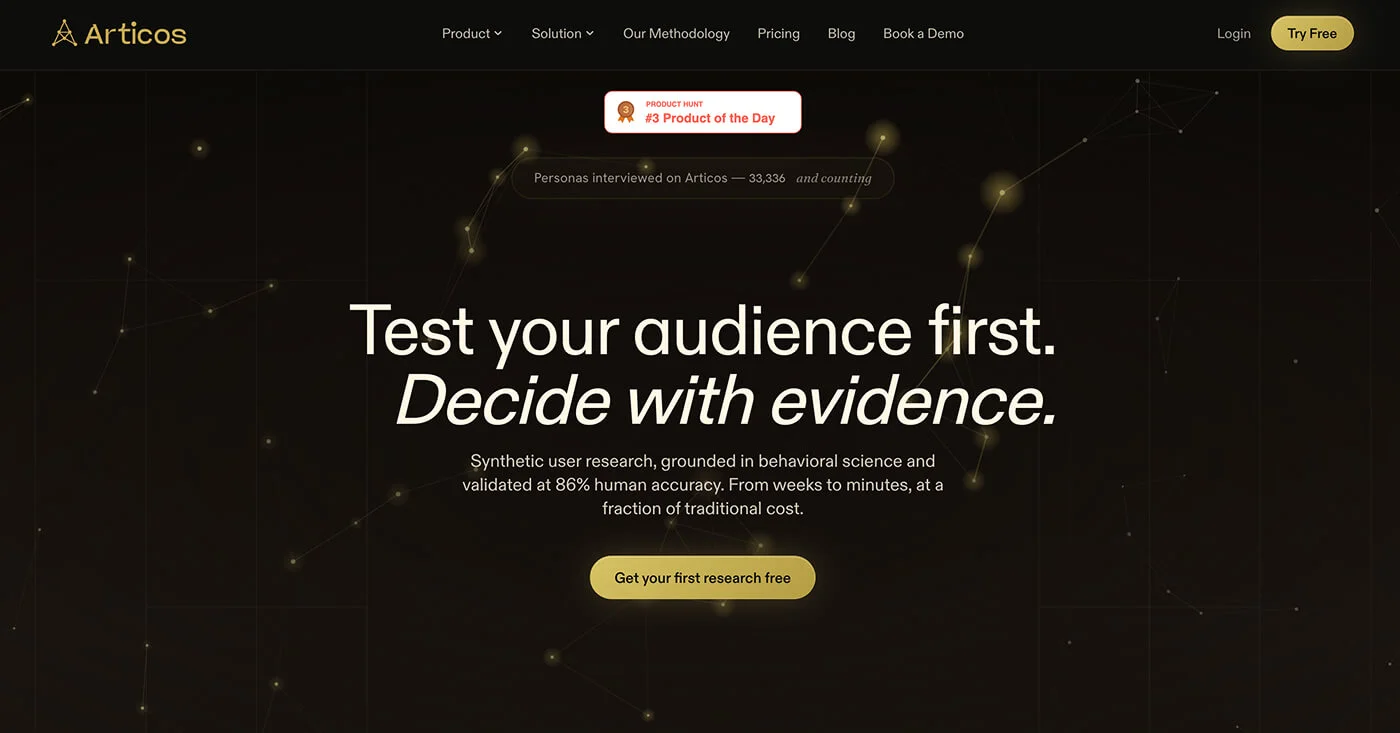
Articos is a peer-reviewed synthetic user research platform that delivers insights from AI-generated personas matched to your ideal customer profile. Unlike general-purpose LLMs like ChatGPT and Claude used for research, Articos runs on methodology validated across 46 studies in 9 domains, with 86% theme recall against benchmarks from Baymard Institute and Nielsen Norman Group. This academic validation gives B2B marketing teams research signals that hold up when leadership or clients ask how the data was produced.
Designed for B2B SaaS marketing teams, growth teams, and marketing agencies, Articos supports message testing, positioning validation, landing page testing, headline testing, and user interviews against simulated personas. Studies run in under 30 minutes at $8-$20 per study, compared to traditional user research at $5,000-$30,000 and 4-8 weeks. The economics enable weekly research cycles for teams that previously relied on gut calls or ChatGPT prompts.
Articos offers a free trial with 2 studies included and no credit card required. On-demand Research Packs start at $29 for 2 studies, and monthly plans start at $79 for the Starter tier, with Pro at $199.
Best for Enterprise organizations requiring comprehensive research capabilities
Qualtrics is a market research and customer experience platform that helps businesses gather and analyze data on customer behavior, preferences, and motivations. It enables organizations to conduct both B2B and B2C market research through primary and secondary research methods to inform strategic planning and improve customer engagement.
The platform provides comprehensive tools for brand perception tracking, competitive analysis, and customer experience monitoring. Qualtrics supports both qualitative and quantitative research methodologies, making it suitable for complex B2B markets that require in-depth analysis and real-time trend forecasting.
Qualtrics offers a free account for basic needs and a Standard Plan at $420/month (billed annually). Enterprise pricing is available upon request. For more details, visit their pricing page.
Best for B2B companies scaling inbound pipeline with AI automation
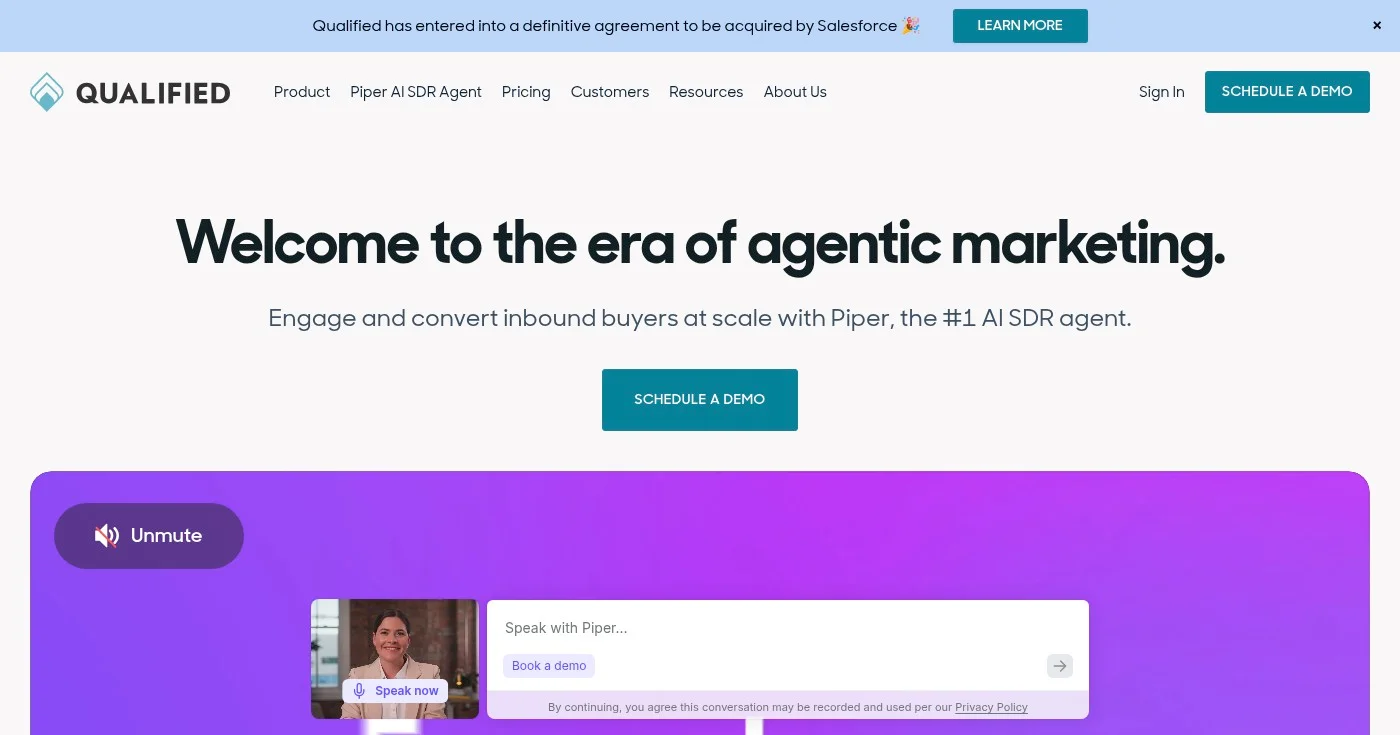
Qualified is an agentic marketing platform powered by Piper, an AI SDR (Sales Development Representative) agent. It engages and converts inbound buyers at scale through real-time website conversations, personalized emails, and multi-channel nurturing, working 24/7 to generate pipeline and book qualified meetings.
The platform seamlessly integrates with your existing tech stack to provide account-based buying intent understanding and automatically route high-value prospects to the right sales reps. Qualified has proven results with 500+ customers, including a 22% pipeline increase at Asana and $27M in pipeline generated at Demandbase.
Qualified offers three tiers: Premier (base AI SDR capabilities), Enterprise (adds SSO, reporting API, multi-language, intent signals), and Ultimate (adds multiple agents, websites, and high-volume support). Custom pricing is based on pipeline needs. For details, visit their pricing page.
Best for Teams needing instant lead qualification and routing
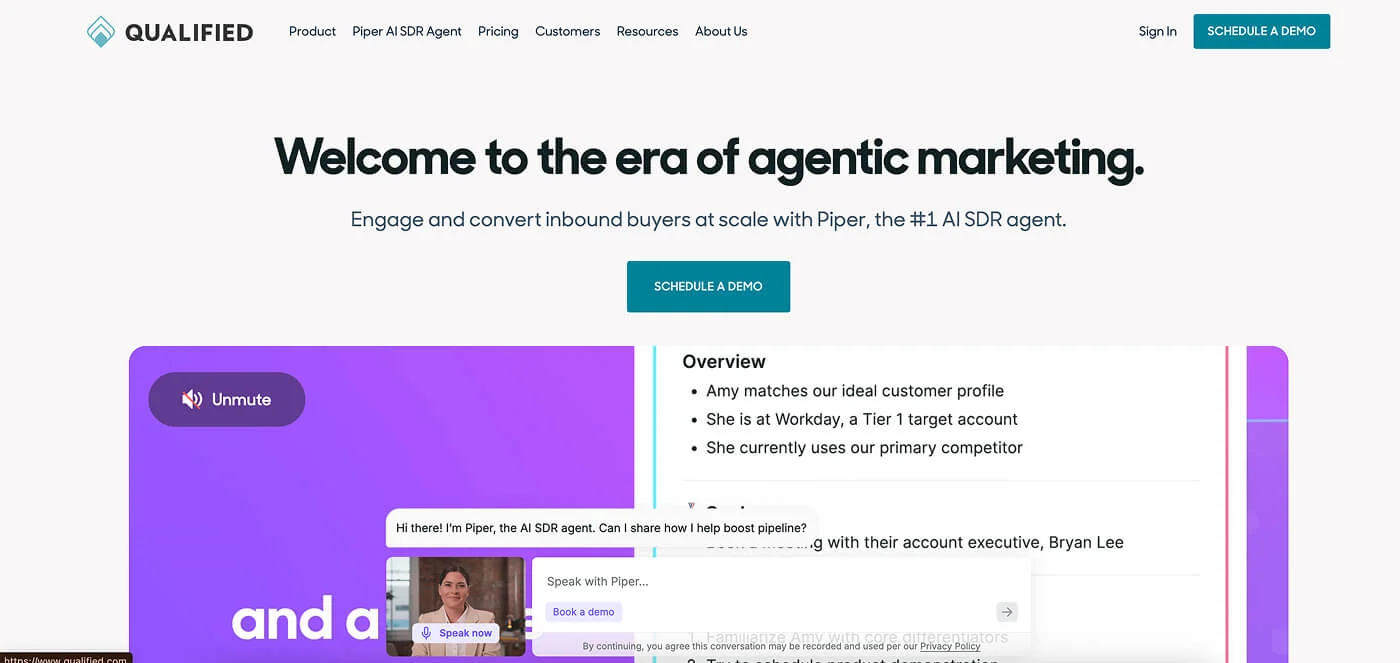
Piper the AI SDR is an AI-powered sales development representative agent that engages leads the moment they hit your site, delivering 24/7 website coverage and instantly qualifying and routing buyers. As part of the Qualified platform, Piper automates the first touchpoint with inbound prospects, ensuring no lead goes unattended.
Piper uses conversational AI to understand visitor intent, ask qualifying questions, and route high-value prospects to the appropriate sales rep in real-time. This eliminates the lag time between a prospect's initial interest and sales engagement, significantly improving conversion rates and pipeline velocity.
Piper the AI SDR starts at $1,500/month for the Premier plan, with Enterprise and Ultimate tiers offering custom pricing for advanced features and higher volume. For more information, visit their pricing page.
Best for Sales teams tracking goals and performance metrics
The OKRs Tool allows B2B sales professionals to set objectives and achieve key results, with AI assistance to create goals quickly and real-time dashboards to track progress. This goal-setting framework helps align sales and marketing teams around measurable outcomes tied to market research insights.
By connecting market research findings to specific objectives and key results, teams can track how well their strategies are performing and adjust tactics based on real-time data. The AI-powered goal creation feature helps translate research insights into actionable targets that drive business growth.
The OKRs Tool offers a free Launch plan at $0/user/month, a Growth plan at $7/user/month, and custom Enterprise pricing for larger organizations. For more details, visit their pricing page.
Best for Enterprise ABM teams leveraging predictive intelligence
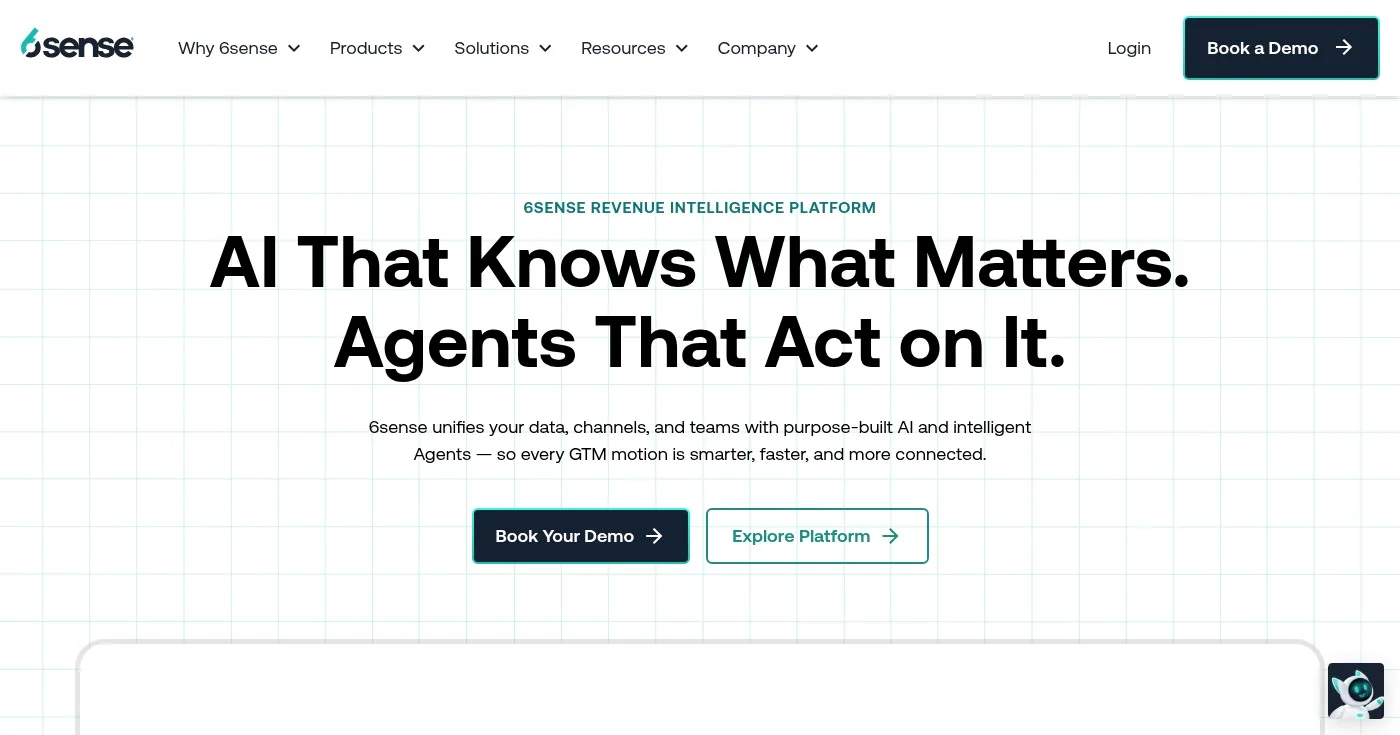
6sense is an AI-powered Account-Based Marketing (ABM) platform that unifies data, channels, and teams with purpose-built AI and intelligent agents. It enables smarter go-to-market motions across inbound, outbound, competitive takeout, and advertising workflows by combining intent data, predictive modeling, and multi-channel activation.
The platform provides intent data and scoring to identify which accounts are actively researching solutions, predict which are most likely to buy, and prioritize outreach accordingly. 6sense's AI Email Agents and Sales Copilot automate personalization and workflow execution, helping teams engage the right accounts at the right time with the right message.
6sense offers a free plan with basic features and a custom enterprise plan with full ABM capabilities. Pricing is tailored to organization size and requirements. For a quote, visit their pricing page.
Best for Research teams coordinating projects and workflows
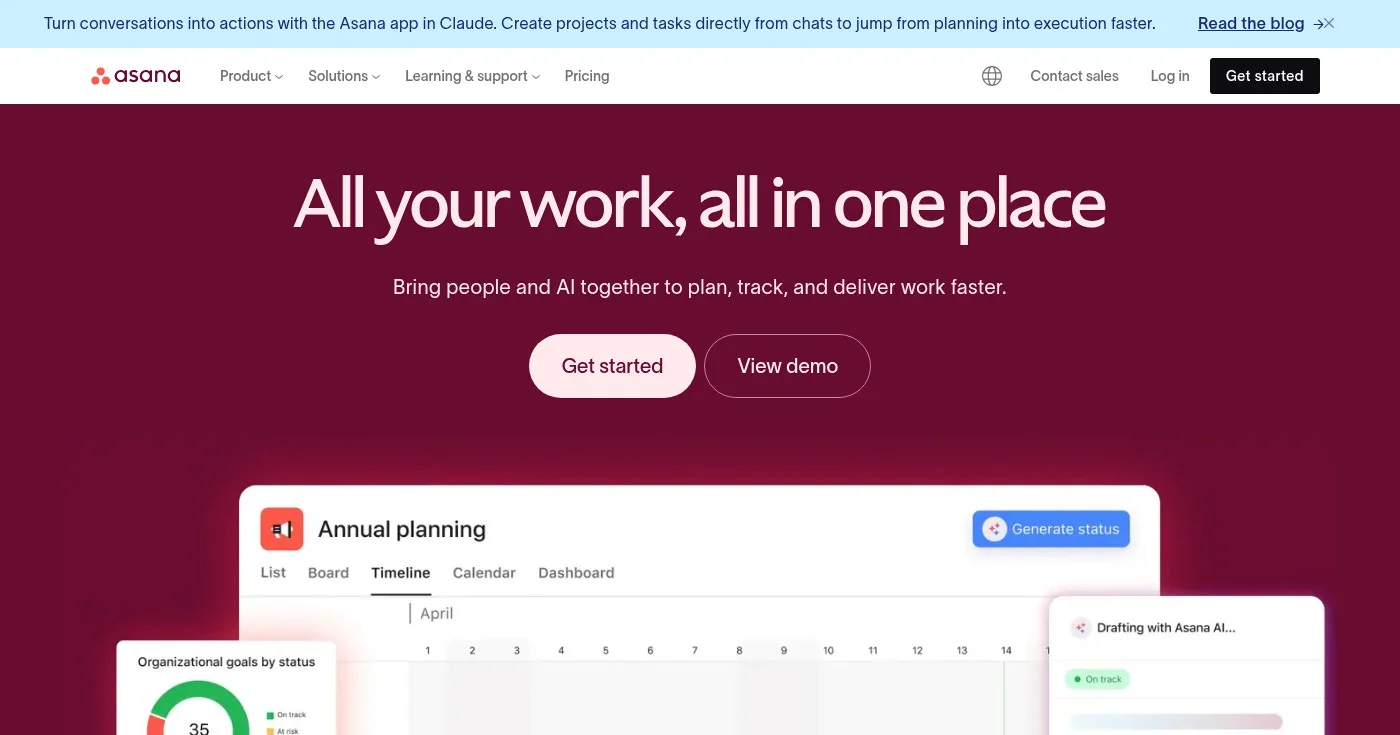
Asana is a work management platform that brings people and AI together to plan, track, and deliver work faster. It helps teams manage projects, tasks, and goals in one centralized place, with AI-powered features to streamline workflows and boost productivity. For market research teams, Asana provides the organizational backbone to coordinate research projects, track deliverables, and collaborate across departments.
The platform's AI-powered project creation and workflow automation features help research teams set up studies quickly, assign tasks, and monitor progress in real-time. Asana's goal tracking capabilities also enable teams to connect research initiatives to broader business objectives and measure impact.
Asana offers a free Basic plan, Premium at $10.99/user/month (or $9.99/month billed annually), and Business at $24.99/user/month. Enterprise pricing is available for larger organizations. For more details, visit their pricing page.
Best for Sales teams prospecting in European and EMEA markets
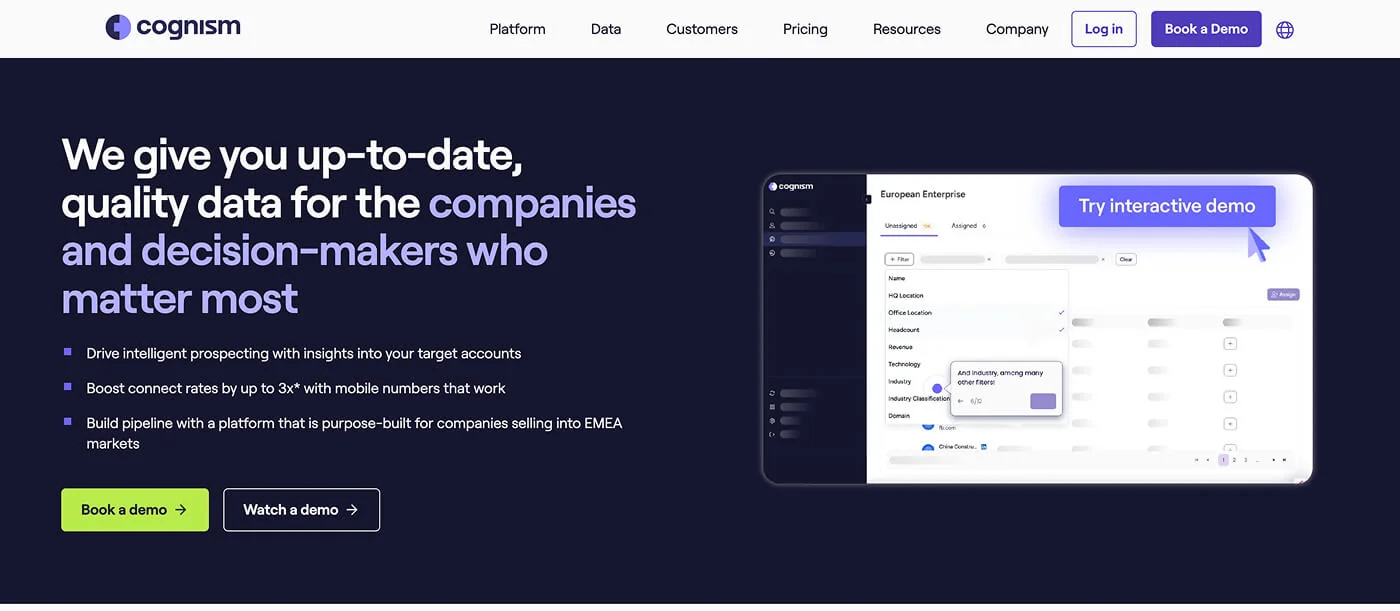
Cognism is a premium sales intelligence platform that provides up-to-date, quality B2B contact data and buyer insights for companies selling into EMEA markets. It offers phone-verified contacts, decision-maker intelligence, and intent signals to drive prospecting and boost connect rates.
The platform's Diamond Data® provides phone-verified, tested contact data that reduces wrong numbers and wasted calls. With exceptional European coverage and GDPR-compliant databases, Cognism is trusted by 4,000+ businesses globally to power their B2B prospecting and market research efforts in EMEA regions.
Cognism offers three tiers: Grow (contact for pricing), Elevate (approximately $22,513 annually for 5 users), and Enterprise/Custom (varies based on organization size). For a custom quote, visit their pricing page.
Best for Enterprises unifying sales, service, and customer data
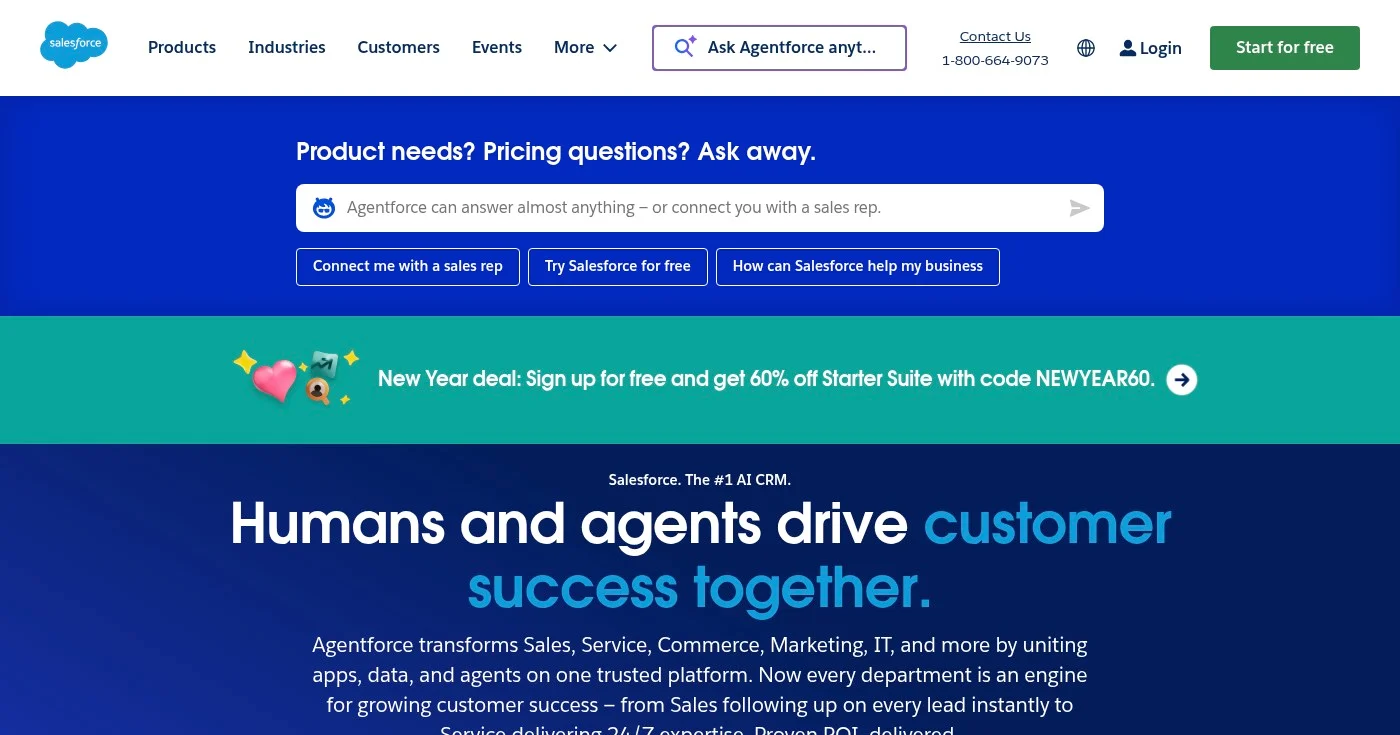
Salesforce is the #1 AI CRM platform that unites apps, data, and agents on one trusted platform. It transforms Sales, Service, Commerce, Marketing, IT, and more by enabling humans and AI agents to drive customer success together, with proven ROI and autonomous case resolution capabilities.
The platform's AI-powered Agentforce agents deliver 66% autonomous case resolution, providing 24/7 customer support and freeing up teams to focus on strategic initiatives. Salesforce's 360° customer view consolidates data from multiple departments, enabling comprehensive market research and customer intelligence that informs go-to-market strategies.
Salesforce offers Essentials at $25/user/month ($20.83/month billed annually), Professional at $75/user/month ($62.50/month billed annually), and Enterprise at $125/user/month ($104.17/month billed annually). For more details, visit their pricing page.
Best for Growing businesses needing unified marketing and sales
HubSpot is an AI-powered customer platform that unifies marketing, sales, and customer service teams on a single integrated system. It connects customer data and tools across your entire business to help teams grow, scale, close deals, and retain customers more effectively.
The platform's Smart CRM with unified customer data provides a foundation for market research by tracking every customer interaction, engagement, and behavior. HubSpot's built-in AI (Breeze) automates workflows, generates insights, and helps teams act on customer intelligence faster. With AI agents that can resolve 65% of support tickets, HubSpot reduces manual work and enables teams to focus on strategic initiatives.
HubSpot offers a free plan, Starter at $15/month ($9/month billed annually), Professional at $890/month ($800/month billed annually), and Enterprise at $3,900/month ($3,600/month billed annually). For more details, visit their pricing page.
Selecting the ideal B2B market research tool depends on your specific requirements, budget, and research objectives. Consider these key factors:
Common Misconceptions: A common misconception is that B2B market research requires weeks or months to deliver actionable insights. Modern platforms like Wynter prove that verified, qualitative feedback from real target customers can be obtained in 12-48 hours, enabling rapid iteration and decision-making.
Another misconception is that all B2B data is equally reliable—in reality, phone-verified and LinkedIn-verified participants provide significantly more accurate insights than unverified or synthetic data sources.
The B2B market research landscape is evolving rapidly with AI-powered automation, real-time intent data, and integrated customer intelligence platforms reshaping how companies understand their markets.
The 4 C's of B2B marketing are Customer (understanding your target audience's needs and pain points), Cost (the total cost of ownership from the buyer's perspective, not just price), Convenience (how easy it is for customers to research, purchase, and use your solution), and Communication (two-way dialogue and relationship-building rather than one-way promotion).
These customer-centric principles replace the traditional 4 P's (Product, Price, Place, Promotion) and emphasize understanding buyer needs through market research.
The 7 P's of B2B marketing are Product (the solution you offer), Price (your pricing strategy and value proposition), Place (distribution channels and how buyers access your solution), Promotion (marketing communications and campaigns), People (your team and the relationships they build), Process (the buyer journey and sales process), and Physical Evidence (tangible proof of value like case studies, demos, and testimonials).
Market research tools help optimize each P by providing insights into customer preferences, competitive positioning, and messaging effectiveness.
ChatGPT can assist with certain market research tasks like analyzing existing data, generating survey questions, summarizing findings, and identifying trends from provided information. However, it cannot conduct primary research by directly surveying real B2B buyers, accessing proprietary databases, or providing verified contact data.
For authentic B2B market research, you need platforms like Wynter that connect you with verified target customers, or sales intelligence tools like Cognism that provide phone-verified contact data. ChatGPT works best as a research assistant to complement, not replace, dedicated B2B market research tools.
B2B market research costs vary widely based on methodology and platform. On-demand platforms like Wynter start at $20,000/year for subscription access to verified customer insights. Enterprise platforms like Qualtrics offer plans starting at $420/month (billed annually).
Sales intelligence tools like Cognism cost approximately $22,513 annually for 5 users. Free and low-cost options exist—HubSpot offers a free CRM with basic research capabilities, while traditional research agencies can cost $50,000-$200,000+ for custom studies.
B2B market research focuses on understanding buyer needs, pain points, preferences, and decision-making processes through surveys, interviews, and message testing (platforms like Wynter and Qualtrics).
Sales intelligence provides contact data, company information, and buying signals to identify and reach specific prospects (tools like Cognism and 6sense). The best approach combines both: use market research to understand what resonates with your ICP, then use sales intelligence to identify and engage accounts matching that profile.
The right B2B market research tool can transform how you understand your target audience, validate messaging, and drive pipeline growth. Whether you need fast, verified customer insights from platforms like Wynter, comprehensive enterprise research capabilities from Qualtrics, or AI-powered intent data from 6sense, the key is matching the tool to your specific research objectives, budget, and integration requirements.
Start by identifying your primary use case—message testing, ICP validation, competitive analysis, or sales intelligence—then evaluate platforms based on data quality, speed to insight, and alignment with your existing tech stack.
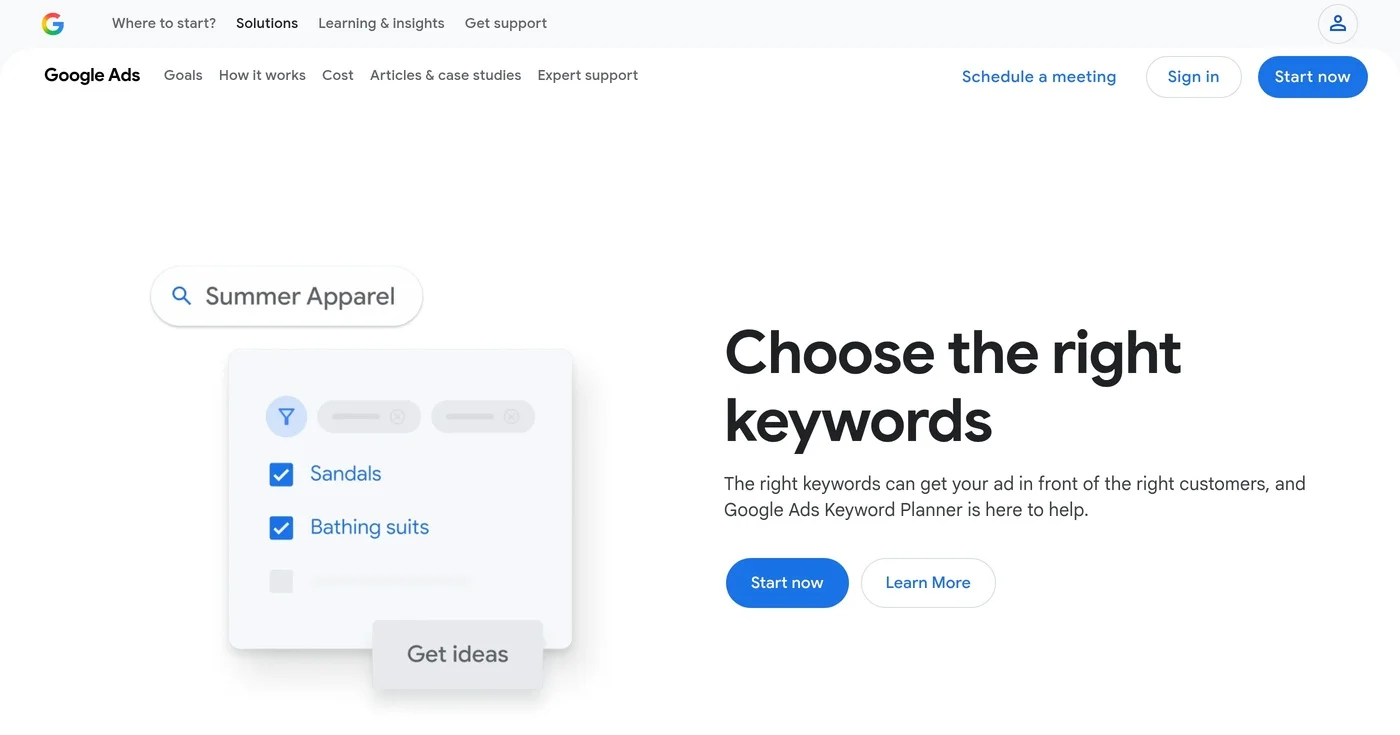
Open Google Keyword Planner without treating setup as running ads, then read volume, competition, and the two bid columns for what those numbers are not.
ZoomInfo alternatives have no public platform list price. Apollo publishes a seat price, Cognism covers EU phones, and Lusha starts at $49.90 a month.

HubSpot's pricing jumps from $0 to $890/month with no mid-tier. These 10 HubSpot alternatives are segmented by sales CRM, email automation, and agency use case
