


48 Digital Marketing Statistics for 2026
The 48 most important digital marketing statistics for 2026, covering industry size, SEO, social media, email marketing, video, AI, and paid search benchmarks.
Updated 10 min read
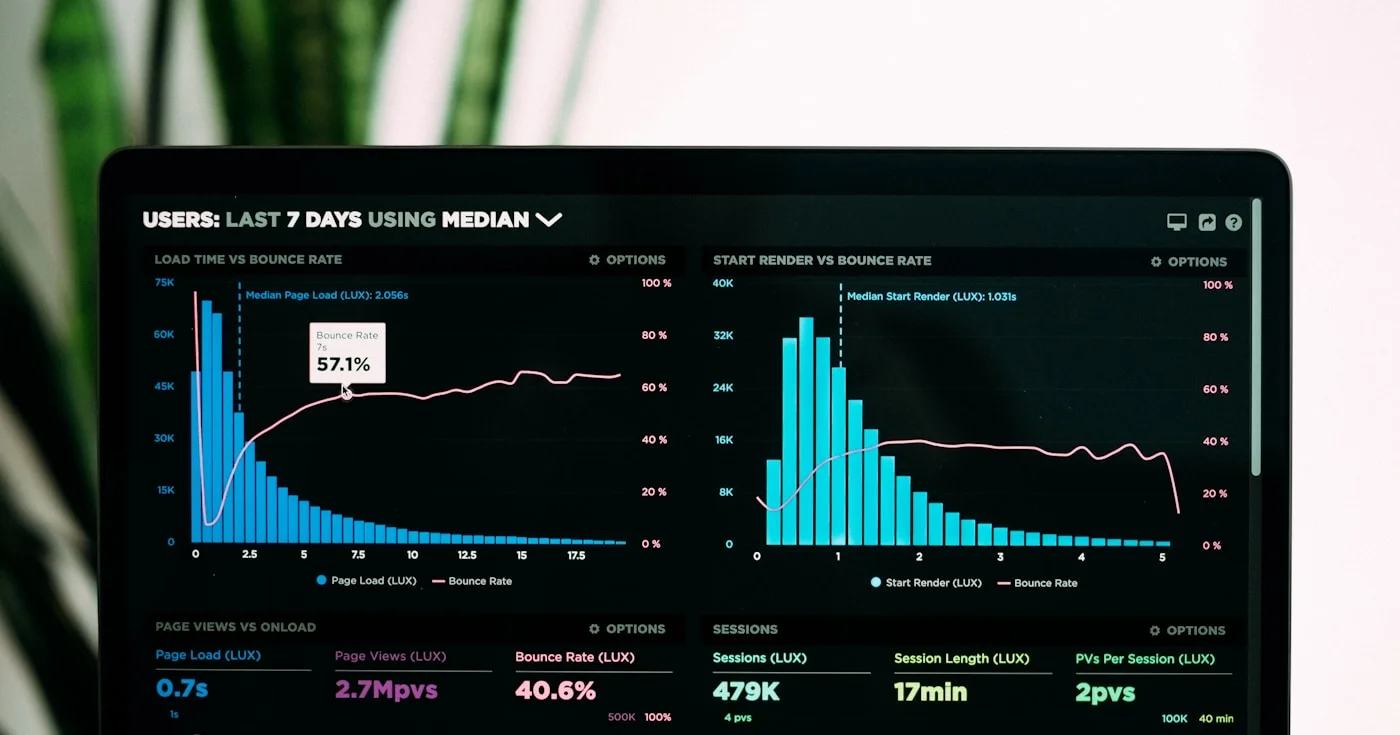

The 48 most important digital marketing statistics for 2026, covering industry size, SEO, social media, email marketing, video, AI, and paid search benchmarks.
The global digital advertising market is on track to reach $786.2 billion in 2026. Email marketing returns $36 for every $1 spent, while short-form video now delivers the highest ROI of any content format.
The data makes one thing clear: marketers who understand where performance is shifting spend their budgets more precisely, test smarter, and outgrow competitors who still rely on gut feel.
In this guide, you'll find 48 digital marketing statistics for 2026 organized by channel and theme, each linked to its primary source.
Digital marketing is one of the fastest-scaling industries in the world, and budget confidence is at an all-time high. These figures show just how much money is moving into the channel, and where it's going.
1. The global digital advertising and marketing market is projected to reach $786.2 billion in 2026, with further growth pushing it toward $1.16 trillion by 2030.
2. Search accounts for 40.9% of the global digital advertising market, making it the largest single segment by weight (Global Industry Analysts).
3. Over 75% of marketers expect to maintain or raise budgets for search and display advertising in 2026, according to HubSpot's State of Marketing report.
4. 60% of small businesses plan to raise their marketing budgets in 2026, with content marketing and digital advertising as the top two investment priorities.
5. Planned budget increases by channel: content marketing leads at 45%, followed by digital advertising (43%), branding (41%), and sponsorships (35%).
6. 75% of marketers already use more than five distinct channels, and 45% allocate 10–20% of their budget specifically to testing new ones.
7. Marketing budgets average 7.7% of company revenue in 2024, according to Gartner, a figure that has held broadly steady for three consecutive years.
Organic search remains the single largest traffic driver across the web, but AI-generated results are beginning to reshape how clicks get distributed. These numbers show where organic performance stands, and what's under pressure.
8. 40.65% of website traffic still comes from organic search in 2026, compared to just 0.26% from AI-referred traffic, according to Ahrefs.
9. 50% of marketers report drops in search traffic alongside increases in AI referral traffic, but note that AI-referred visitors show higher purchase intent, according to HubSpot's 2026 report.
10. AI Overviews now correlate with a 58% lower average CTR for top-ranking pages, according to Ahrefs' December 2025 study, with further declines expected as AI summaries expand to more query types.
11. Nearly 56% of marketers say improving conversion rates is much easier now than ten years ago (HubSpot 2026), driven by maturity in A/B testing, analytics, and personalization tools.
12. Mobile devices account for 54% of global web traffic as of 2025 (StatCounter), making mobile page experience a primary ranking and conversion factor for any organic search strategy.
13. 41% of marketers say updating their SEO strategy for AI-driven search changes is the single biggest trend they are exploring in 2026, per HubSpot.
Social platforms have quietly become the primary product discovery channel for a large portion of the internet. More than just engagement surfaces, they now drive purchase decisions, customer service expectations, and content distribution.
14. 5.66 billion people are active on social media worldwide in 2026, with the typical user spreading their time across 6.75 different platforms per month.
15. 90% of consumers rely on social media to stay current with trends and cultural moments, according to the Sprout Social Index.
16. Social platforms including TikTok, Instagram, and YouTube collectively account for over 60% of product discovery, surpassing Google as the primary channel for researching what to buy.
17. 73% of consumers say they will switch to a competitor if a brand fails to respond on social media, making response time a direct retention metric.
18. The global social media advertising market is expected to grow 12% in 2026 after growing 7.2% in 2025, with brands spending more than $5 billion per week on social ads.
19. The global digital video advertising market is projected to grow from $140.28 billion in 2025 to $188.76 billion in 2026, driven by short-form and creator-led formats.
Email is consistently the highest-ROI channel in digital marketing. These statistics show why marketers who systematically invest in email list quality and automation pull further ahead each year.
20. For every $1 spent on email marketing, businesses earn an average return of $36, a 3,600% ROI that outperforms every other digital channel.
21. Nearly 1 in 5 companies (18%) achieve email marketing ROI of 7,000% or more, meaning $70 back for every $1 spent.
22. Automated workflows generate 30x higher returns compared to one-off email campaigns, according to Email Monday.
23. 52% of consumers made a direct purchase from an email they received, making email the top channel for driving actual sales, not just awareness.
24. Email marketing conversion rates stand at 2.8% for B2C brands and 2.4% for B2B brands, beating paid search and organic social on a per-session basis (FirstPageSage, 2025).
25. 41% of marketers name email their most effective channel overall, far ahead of social media and paid search, which each score 16%.
26. 63% of organizations that achieve high email ROI spend more than 20% of their total marketing budget on it, while 75% of low-ROI companies spend less than 20%.
Video has crossed from "growing channel" to table stakes. The question for most marketing teams now is not whether to invest in video, but which format to prioritize and how to measure what works.
27. 91% of businesses use video as a marketing tool in 2026, back to joint all-time highs after a slight dip in 2025, based on Wyzowl's 12-year longitudinal survey.
28. 82% of businesses say video marketing delivers positive ROI, with short-form formats leading performance across nearly every industry.
29. Videos under 60 seconds generate 2.5x more engagement per impression than longer formats, and 83% of marketers say short-form delivers the highest ROI for engagement.
30. 69% of video marketers produced social media videos in 2026, making it the most common single use case for video content.
31. 67% of marketers who do not use video say they plan to start in 2026, suggesting the channel will reach near-universal adoption within the next two years.
32. Short-form video is already the top content format used by marketers at 60%, tied with long-form video and ahead of blog posts at 38%, per HubSpot's 2025 data.
Influencer marketing has moved from experimental to a line item in most digital budgets. The data now shows that micro-influencers outperform celebrities on engagement and cost efficiency, and that most marketers plan to increase their creator spend.
33. The global influencer marketing industry reached $32.6 billion in 2026, more than tripling in value since 2020.
34. Influencer marketing returns $5.78 for every $1 spent, with top-performing campaigns reaching $18–$20 per $1 invested.
35. 86% of consumers make at least one influencer-driven purchase per year, reflecting how deeply creator content now shapes buying behavior.
36. Around 86% of US marketers are estimated to use influencer marketing in 2025, up from 64.5% in 2020 (eMarketer).
37. 80.8% of US marketers run influencer campaigns on Instagram, more than any other platform, while 57.7% of marketers at companies over 100 employees also use TikTok (eMarketer).
38. Micro-influencers deliver 3.2x higher engagement at 60% lower cost than macro-influencers, making them the better default for most mid-market campaigns.
AI adoption in marketing moved from majority to near-universal in the space of 18 months. The challenge now is less about whether to use it and more about how to deploy it in ways that differentiate rather than commoditize.
39. 93% of CMOs say generative AI is delivering clear ROI for their organization, according to SAS.
40. 66% of marketers use AI tools on most or all of their projects, per MiQ's 2025 AI Confidence Curve Report.
41. 77% of marketers who use generative AI apply it primarily to creative development tasks, making it the most common use case (Gartner 2025).
42. 71% of marketers say AI makes it easier to create more content across channels, but 53% report that AI saturation makes differentiation harder.
43. 63% of marketers say they need human-centered, unique content to cut through the AI-generated volume, per HubSpot's 2026 report.
44. McKinsey estimates that generative AI could unlock $0.8 to $1.2 trillion in annual value across sales and marketing through incremental productivity and revenue gains.
Paid search remains the fastest path to measurable top-of-funnel volume, and it keeps growing. AI-powered bidding now dominates most Google Ads accounts, reshaping what "campaign management" means.
45. Global PPC advertising spend will reach $306 billion in 2026, growing at 11% year-over-year and representing 65% of all digital ad spend.
46. Google Ads holds 62% of global PPC revenue, Amazon Ads holds 14%, and Microsoft Advertising holds 6%, leaving 16% split across all other platforms.
47. Smart Bidding now manages 78% of all Google Ads spend, and advertisers using it report 14% higher conversion rates on average.
48. The average conversion rate for Google Ads across all industries is 7.52% in 2025, according to LocaliQ's Search Advertising Benchmarks report.
The most consistent pattern across this data is the premium on measurement and compounding. Email delivers a $36 return per $1 spent not because it is novel but because it is direct, measurable, and scalable across a list you own. The same logic applies to SEO: a longer lead time than paid search, but outperforming paid on long-term cost efficiency.
AI creates a new dynamic that cuts both ways. 66% of marketers now use it on most projects, and output volume has surged across the industry. The teams pulling ahead use AI to improve targeting precision, personalize campaigns at scale, and free up time for the human elements algorithms cannot replicate.
Social media's role as a product discovery engine means your social presence is now part of the purchase funnel. Over 60% of product discovery now happens on social platforms, and brands that treat it as a pure awareness play leave qualified purchase intent on the table. Pair social with influencer partnerships: micro-influencers deliver 3.2x higher engagement at significantly lower cost than large-follower accounts.
The biggest shift in digital marketing is not any single channel but the divergence between teams who compound their data and those who do not.
Whether you focus on email, video, or AI-assisted personalization, the underlying principle is the same: owned data and measurable feedback loops create durable advantages.

47 content marketing statistics for 2026, organized by ROI, AI adoption, SEO, formats, and B2B performance. Primary sources linked inline throughout.

67 B2B content marketing statistics on ROI, formats, AI, and budget. Data from 2,200+ marketers and 312 companies in 2026.

42 B2B email marketing statistics on ROI, open rates, cold reply rates, deliverability, and AI for 2026. Benchmarks from Litmus, WarmySender, Validity, and HubS
