


The Complete Guide to Earned Media (2026)
Everything marketers need to know about earned media: definition, types, real examples, measurement, and a step-by-step strategy to generate consistent coverage
Updated 16 min read


Everything marketers need to know about earned media: definition, types, real examples, measurement, and a step-by-step strategy to generate consistent coverage
Earned media is any publicity your brand receives from third-party sources without direct payment: press coverage, customer reviews, social mentions, influencer shoutouts, and word-of-mouth. Unlike paid ads, you can't buy it outright.
You earn it through reputation, compelling stories, and content worth sharing. 92% of consumers trust earned media over any form of advertising, which makes it the highest-credibility channel in your marketing mix.
Marketers currently allocate roughly 24% of their digital budgets to earned media, nearly equal to paid. Yet most treat it as an afterthought rather than a system. This guide covers everything from the types of earned media and how to measure it, to a six-step strategy you can put in place this quarter.
Earned media is the publicity your brand earns organically through reputation, word-of-mouth, and public relations efforts. Cision defines it as the visibility your business earns from organic sources: it isn't created directly by your brand or paid for, it comes from third parties who choose to talk about you.
The core principle is simple: earned media can't be bought, only deserved.
That third-party origin is what separates earned media from the other two legs of the classic media mix. Owned media is content you control (your blog, website, email list). Paid media is coverage you buy (ads, sponsored articles, influencer contracts with payment). Earned media belongs to neither category; it's voluntary coverage from journalists, reviewers, customers, or communities because you did something noteworthy.
Trust in advertising continues to erode, and consumers have developed strong filters against paid content. When a journalist writes about your product, a customer posts a glowing review, or an influencer recommends you without a contract, it carries a different weight than any ad you could buy.
71% of customers say they would buy less from a company that lost their trust, while 93% remain loyal to brands they trust. Earned media feeds directly into that trust equation. It also extends your reach into audiences that would never click your ads but will pay attention to a peer recommendation or a credible publication.
For marketers who care about SEO, editorial backlinks from earned press coverage also strengthen domain authority and feed long-term organic rankings.
The most practical framework for understanding earned media is the PESO Model, created by Gini Dietrich of Spin Sucks.
PESO stands for Paid, Earned, Shared, and Owned media. The key insight: using one or two media types in isolation is significantly less effective than integrating all four.
Paid media, such as ads, sponsored articles, and boosted social posts, is the fastest way to reach new audiences. You control the message and placement entirely. Its weakness is credibility: audiences know you paid for it.
Earned media carries weight because it comes from someone with no financial obligation to say good things. It includes press coverage, analyst mentions, customer reviews, unpaid influencer posts, and viral content. You have no direct control over it, which is exactly why people trust it.
Shared media covers social posts and community content from your own accounts and from others sharing your content. When a reader shares your blog post or a customer tags you on Instagram, that's shared media. It overlaps with earned when the content originates outside your brand.
Owned media is your website, blog, email list, and any channel you fully control. High-quality owned content is the raw material that generates earned coverage. Journalists link to it, customers share it, and influencers reference it when it's genuinely useful.
Earned media doesn't happen in a vacuum. A product launch earns press coverage because you published owned content (a blog post, a data report) and used paid amplification (social ads targeting journalists). When coverage lands, you share it across your owned channels. Each type feeds the others. Treating earned media as a standalone PR tactic disconnected from content and paid amplification will underperform.
Understanding which types apply to your brand helps you prioritize where to invest relationship-building and content creation time.
Press coverage is what most marketers picture when they hear "earned media." A journalist writes about your product launch, includes you in a roundup, or quotes your CEO as an expert source. Press mentions drive awareness, SEO equity (via backlinks), and brand legitimacy in one hit.
Getting consistent press requires building genuine relationships with journalists before you need coverage, not pitching cold when you have news.
When customers or fans tag your brand, share your content, or post about their experience without a paid arrangement, that's earned social coverage. Social mentions are the most volume-scalable type of earned media: a single satisfied customer can reach thousands with a 30-second video.
Social listening tools (Brandwatch, Mention, Sprout Social's social listening suite) help you catch and respond to mentions before they go cold.
Reviews on Google Business Profile, G2, Capterra, Trustpilot, and Amazon are a form of earned media with direct purchase influence. For B2B software, G2 reviews appear in brand search results and SaaS comparison content. For B2C products, star ratings can determine whether anyone clicks at all.
Proactively asking customers for reviews via email automation or in-app prompts after a positive interaction is the fastest way to build review volume without paying for fake ones.
Word-of-mouth is the oldest form of earned media: people recommending you to friends, colleagues, or professional communities. It's harder to measure but extraordinarily powerful. Referral programs and NPS-driven follow-up can systematically convert happy customers into active advocates.
When a creator posts about your product because they genuinely love it, without a paid contract, that's earned influencer media. It's increasingly valuable as audiences grow skeptical of obviously sponsored content. Influencer-created content generated $236 billion in EMV in 2024 globally, showing the economic scale of creator-led earned coverage.
UGC (photos, videos, and posts created by customers featuring your product) functions as both earned media and social proof. Lululemon built earned media worth $1.6M through nano and micro-influencer gifting programs, generating 7M+ impressions without paid contracts.
A host recommending your tool, a founder featured as a guest expert, or an analyst discussing your product on an industry podcast all count as earned media. Podcast audiences tend to be highly engaged and trust hosts they follow consistently, making a single mention more valuable than many banner ad impressions.
When your content (a campaign, a video, a data report) spreads organically beyond your owned channels and generates coverage you didn't buy, that's earned media at scale. The Blair Witch Project directors hung missing person posters at the 1999 Sundance Film Festival and turned a $35,000 film into a $249 million box office hit through earned buzz alone.
When other sites link to your content without a paid arrangement, that's earned media with a direct SEO benefit. Editorial links from credible sources are the single most powerful signal for improving organic search rankings. They happen naturally when your content is genuinely useful, original, or data-rich.
Inclusion in "Best of" roundups, analyst reports (Gartner, Forrester), or industry award programs is a form of earned media that drives credibility with buyers at the top of your funnel. For SaaS companies, appearing on G2 grid reports or Capterra top-rated lists is a purchase-decision signal.
Getting consistent earned coverage requires a repeatable system, not a one-time PR push.
Start by identifying which publications, journalists, podcasters, creators, and communities your target audience actually trusts. A B2B SaaS company targeting marketing teams should know which Substack newsletters, LinkedIn voices, and trade publications their buyers read. Use Muck Rack or Cision to find journalists by beat and recent coverage.
The tighter your targeting, the higher your pitch hit rate. Generic media blasts waste both your time and your reputation with journalists.
Journalists and influencers cover things that are new, surprising, useful, or data-backed. The most reliable triggers for earned coverage are:
If your owned content is thin, your earned coverage will be too. Build the asset first.
72% of PR professionals report that securing media placements is harder than ever. Editorial teams are smaller, reporters cover more beats, and pitches arrive faster than they can be read. The brands that earn consistent coverage built relationships before they needed them.
Follow target journalists on social media. Comment thoughtfully on their work. When you do pitch, it's a personal note to someone who knows you, not a cold email from a stranger.
You can't rely on journalists discovering your owned content organically. Actively distribute every publication: share new blog posts across social, email, and Slack communities. Push data reports directly to journalists who cover your space. The more eyeballs on your content, the higher the probability of organic shares and coverage.
This sounds obvious, but it's the most commonly skipped step. Great content with no promotion generates neither earned media nor traffic.
Your existing customers are your most credible earned media channel. Build systems to convert satisfied customers into public advocates:
Responding to mentions quickly matters too. When someone posts about your product, engage within the same day. Unacknowledged coverage is wasted credibility.
Earned media is notoriously hard to measure, and 79% of marketers cite measuring influencer ROI as their biggest challenge. The key is using a portfolio of metrics rather than a single number.
Track these signals across all earned media activity:
Metric | What it measures |
|---|---|
Media mentions (volume) | Total coverage count across press, social, podcasts |
Reach / Impressions | How many people potentially saw the coverage |
Share of Voice | Your brand mentions vs. competitors in a period |
Earned Media Value (EMV) | Dollar equivalent of equivalent paid coverage |
Backlinks from coverage | SEO equity generated from press mentions |
Referral traffic | Visitors arriving from earned placements |
Review rating trends | Star rating direction over time on G2, Google, Capterra |
Sentiment | Positive, neutral, or negative tone of coverage |
Earned Media Value puts a dollar figure on organic coverage by calculating what the equivalent exposure would cost as paid advertising.
The most widely used formula is:
EMV = Impressions × CPM × Quality Multiplier
For example: 500,000 impressions × $40 CPM × 1.2 quality multiplier = $24,000 EMV
A simpler social-specific version assigns dollar values per engagement type. If you benchmark a social like at $0.10 and receive 1,000 likes on a post about your brand, that interaction carries an estimated EMV of $100.
Launchmetrics breaks down the three main approaches:
Chief Strategy Officer Arnaud Roy at Launchmetrics notes: "Brands tend to think of earned media as free", but there's always a cost associated with it. Pitching, relationship management, and content creation all carry real costs. Pairing EMV with backlink counts, referral traffic, and conversion attribution gives a more complete picture of what your earned media program is actually worth.
Understanding where earned media fits in your broader marketing mix is essential for allocating budget and effort effectively.
Type | Who controls it | Cost | Credibility | Speed |
|---|---|---|---|---|
Earned media | Third parties | No direct payment | Highest | Slow to build |
Paid media | Your brand | Ongoing spend | Lower | Immediate |
Owned media | Your brand | Content creation cost | Medium | Medium |
Earned media wins on credibility and reach but requires sustained investment in relationships and content quality. You have no control over timing, tone, or placement.
Paid media wins on speed and targeting precision. You can launch a campaign today and reach a defined audience by tonight. Credibility is lower because audiences know you paid for it.
Owned media is the foundation both paid and earned campaigns run on. Without strong owned content, you have nothing worth sharing and nothing worth covering.
As Mailchimp notes, the most effective marketing strategies use all three together: owned content provides substance, paid media accelerates reach, and earned media validates and amplifies what your brand stands for.
Running one PR push around a product launch and calling it your earned media strategy is like running one email campaign and calling it your email marketing strategy. Earned media compounds over time through consistent relationship-building, regular content publication, and ongoing customer advocacy programs. One-off campaigns rarely produce sustainable coverage.
Sending the same press release to 500 journalists across unrelated beats damages your reputation with every reporter on that list. Research each journalist's recent coverage and beat before you pitch. A pitch tailored to their last three articles will outperform a mass blast every time. The Muck Rack State of PR survey found journalists cite irrelevant pitches as their top complaint, making targeting research non-negotiable.
Strong content that nobody knows about generates zero earned coverage. Every article, report, or video needs active distribution through your email list, social channels, and direct journalist outreach. If you're publishing weekly and not actively promoting each piece, you're leaving earned media opportunities on the table.
Not all earned media is positive. An unmanaged critical review, a viral complaint, or a negative press mention left unaddressed can compound quickly. Monitoring your brand mentions (via Google Alerts, Mention, or Brandwatch) and responding promptly to negative coverage is as important as generating positive coverage.
Fifty mentions in low-authority blogs may move your EMV metric, but they deliver less SEO equity and reach than five mentions in credible industry publications. Track quality signals (domain authority of linking sites, share of voice in target publications, referral traffic from coverage) alongside raw volume counts.
In 2017, State Street Global Advisors installed the Fearless Girl statue facing the Charging Bull on Wall Street to mark International Women's Day and promote their gender diversity ETF (SHE).
The installation cost a fraction of what an equivalent paid media campaign would have cost, yet it generated global press coverage across hundreds of major publications, hundreds of millions of earned social impressions, and significant increases in brand recognition for State Street's institutional asset management division.
What made it work: the stunt was visual, emotionally resonant, timed to a culturally relevant moment (International Women's Day), and directly tied to a business narrative (the SHE fund). Every element was designed to be coverable by journalists and shareable by the public without a single dollar spent on distribution.
The lesson: earned media at scale isn't about luck. It's about creating something genuinely newsworthy and giving journalists and audiences a reason to pay attention.
Tracking, pitching, and measuring earned media manually at any meaningful scale is unsustainable. These platforms are the most widely used by marketing and PR teams.
Tool | Best For | Pricing |
|---|---|---|
Journalist database, pitch tracking, media monitoring | Custom pricing | |
End-to-end PR platform, media database, analytics | Custom pricing | |
PR outreach and media monitoring (now part of Semrush) | Custom pricing | |
Social listening, EMV calculation for social mentions | From $199/seat/mo (annual billing) | |
Enterprise brand monitoring and social listening | Custom pricing | |
Basic brand mention monitoring | Free |
For teams starting out, Google Alerts plus a spreadsheet to track coverage quality and referral traffic is enough to build an earned media baseline. Upgrade to a dedicated platform when volume makes manual tracking unsustainable.
Earned media is the credibility layer that paid and owned media cannot replicate on their own. When customers, journalists, and creators talk about your brand without being paid to do so, it signals to the market that you've built something worth paying attention to.
The brands that earn the most consistent coverage share a few habits: they publish owned content worth covering, they build media relationships before they have news, they activate their customers as advocates, and they measure quality as well as volume. Start with one of those four and build the system from there.

Paid search wins when you need a visit this week and you do not already rank. SEO wins when you can wait months for a click you stop paying for.
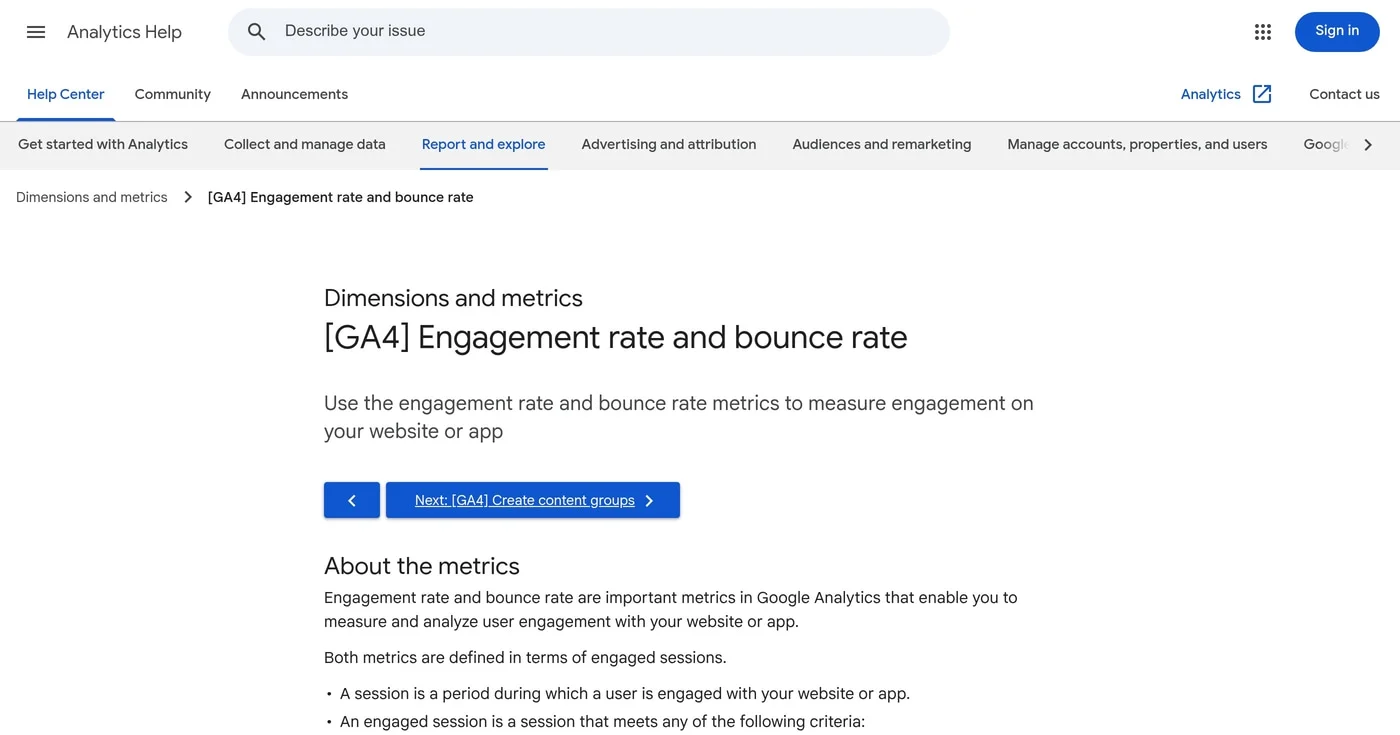
Bounce rate in GA4 is the share of sessions that were not engaged. See how that differs from Universal Analytics, why samples disagree, and what to check first.
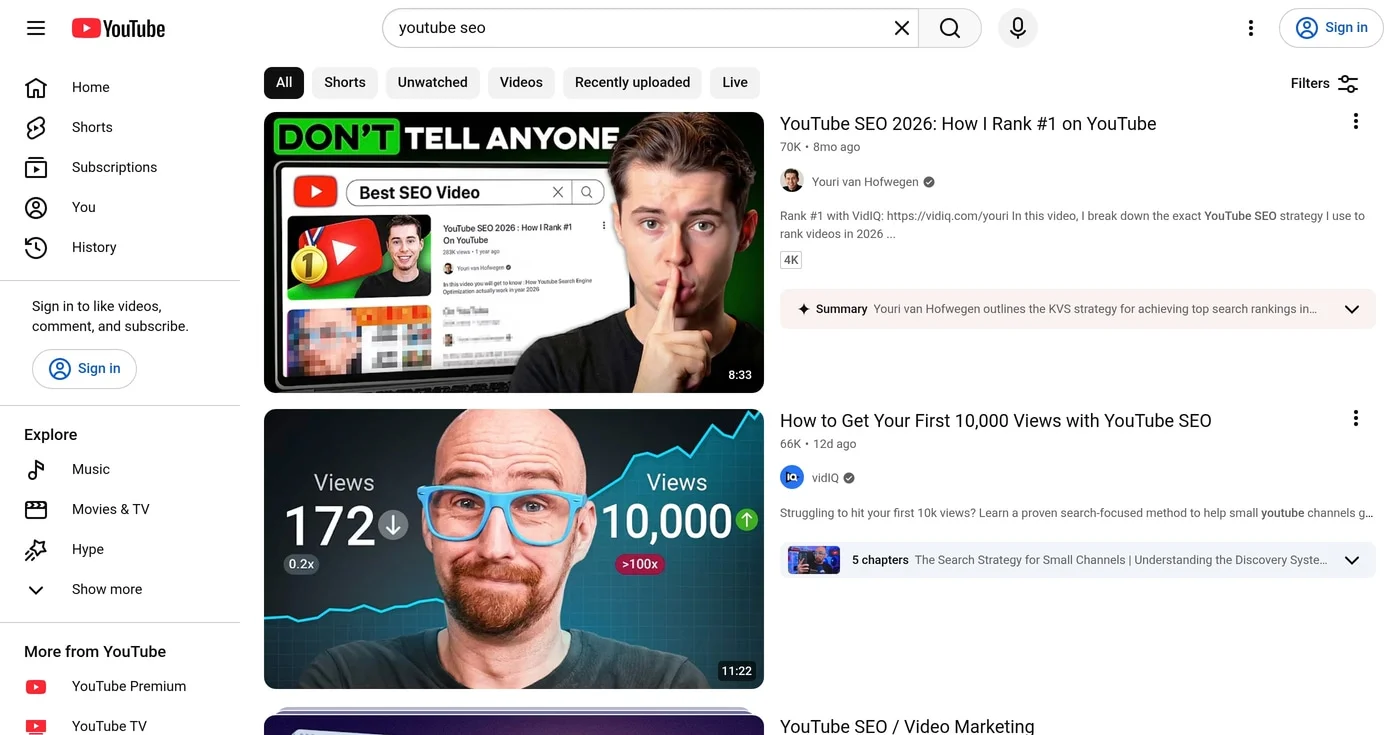
YouTube SEO matches a video to a query. See the ranking factors YouTube names, the official metadata limits, and why retention has no published cutoff.
