


Which Zapier Alternative Matches How You Get Billed?
Rank Zapier alternatives by billing unit: n8n executions, Make credits, Pabbly lifetime. Live September 2026 prices.
Updated 16 min read

Rank Zapier alternatives by billing unit: n8n executions, Make credits, Pabbly lifetime. Live September 2026 prices.
The strongest Zapier alternatives in 2026 are n8n for execution-priced self-host, Make for visual branching on Core at $12, and Pabbly Connect for a lifetime SKU. People leave when a multi-step Zap burns through Professional’s 750 tasks.
A 6-step lead follow-up run 1,000 times is 5,000 Zapier tasks, 6,000 Make credits, and 1,000 n8n executions. Rank by that math, not by who put themselves in slot 1.
Zapier is still the fastest two-step Zap, with the largest connector catalog. Wade Foster told Madrona in April 2026 that Zapier runs several hundred million in ARR with about 800 employees and less than $1 million of venture capital.
The bill is the problem. Professional is $19.99/mo billed yearly ($29.99 monthly) for 750 tasks.
Team starts at 2,000 tasks for $69/mo yearly. A 50,000-task Team plan is $399/mo yearly, not $69.
Common reasons people look for Zapier alternatives:
Stay on Zapier when the Zap is 2-3 linear steps, the connector does not exist elsewhere, and nobody on the team wants a canvas. On r/zapier, the durable pattern is hybrid: Zapier for simple flows, something else for loops and volume.
Head-query listicles skip this table. It is the article.
Platform | Unit | What counts | Live entry SKU (8 Sep 2026) | Self-host |
|---|---|---|---|---|
Task | Successful action step. Empty polls free. | Free 100 tasks, 2-step. Professional $19.99 yearly / 750 tasks. Team from 2,000 tasks / $69 yearly. | No | |
Credit (since 27 Aug 2025) | Most module actions = 1 credit per bundle. Routers and error handlers do not count. | Free 1,000 credits, 2 scenarios, 15-min interval. Core $12 / 10k credits. | No | |
Execution | One full workflow run, any number of nodes. Sub-workflow runs do not count on Cloud. | No permanent cloud free tier. Starter €20/mo yearly / 2,500 executions. | Yes (Community) |
Live billing units as of 8 Sep 2026
Worked example: a 6-step lead follow-up, 1,000 runs/month, one item per run.
Double the steps to 12 and Zapier and Make roughly double. n8n stays at 1,000 executions.
Fan-out hides the sticker. Push 500 CRM rows through a filter, then Slack, then Sheets: Zapier bills about 1,500 tasks, Make about 1,500 credits, n8n one execution.
Make also bills empty polls. Tom Nassr (X-Ray, 4:48) measured a 5-minute empty poll at about 8,000 credits/month, enough to eat a 10k Core allotment before useful work. Zapier does not bill that check.
Ordered by search demand (n8n vs Zapier outsearches the head query), then PAA coverage. Not by who ranked themselves #1.
Alternative | Differentiator Tag | Best For | Billing unit | Self-host | Pricing | Free plan |
|---|---|---|---|---|---|---|
Upgrade pick | High-volume, code, residency | Execution | Yes | From €20/mo yearly | Self-host only | |
Closest match | Visual branching, mid volume | Credit | No | From $12/mo | Yes, 1,000 credits | |
Budget pick | Cheap hosted / lifetime | Task (external only) | No | From $16/mo yearly | Yes, 100 tasks, 2-step | |
Best for Microsoft 365 | Teams, Outlook, Dataverse | Per user / bot | M365 / Azure | From $15/user yearly | 30-day trial | |
Best for beginners | Consumer apps and IoT | Applet | No | From $2.99/mo | Yes, 2 applets | |
Best for enterprise | Fortune 500 orchestration | Capability / recipe | Enterprise | Custom, sales-led | No | |
Best free option | MIT self-host plus cheap cloud | Credit (per run) | Yes | From $16/mo yearly | Yes, 100 credits/day | |
Best for developers | Code-as-workflow (Workday-owned) | Credit | No | From $29/mo | Yes, 100 credits/mo |
All Zapier alternatives side by side
Best Zapier alternative for high-volume workflows you can self-host
n8n bills executions, not steps. GitHub showed 203,702 stars on 8 Sep 2026. Jan Oberhauser founded it in 2019.
Do not call n8n open source. The license is fair-code (Sustainable Use): Community Edition is free on your box for internal use, and you may not resell hosted n8n.
Oberhauser in Sequoia (7:28): "We never call ourselves open source because we don't have an OSI-approved open source license."
Agencies hit the same wall. u/conor_is_my_name (November 2025) notes you may not provide client access to n8n.
Zapier charges per successful action. n8n Cloud charges per workflow run, so a 12-node enrichment costs the same as a 3-node Slack ping.
Zapier has the larger catalog and a 5-minute first Zap. n8n makes you the developer: JS/Python nodes, HTTP, and self-host if the payload cannot leave your VPC.
Best Zapier alternative for visual branching at mid volume
Make (formerly Integromat, Celonis-owned) treats routers, iterators, and aggregators as first-class. You build on a canvas, not a list. The pricing page lists 3,000+ apps.
Fabian Q. Veit has publicly put paying customers above 400,000 and ARR near €100 million (TNW, 16 Apr 2026). Treat those as his statements, not audited filings.
As of 8 Sep 2026, Core is $12/mo for 10k credits. Older roundups still print $9.
Credits replaced operations on 27 August 2025. Paid plans include Make Grid, the visual map for every scenario.
Zapier is a list of steps. Make is a canvas, and Make is cloud-only.
Zapier does not bill empty polls; Make does, which is how a cheap Core plan disappears on a 5-minute watch.
u/Glum-Carpet (November 2025) says Zapier railroads you into specific flows while Make is more customizable, with a bigger learning curve. If you are not a tech person, Zapier is still the better product.
Best Zapier alternative for a cheap hosted or lifetime bill
Recurring Standard is $16/mo yearly for 10,000 tasks. Pabbly Connect is Magnet Brains’ automation product out of Bhopal. Internal Filter, Router, Formatter, Iterator, Delay, and Code steps do not consume quota.
The lifetime page is where listicles lie. Standard lifetime is $349 for 3,000 tasks/month and two-step workflows only. Multi-step is Ultimate at $799.
Zapier’s Professional 750-task cap is the pain Pabbly sells against. A five-step Zap that burns five tasks can land as one Pabbly task when the extra steps are internal.
Recurring (connect-pricing.md):
Lifetime (connect-onetime-pricing.md):
Best Zapier alternative if the stack is already Microsoft 365
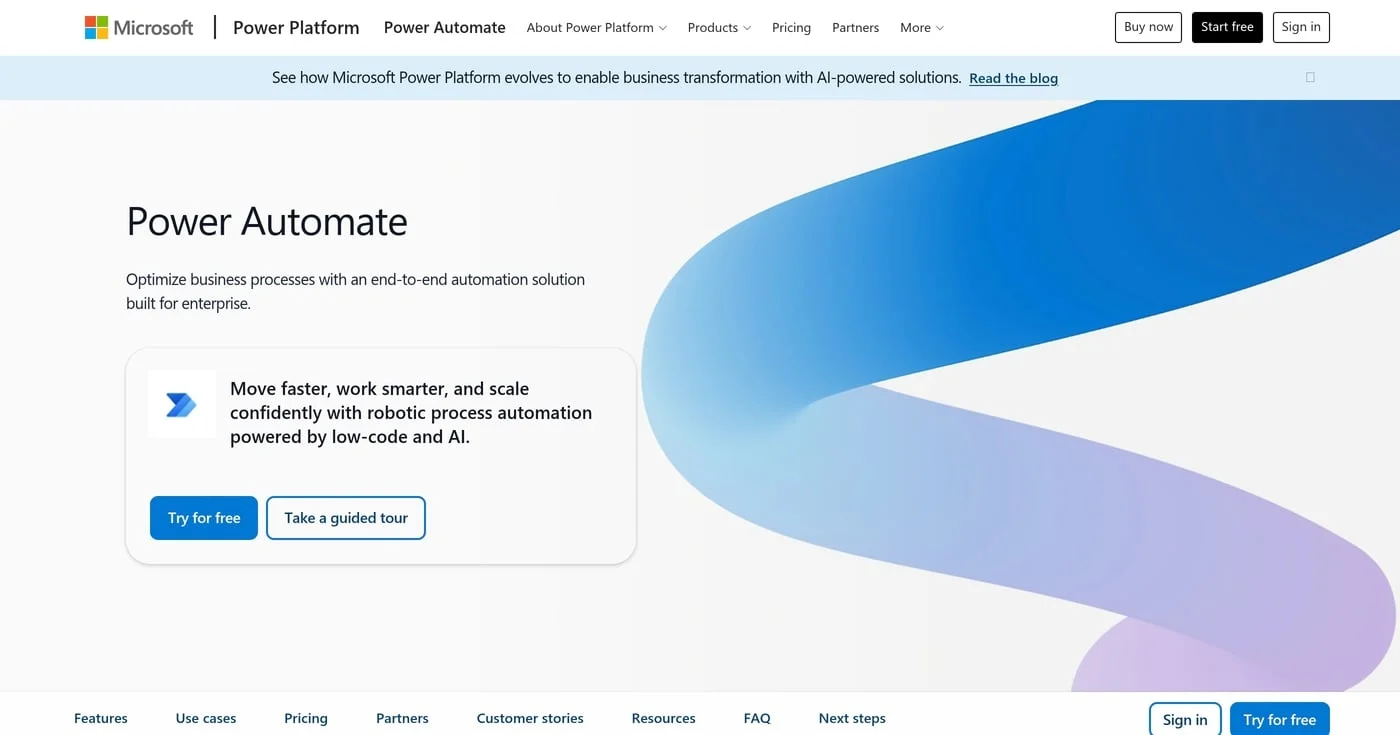
Power Automate Premium is $15.00 per user/month, paid yearly, covering cloud flows plus attended desktop RPA. Unattended bots are Process at $150/bot/month yearly, or Hosted Process at $215/bot if Microsoft runs the VM.
Choose it because Outlook, Teams, SharePoint, Dataverse, and Entra are already the system of record. Do not choose it as a cheaper Zapier. Non-Microsoft connectors often sit behind premium SKUs.
Power Automate is glue inside M365, with Copilot Studio and desktop RPA. Zapier stays vendor-neutral.
A growth team living in HubSpot and Google Sheets will fight Dataverse. A team living in Dynamics will wonder why they ever paid Zapier per task.
Best Zapier alternative for consumer apps, phones, and IoT
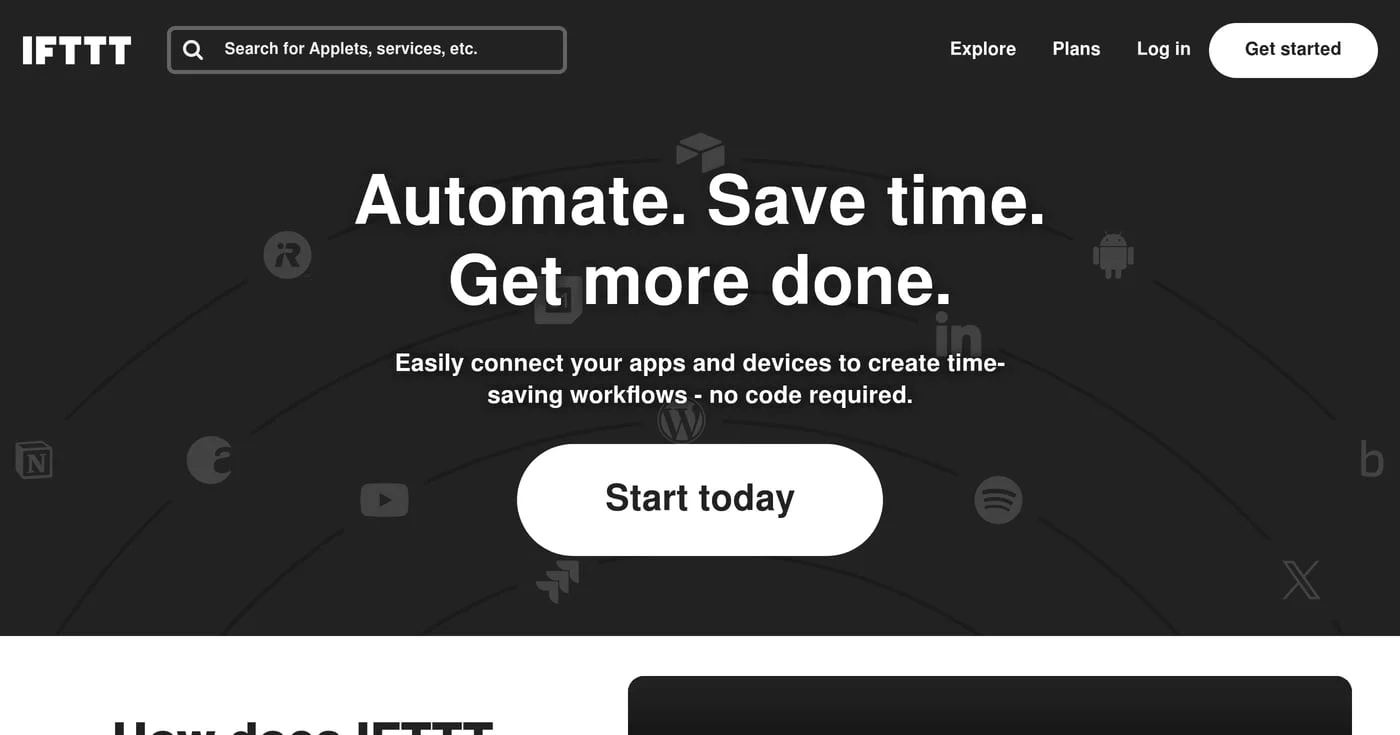
IFTTT is If-This-Then-That, not an iPaaS. Free is 2 applets.
Pro is $2.99/mo with 20 applets and multi-action. Pro+ is $8.99/mo with unlimited applets, queries, and filter code.
Use it for Oura-to-calendar, iOS-to-Notion, and smart-home gaps. Do not use it for HubSpot lead routing with three branches.
A watch, a thermostat, a camera: Zapier treats those as afterthoughts. IFTTT covers them.
Multi-action exists on live Pro. Older pages that say IFTTT is single-action on every tier are wrong.
Best Zapier alternative for enterprise orchestration
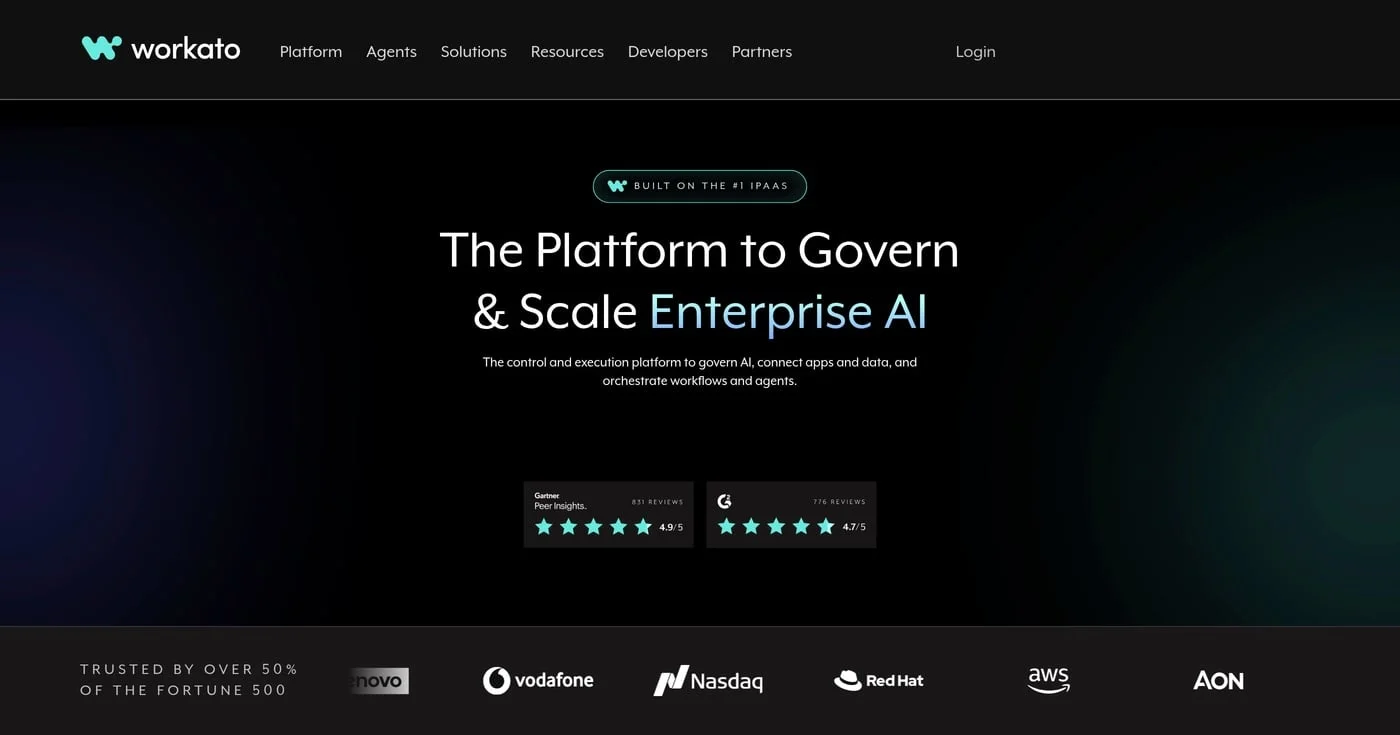
There is no public list price. Workato sells Standard through Business MCP, Enterprise MCP, and Workato ONE, with consumption quoted by sales.
FY26 (ended 31 Jan 2026, company-reported): 35% year-over-year ARR growth, 700+ customers above $100k ARR, and a “half of Fortune 500” claim. Vijay Tella is CEO.
Workato is sales-led iPaaS: recipe governance, embedded automation, Enterprise MCP. Zapier is self-serve and task-metered.
A $19.99 Professional quote does not model a Workato RFP. If security, SSO, and a named CSM are the requirements, stay in that meeting.
Custom. Start at Workato pricing and talk to sales. Do not use third-party valuation blogs as a proxy for your invoice.
Best Zapier alternative if you want MIT-licensed self-host plus a cheap cloud
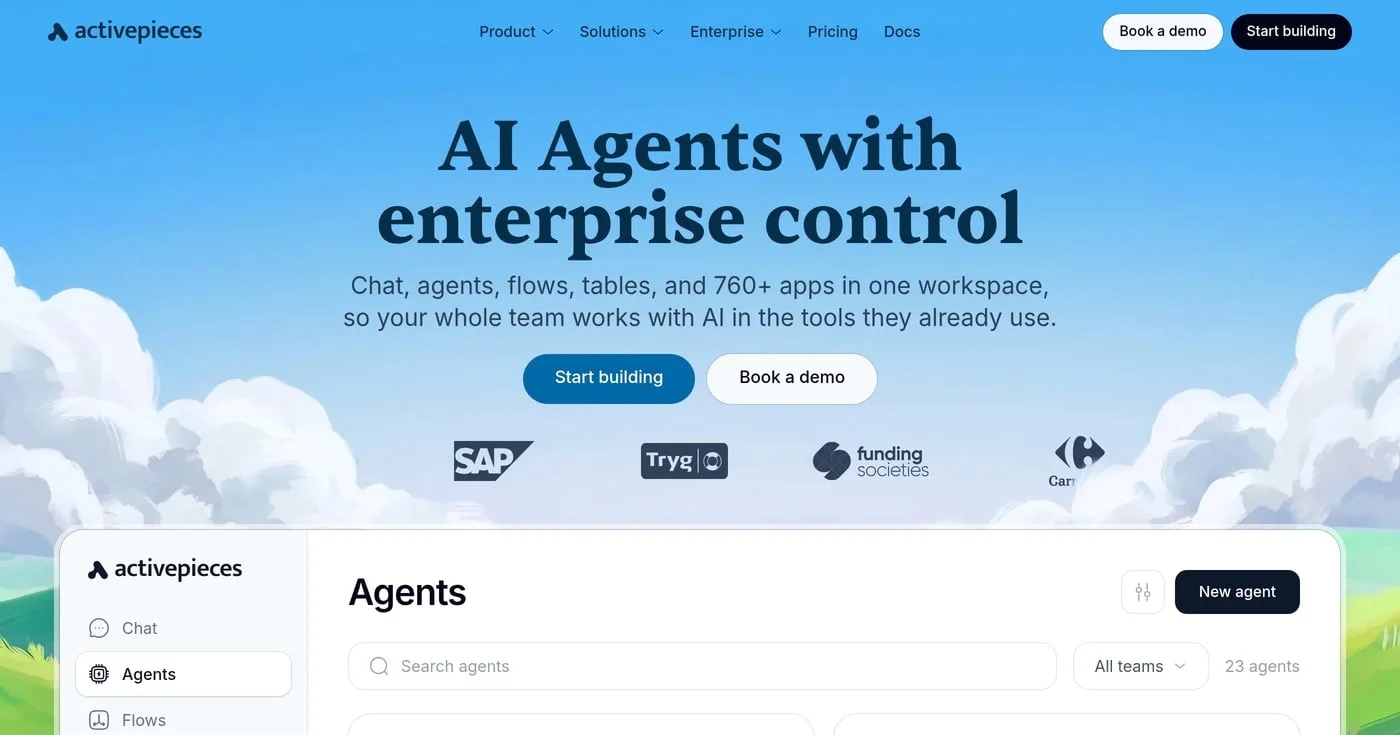
Community is MIT. Activepieces is the self-host option without n8n’s Sustainable Use terms.
GitHub showed 24,330 stars on 8 Sep 2026. YC S22, led by Ash Samhouri (CEO) and Mohammad AbuAboud (CTO).
Cloud Plus is $16/mo yearly for 10,000 credits. One credit covers a whole run; AI steps can cost more. Free is 100 credits per day, unlimited flows, cloud or on-prem.
Activepieces aims for linear-ish flows and pieces as npm packages, while remaining self-hostable under MIT. n8n’s fair-code wall does not apply the same way.
Zapier still wins on catalog size and “live in five minutes.” Activepieces wins if license and on-prem matter and you do not want n8n’s Sustainable Use terms.
Best Zapier alternative if the workflow is code and you accept a Workday parent
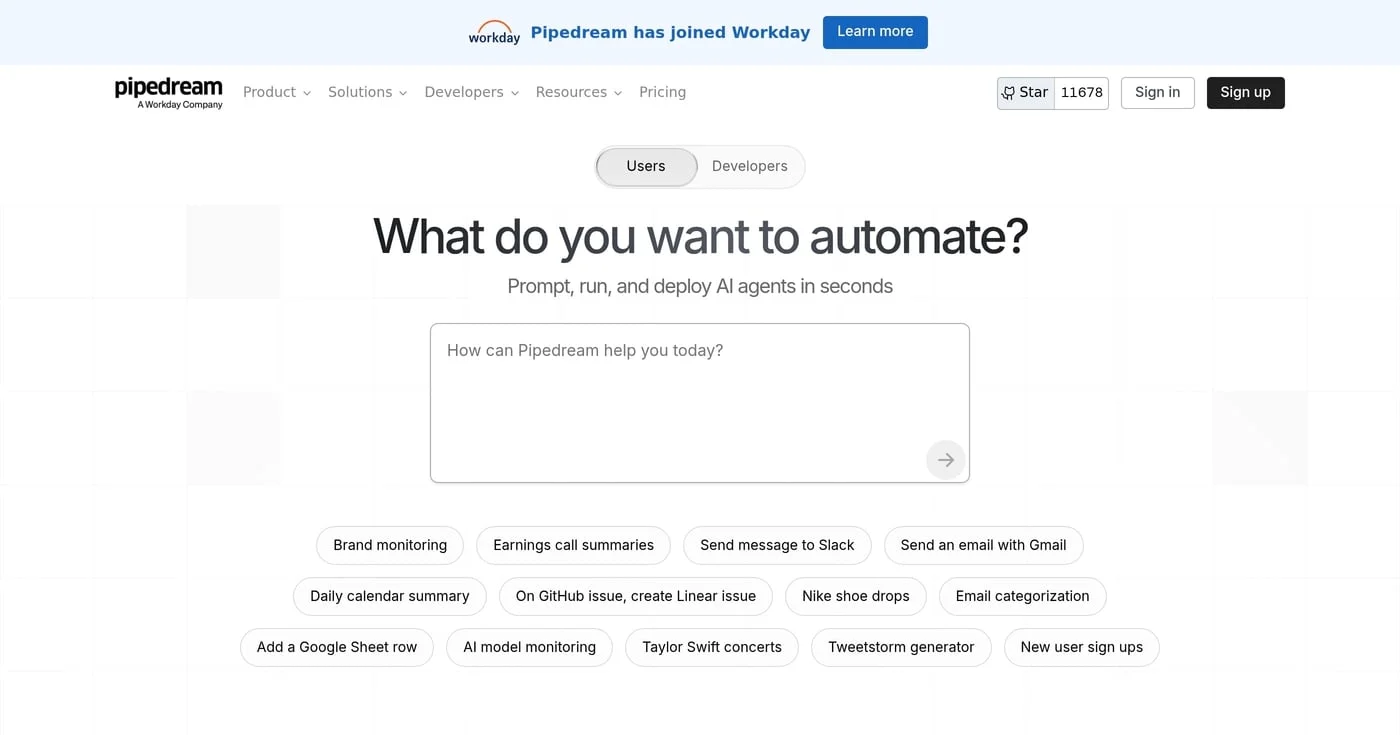
Node, Python, or Go is the workflow. Pipedream is hosted and source-available. Free is 100 credits/month, not 10k.
Basic is $29/mo yearly. Advanced is $49.
Disclose the parent. Pipedream said the Workday acquisition closed (December 2025).
Public Free/Basic/Advanced SKUs were still on the pricing page on 8 Sep 2026, after the Workday close. Pipedream still sells self-serve credits; the parent is now an enterprise integration bet.
Zapier hides code behind Formatter and Code by Zapier (runtime caps, extra tasks). Pipedream starts in code and adds 3,000+ connectors around it.
You lose Zapier’s non-dev editor. You gain GitHub Sync on Advanced and a credit meter that looks more like n8n than like tasks.
Relay.app is shutting down. Free accounts were already deleted on 15 Aug 2026. Paying customers lose access on 14 Sep 2026.
TechCrunch reported that founder Jacob Bank rejoined Google as VP of Product, Chrome. Export if you still have a paid seat. Do not migrate to Relay.
Automatisch is AGPL and stalled: no commits since 15 Jan 2026. Do not recommend it as a free Zapier alternative. Huginn (MIT, 49,919 stars) is the honest OSS texture pick: Ruby/Rails, self-host only, dated UI, useful for RSS and webhooks, not a Zapier UX clone.
Gumloop, Lindy, Vellum, and Sim rank themselves #1 in their own Zapier-alternative posts. They are agent builders. They are not this list.
Marketers type this three-way because the invoices disagree.
Zapier | Make | n8n Cloud | |
|---|---|---|---|
Shape | Linear Zap | Visual scenario | Canvas + code nodes |
6-step × 1,000 runs | 5,000 tasks → $89 Professional yearly | 6,000 credits → $12 Core | 1,000 executions → €20 Starter |
Empty poll | Free | Bills a credit | Trigger-dependent |
Self-host | No | No | Yes |
First Zap speed | Fastest | Medium | Slowest |
Reddit’s hybrid answer is the one that survives contact with a real stack: Zapier for simple/mainstream connectors, Make for visual branching and bundles, n8n for high-volume loops, payments, and data control. SaaS marketing automation still needs that glue. The question is which meter you want to feed.
u/NSBSC in r/zapier (February 2026) moved complex workflows and payments to n8n and left Zapier on simple flows: a 500-iteration loop took about 13 minutes on Zapier and seconds on n8n. That is an anecdote, not a benchmark. n8n wins when you will operate it.
Related searches mash three different jobs. Split them.
Free hosted (capped): Zapier Free (100 tasks, 2-step), Make Free (1,000 credits, 2 scenarios, 15-min), IFTTT Free (2 applets), Activepieces Free (100 credits/day), Pipedream Free (100 credits/mo). These are demos and side-project caps, not a growth team’s production plan.
Cheap hosted: Make Core $12, n8n Cloud Starter €20, Pabbly Standard $16, Activepieces Plus $16. This is where most marketers should land after Zapier Professional’s 750-task wall.
Self-host / fair-code / MIT: n8n Community (fair-code, unlimited executions, no client-facing n8n), Activepieces Community (MIT), Huginn (MIT). Self-host is not automatically cheaper.
Oberhauser: hardware sits idle most of the time; you win location and control. If the person who patches Docker bills like a consultant, one holiday outage wipes a year of Zapier savings.
n8n Cloud has no permanent free tier. Articles that call n8n “the free open-source Zapier” are wrong on both adjectives.
“Zapier AI” is the breakout adjacent query. Every major platform shipped agents. The invoice still uses task, credit, or execution.
Zapier since 15 June 2026: AI by Zapier is Standard 1× / Advanced 3× / Premium 5×, plus a 75-task pause. Formula: tasks = (1 × model rate) + (tool calls × model rate). Five ordinary actions plus one Premium AI step with two tool calls is 20 tasks per run, not 6.
The 15 June announcement says new steps default to Advanced (3×). The model-tier article says paid new steps default to Premium (5×).
Check the live editor. Do not pick a winner from the help center.
Agents are a separate meter (activities, not tasks): Free 400/mo, Pro 1,500/mo. Zapier’s own feed is blunt about not agent-washing a filter:
"You don't need an AI agent to flag emails from the senders and subjects you care about btw (save your tokens and just automate that)."
Zapier on LinkedIn (September 2026)
Wade Foster’s line is the useful one:
The real story in AI right now isn’t just agents. It’s agents + deterministic workflows. That combo is what’s actually driving results today. Free-roaming agents sound cool. But the highest ROI is coming from structured workflows that use models for judgment, not autonomy https://t.co/G5iXUNsP8j
Make ships Maia plus AI Agents; native AI modules can consume multiple credits. n8n counts an agent run as one execution and lets the LLM vendor bill tokens. Workato talks Otto and Enterprise MCP. None of that crowns a “best AI automation platform.” Compare meters.
For HTTP-heavy growth work, pair the automation layer with the APIs for marketers you already use. The agent does not replace the connector.


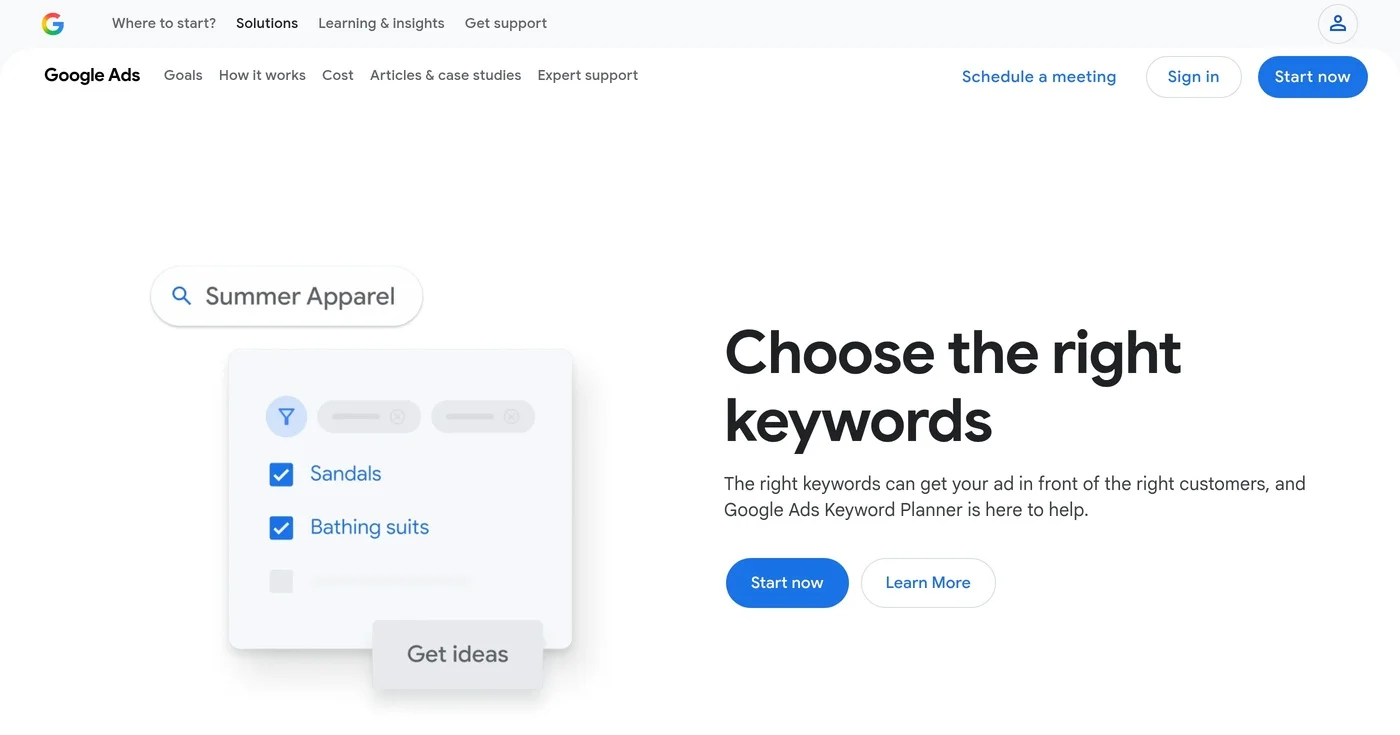
Open Google Keyword Planner without treating setup as running ads, then read volume, competition, and the two bid columns for what those numbers are not.
