Account-based marketing (ABM) platforms have become essential for B2B companies looking to target high-value accounts with precision and drive measurable revenue growth. These platforms combine AI-powered intent data, buying group identification, and multi-channel orchestration to help sales and marketing teams engage the right accounts at the right time.
The ABM software market continues to evolve rapidly, with 67% of B2B marketers reporting that ABM delivers higher ROI than other marketing initiatives. As buying committees grow larger and sales cycles become more complex, the need for sophisticated ABM platforms that can identify intent signals and coordinate engagement across multiple stakeholders has never been greater.
Key Takeaways
- AI-powered intent detection and buying group identification are now standard features in leading ABM platforms, enabling teams to prioritize accounts showing active purchase signals
- Enterprise ABM platforms typically require custom pricing with annual contracts ranging from $10,000 to $100,000+, though some offer tiered plans starting around $2,750/month
- Multi-channel orchestration across advertising, email, social, and content syndication is critical for reaching entire buying committees and accelerating pipeline velocity
- The best ABM platforms unify first-party, second-party, and third-party data to create comprehensive account views and enable personalized engagement at scale
Evaluation Criteria
When evaluating account-based marketing platforms, focus on the key factors that directly impact your ability to identify, engage, and convert high-value accounts.
The most critical considerations include the quality and breadth of intent data, the platform's ability to identify and track entire buying groups, multi-channel orchestration capabilities, seamless integration with your existing tech stack, and transparent pricing that aligns with your budget and scale requirements.
- Intent Data and Predictive Analytics: The platform should provide AI-powered intent signals and predictive scoring to identify accounts actively researching solutions and prioritize those most likely to convert.
- Buying Group Identification: Look for platforms that can map entire buying committees and track engagement across multiple stakeholders, not just individual contacts, to ensure comprehensive account coverage.
- Multi-Channel Orchestration: The best ABM platforms enable coordinated campaigns across advertising, email, social media, content syndication, and web personalization to reach accounts wherever they engage.
- Data Integration and Unification: Evaluate how well the platform integrates with your existing CRM, marketing automation, and data sources to create a unified view of account activity and engagement.
- Pricing and Scalability: Consider whether the platform's pricing model aligns with your budget and growth plans, including the number of accounts you need to target and the channels you want to activate.
Comparison Table
1. Demandbase
Best for AI-powered buying group identification and revenue orchestration
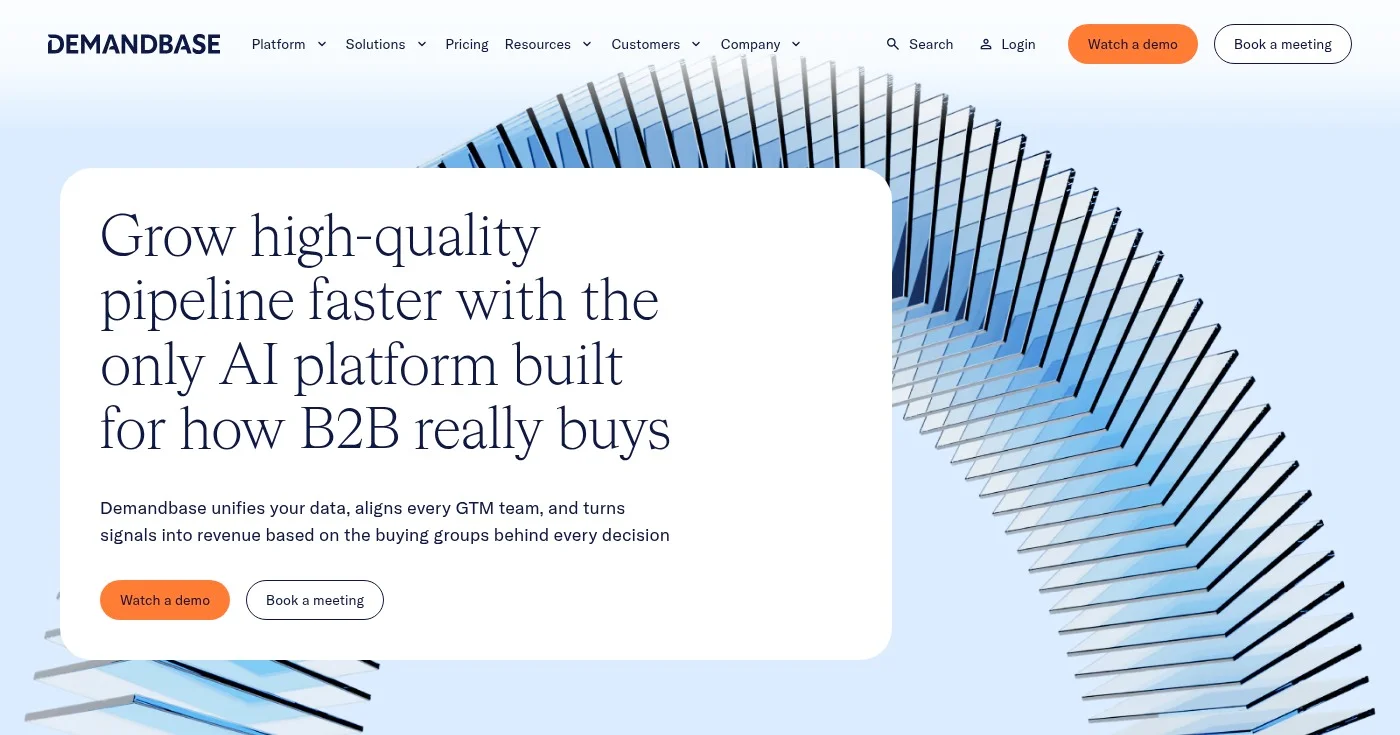
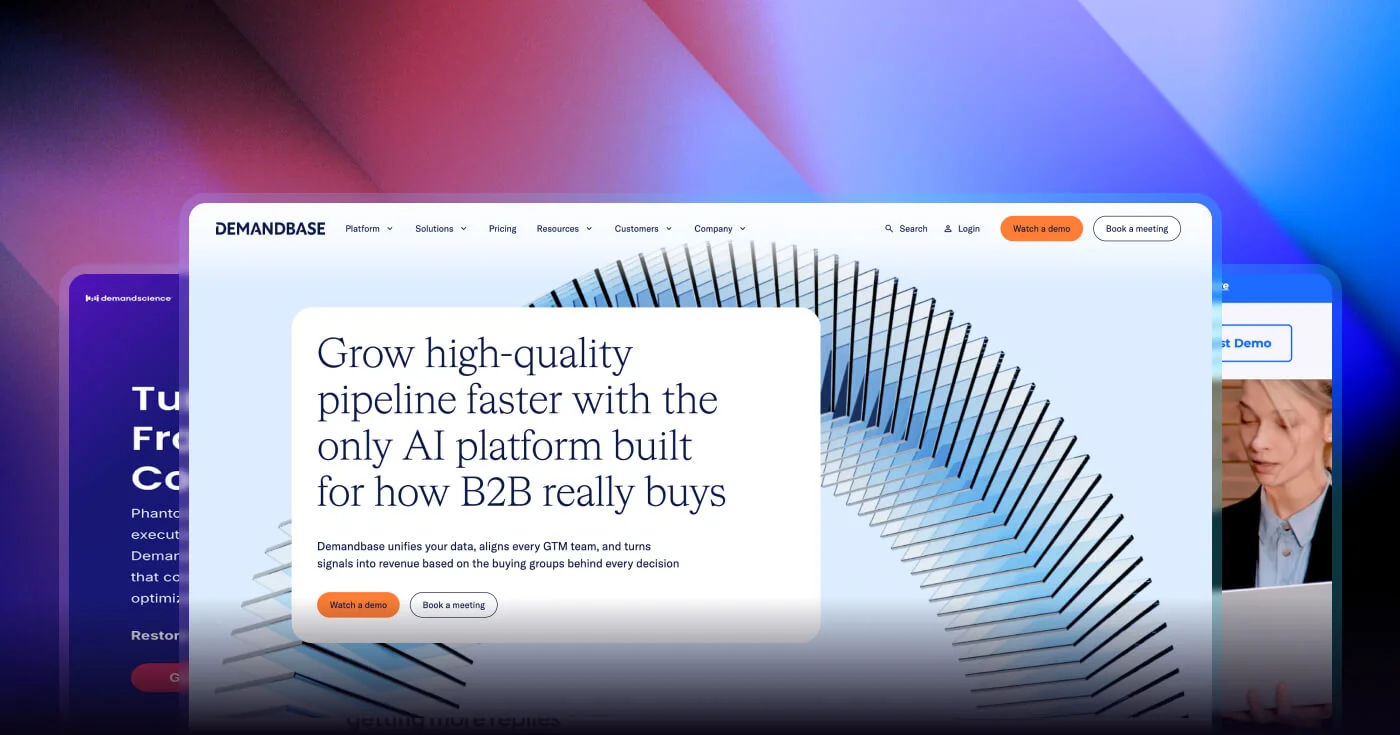
Demandbase is an AI-powered ABM platform that unifies first and third-party data to identify buying groups and automate go-to-market actions. It helps B2B sales and marketing teams turn intent signals into revenue by orchestrating the entire revenue engine across sales, marketing, and advertising channels.
The platform's Pipeline AI automatically identifies the next best actions to take with each account, while its transparent AI insights provide explainability for every recommendation. With proven results including a 3X increase in conversions for Adobe and a 52% revenue increase for SAP Concur, Demandbase delivers measurable impact for enterprise organizations.
Key Features
- AI-Powered Intent Detection and Buying Group Identification: Automatically identifies accounts showing purchase intent and maps the complete buying committee to ensure you engage all decision-makers.
- Pipeline AI with Automated Next Best Actions: Uses artificial intelligence to recommend and automate the most effective actions to move accounts through the pipeline faster.
- Unified Account View: Blends first-party, second-party, and third-party data into a single comprehensive view of each account's engagement and readiness.
- Transparent AI Insights: Provides clear explanations for every AI recommendation, helping teams understand why specific actions are suggested.
- Seamless CRM and Marketing Automation Integration: Connects with your existing tech stack including CRM, marketing automation platforms, and advertising channels for unified execution.
Pros
- 3X increase in conversions demonstrated in Adobe case study
- 52% revenue increase achieved by SAP Concur
- 50% growth in average deal size for Thermo Fisher Scientific
- 83% increase in pipeline velocity for Ingram Micro
- Transparent AI with explainability for all recommendations
Cons
- No free plan available for testing the platform
- Enterprise pricing may be prohibitive for smaller organizations
- Requires integration setup with existing tech stack
- Dependent on quality of first-party data inputs for optimal results
Pricing
Demandbase uses custom enterprise pricing based on your organization's needs and scale. Contact their sales team for a personalized quote.
- Enterprise: Contact for pricing
View pricing details
2. N.Rich
Best for Mid-market companies needing account-based advertising
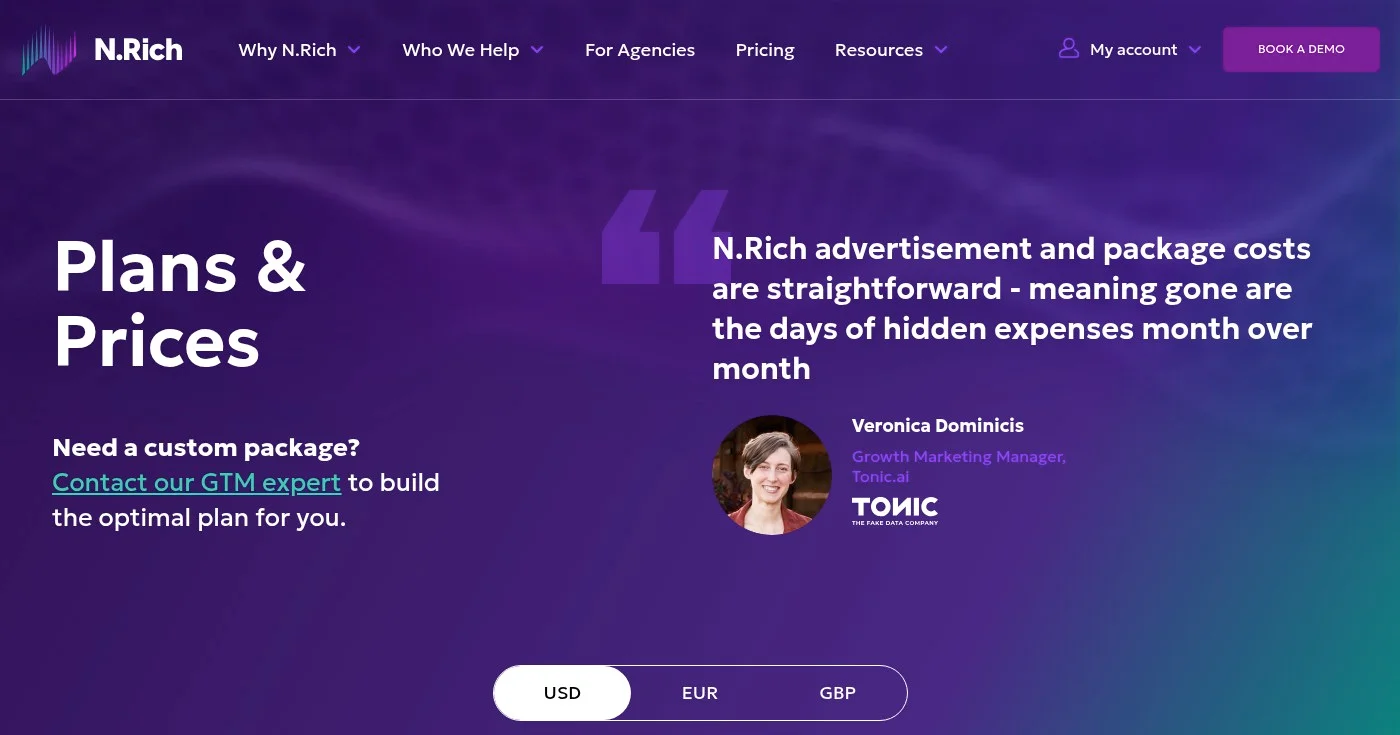
N.Rich is an end-to-end ABM tool designed specifically for mid-market and enterprise companies. The platform combines account list building, dynamic ICP scoring, intent data, and account-based advertising into a unified solution.
With transparent pricing starting at $860/month (billed yearly), N.Rich offers a more accessible entry point for companies looking to implement sophisticated ABM strategies without enterprise-level budgets. The platform includes a comprehensive onboarding process to help teams get up and running quickly.
Key Features
- Account List Builder: Create and manage targeted account lists based on your ideal customer profile and market segmentation criteria.
- Dynamic ICP Scoring: Automatically scores accounts against your ideal customer profile and updates scores as new data becomes available.
- Intent Data Integration: Tracks and surfaces intent signals to identify accounts actively researching solutions in your category.
- Account-Based Advertising: Run targeted advertising campaigns to reach specific accounts across multiple digital channels.
Pros
- Transparent pricing with clear tier structure
- More affordable than many enterprise ABM platforms
- End-to-end solution covering multiple ABM capabilities
- Includes dedicated onboarding support
Cons
- Annual billing required for advertised pricing
- One-time onboarding fee adds to initial cost
- Limited public information about specific features and integrations
- No free trial or plan available for testing
Pricing
N.Rich LITE plan starts at $860/month (billed yearly) with a one-time $1,050 onboarding fee, making it one of the more affordable enterprise ABM platforms. For more details, visit their pricing page.
- LITE: $860/mo (billed yearly) + $1,050 onboarding fee
- GROWTH: $1,983/mo (billed yearly)
- ENTERPRISE: Contact for pricing
View pricing details
3. 6sense
Best for Predictive analytics and intent tracking across the funnel
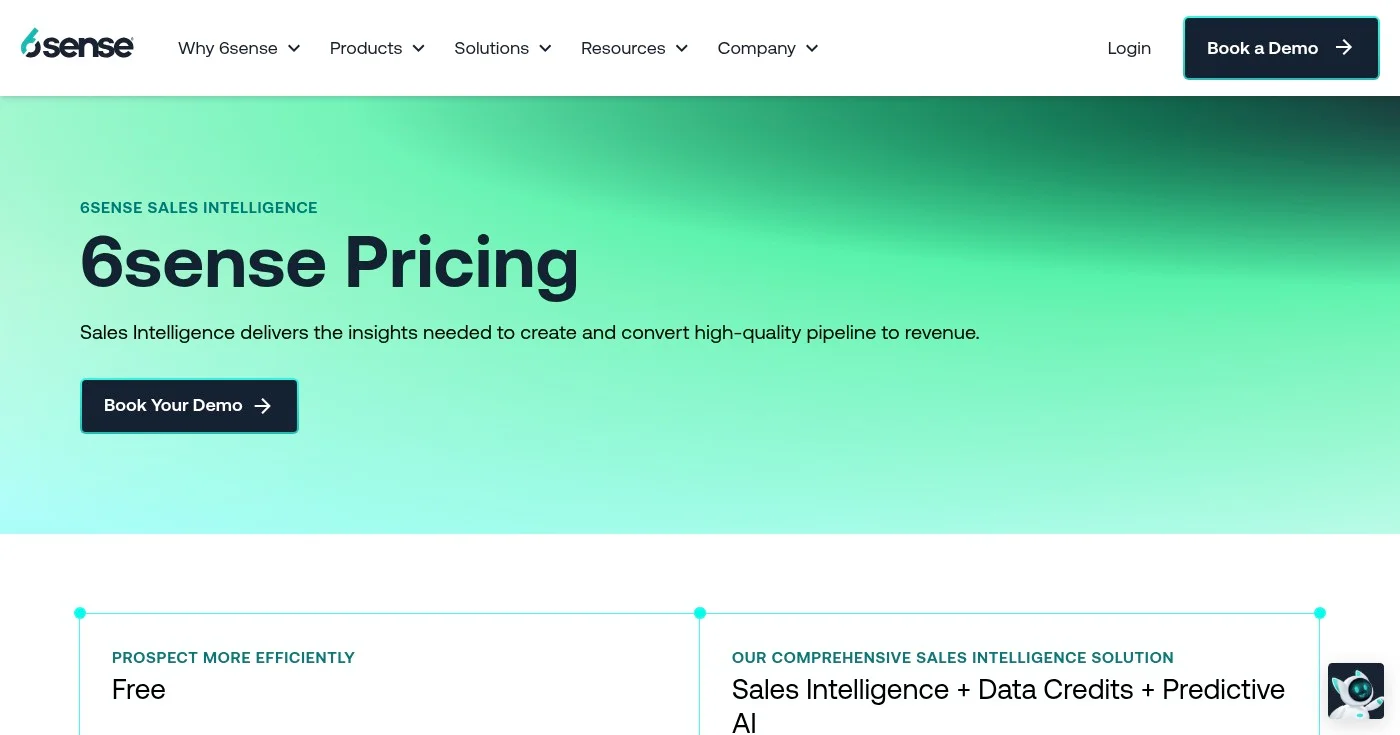
6sense is an all-in-one account-based marketing solution that tracks intent data and provides predictive analytics to engage purchase-ready accounts across the marketing funnel. The platform uses AI to identify accounts showing buying signals and predict which are most likely to convert.
What sets 6sense apart is its comprehensive approach to intent data, combining website behavior, content consumption, and third-party signals to create a complete picture of account readiness. The platform offers a free tier for teams to get started, making it accessible for organizations exploring ABM strategies.
Key Features
- Intent Data Tracking: Monitors account behavior across multiple channels to identify research activity and buying signals in real-time.
- Predictive Analytics: Uses AI to predict which accounts are most likely to purchase and when they'll be ready to engage with sales.
- Account Engagement Scoring: Automatically scores accounts based on their level of engagement and position in the buying journey.
- Multi-Channel Orchestration: Coordinate campaigns across email, advertising, sales outreach, and other channels from a single platform.
- Sales Intelligence Integration: Provides sales teams with real-time insights about account activity and recommended next actions.
Pros
- Free tier available for teams to test the platform
- Comprehensive intent data from multiple sources
- Strong predictive analytics capabilities
- Integrates sales and marketing workflows effectively
- Modular pricing allows you to select specific capabilities
Cons
- Paid plan pricing not transparent; requires sales contact
- Complex platform may require significant training
- Free tier likely has limited functionality
- Enterprise features require higher-tier plans
Pricing
6sense offers a free tier to get started, with paid plans requiring custom pricing based on your needs. Contact their sales team for detailed pricing information.
- Free Tier: Free
- Sales Intelligence + Data Credits + Predictive AI: Contact for pricing
- Sales Intelligence + Data Credits: Contact for pricing
- Sales Intelligence + Predictive AI: Contact for pricing
View pricing details
4. Terminus
Best for Multi-channel ABM campaigns with expert support
Terminus is an ABM platform that integrates first and third-party data to create high-priority account lists and run multi-channel campaigns with expert support. The platform is designed to help teams execute sophisticated ABM strategies without requiring extensive in-house expertise.
Terminus differentiates itself through its combination of technology and human expertise, offering strategic guidance and campaign optimization support. This makes it particularly valuable for teams new to ABM or those lacking dedicated ABM specialists.
Key Features
- First and Third-Party Data Integration: Combines your CRM data with external intent signals and firmographic data to create comprehensive account profiles.
- High-Priority Account List Creation: Automatically identifies and prioritizes accounts most likely to convert based on fit and intent signals.
- Multi-Channel Campaign Execution: Run coordinated campaigns across display advertising, email, social media, and other channels from one platform.
- Expert Strategic Support: Access to ABM specialists who provide strategic guidance and campaign optimization recommendations.
Pros
- Free version available for getting started
- Expert support included with paid plans
- Multi-channel campaign management in one platform
- Good for teams new to ABM strategies
- Flexible pricing tiers for different organization sizes
Cons
- Pricing estimates vary widely; not transparent
- Free version likely has significant limitations
- May require annual commitment for enterprise features
- Limited public information about specific capabilities
Pricing
Terminus offers a free version with limited features, with paid plans estimated to start around $10/month for small teams. Enterprise plans range from approximately $1,500 to $8,333+/month (billed yearly). Contact Terminus for accurate pricing information.
- Free Version: Free
- Small Business/Team Plan: Starting at approximately $10/mo (estimated)
- Enterprise Plan: $1,500-$8,333+/mo (billed yearly, estimated)
5. ZoomInfo
Best for Targeted audience segmentation with professional profiles
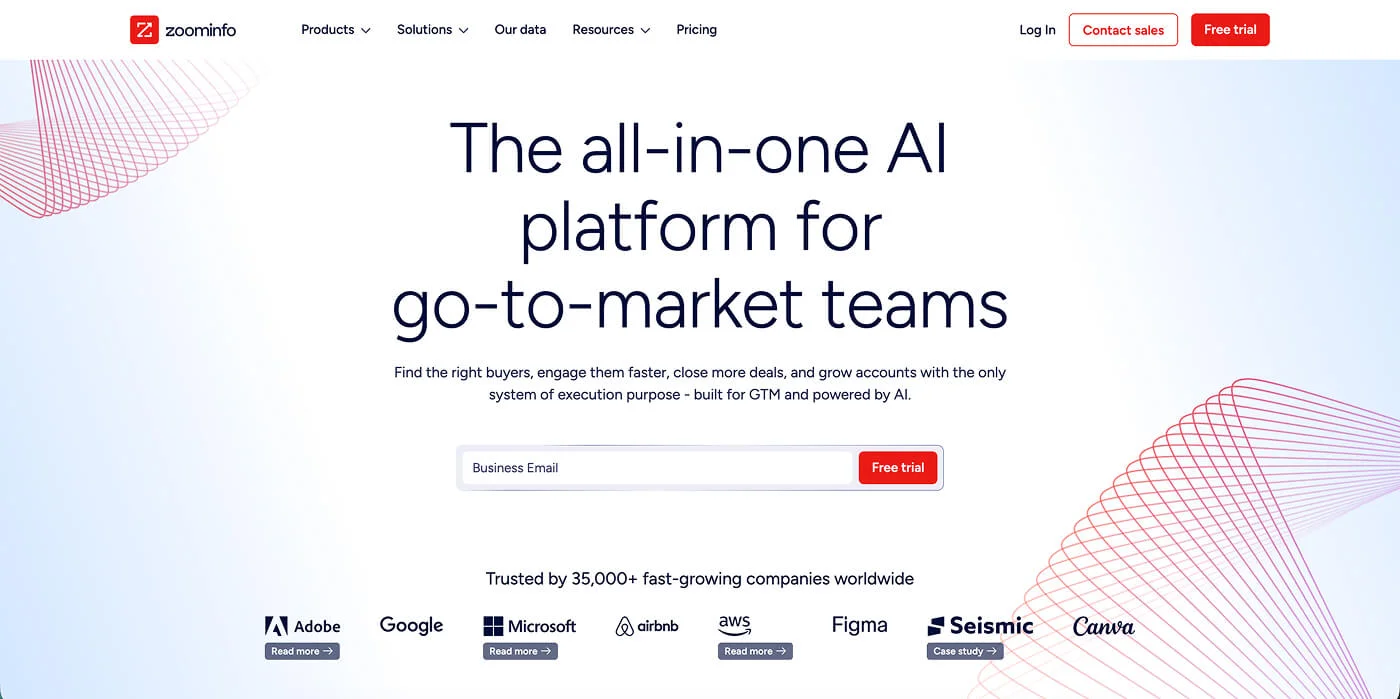
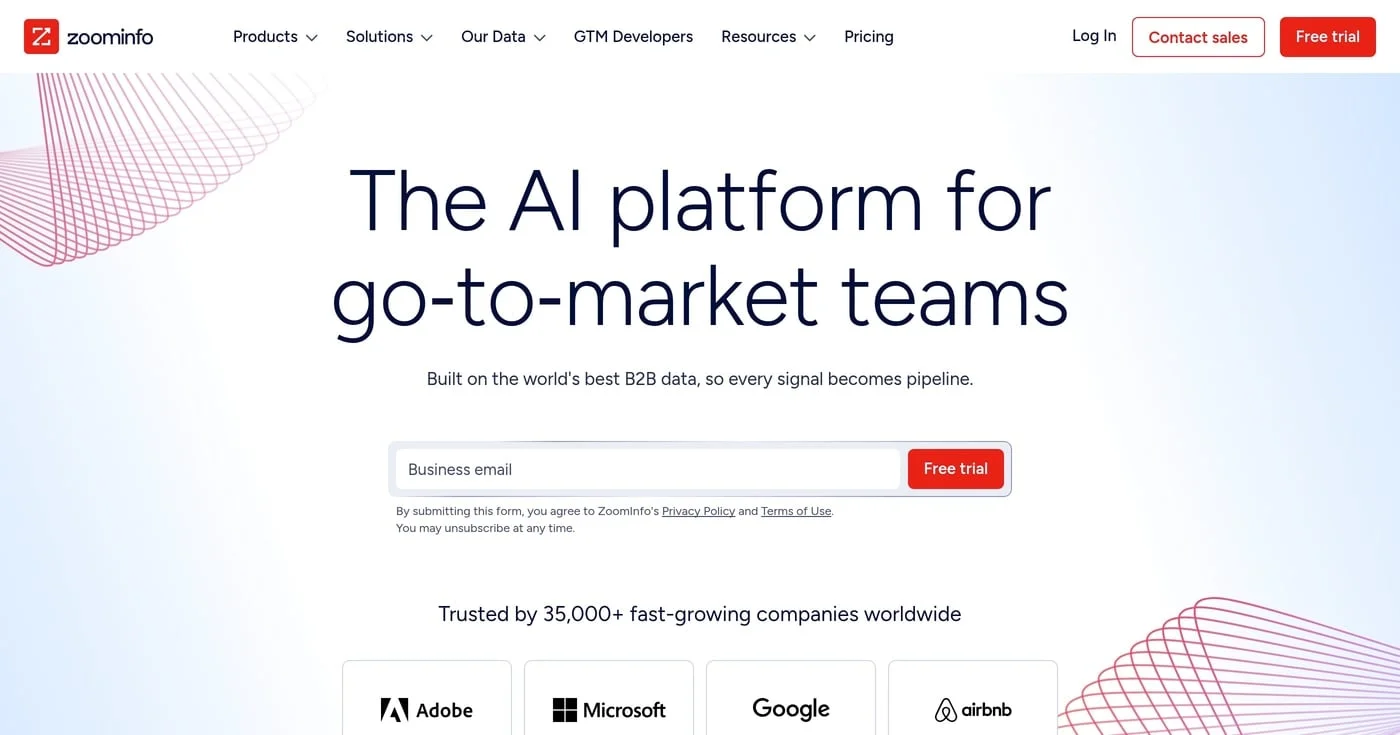
ZoomInfo is an ABM tool that creates targeted audience segments based on professional profiles and enables personalized engagement across email, chat, and social media. The platform is built on one of the largest B2B contact databases, providing detailed information about decision-makers and their organizations.
ZoomInfo's strength lies in its comprehensive data coverage and accuracy, with real-time updates to contact information and job changes. This makes it particularly valuable for sales teams that need reliable contact data alongside ABM capabilities.
Key Features
- Professional Profile Database: Access to millions of verified B2B contacts with detailed professional information, job titles, and organizational data.
- Advanced Audience Segmentation: Create highly targeted segments based on firmographics, technographics, intent signals, and professional attributes.
- Multi-Channel Personalized Engagement: Reach prospects through email, chat, social media, and phone with personalized messaging based on their profile.
- Intent Signal Integration: Identify accounts actively researching solutions through website visits, content consumption, and search behavior.
- CRM and Sales Tool Integration: Seamlessly sync data with Salesforce, HubSpot, and other sales tools to keep contact information current.
Pros
- Extensive B2B contact database with high accuracy
- Real-time updates to contact information and job changes
- Strong integration with major CRM platforms
- Comprehensive firmographic and technographic data
- Multiple pricing tiers to match different needs
Cons
- No free plan or trial available
- Requires annual commitment for advertised pricing
- Can be expensive for smaller organizations
- Data quality varies by industry and geography
Pricing
ZoomInfo Professional plan starts at $1,250-$1,500/month (billed yearly), with Advanced and Elite tiers offering additional features and data access. For detailed pricing, visit their pricing page.
- Professional: $1,250-$1,500/mo (billed yearly)
- Advanced: $1,833-$2,333/mo (billed yearly)
- Elite: $2,917-$3,750+/mo (billed yearly)
View pricing details
6. UserGems
Best for Intent-based targeting using job changes and signals
UserGems is an account-based marketing tool that targets customers based on intent signals like job changes and website visits, with AI-based account prioritization. The platform specializes in tracking when your champions and past customers move to new companies, creating warm outreach opportunities.
This unique approach to ABM focuses on relationship-based selling, helping teams leverage existing relationships and proven buyer patterns. UserGems automatically alerts sales teams when key contacts change roles, enabling timely outreach when prospects are most receptive.
Key Features
- Job Change Tracking: Automatically monitors when your champions, past customers, and engaged prospects move to new companies.
- Website Visit Monitoring: Tracks which accounts are visiting your website and what content they're engaging with to identify active interest.
- AI-Based Account Prioritization: Uses machine learning to score and prioritize accounts based on fit, intent signals, and likelihood to convert.
- Intent Signal Detection: Identifies multiple buying signals including job changes, website activity, and engagement patterns to surface hot accounts.
Pros
- Unique focus on job change tracking creates warm outreach opportunities
- Transparent pricing with clear tier structure
- AI-powered prioritization helps focus on best opportunities
- Particularly effective for relationship-based selling
- Automated alerts ensure timely follow-up
Cons
- Higher starting price point than some competitors
- No free plan or trial available
- Limited to specific intent signals (job changes, website visits)
- Requires existing customer relationships to maximize value
Pricing
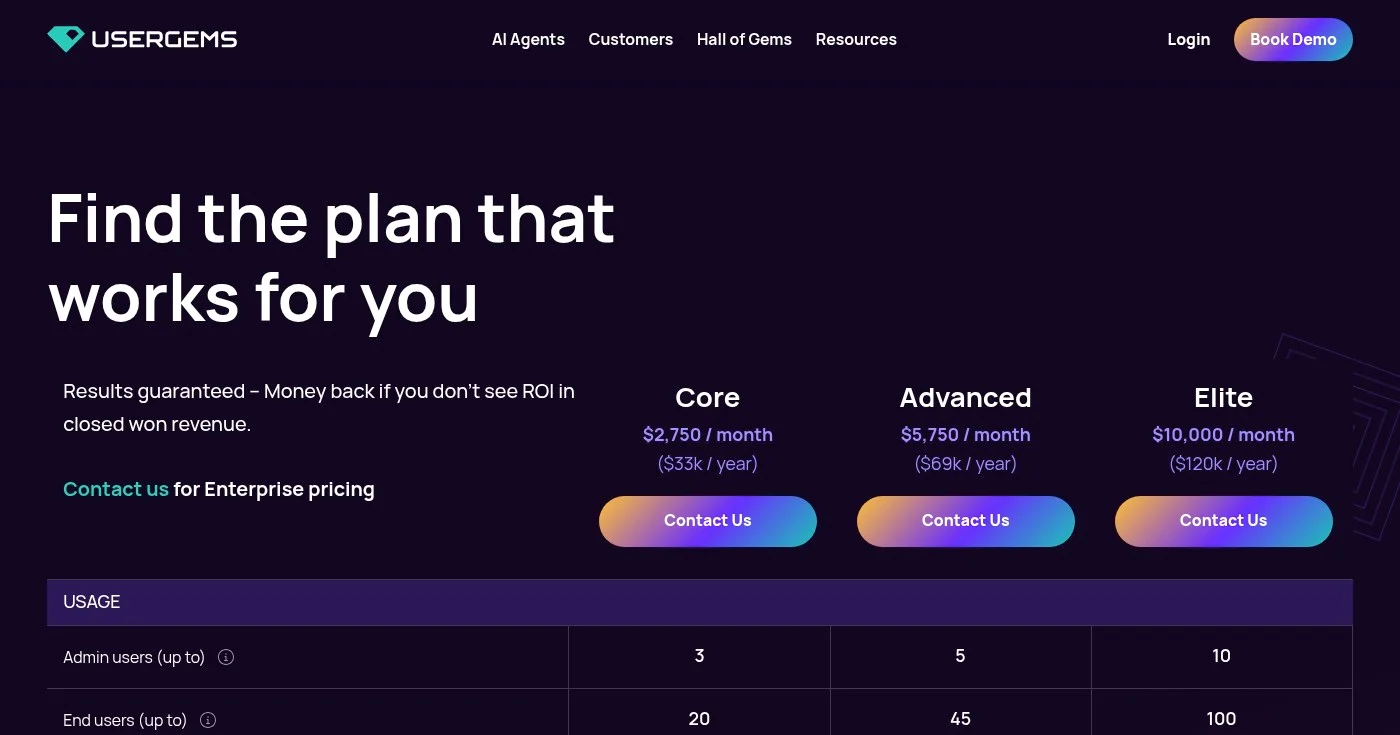
UserGems Core plan starts at $2,750/month, with Advanced and Elite tiers offering additional features and higher usage limits. For more details, visit their pricing page.
- Core: $2,750/mo
- Advanced: $5,750/mo
- Elite: $10,000/mo
View pricing details
7. DemandScience (Terminus)
Best for Verified buyer intelligence with AI orchestration
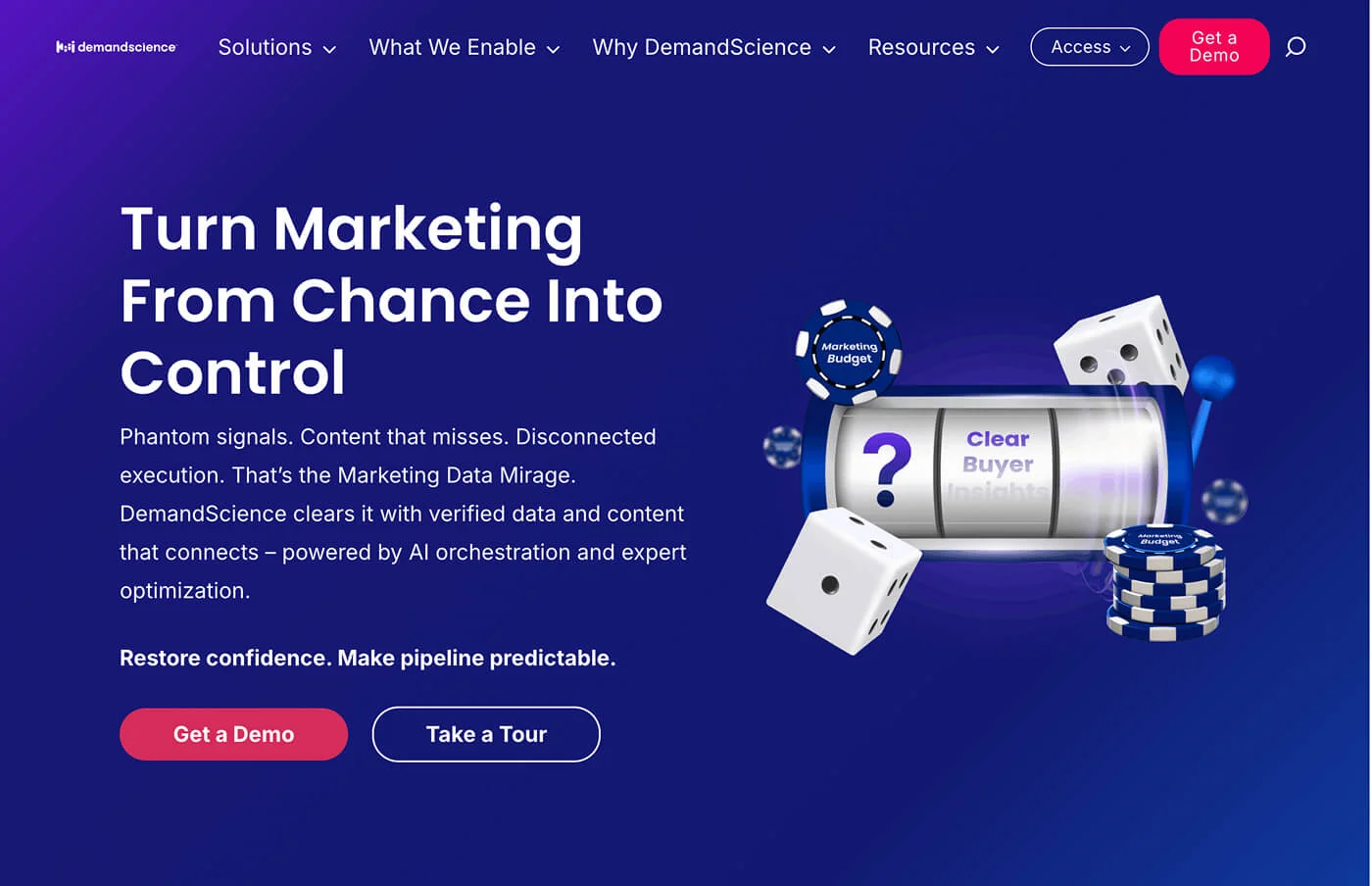
DemandScience (formerly Terminus) is a B2B marketing platform that combines verified buyer intelligence, AI orchestration, and expert services to deliver predictable pipeline and measurable outcomes. It unifies data, content, and campaign execution across multiple channels to eliminate disconnected marketing efforts.
The platform stands out for its emphasis on verified buyer data rather than just intent signals, ensuring higher lead quality. With trusted partnerships with over 900 leading brands, DemandScience provides both technology and strategic expertise to help teams execute sophisticated ABM programs.
Key Features
- Verified Buyer Intelligence and Signals: Access to verified buyer data that goes beyond intent signals to identify accounts with genuine purchase interest.
- AI-Powered Campaign Orchestration: Automatically optimizes campaign performance across channels using AI combined with human expert oversight.
- Multi-Channel Targeting: Execute campaigns across email, advertising, content syndication, and other channels from a unified platform.
- Content Creation and Personalization (Studio): Built-in content creation tools and personalization capabilities to tailor messaging for specific accounts and buying stages.
- Marketing Intelligence Hub (Center): Centralized dashboard for tracking campaign performance, account engagement, and pipeline impact across all channels.
Pros
- Unified platform reduces MarTech sprawl and complexity
- Verified buyer data increases lead quality over intent-only approaches
- AI plus human expert optimization compounds performance
- Multi-channel campaign management in one system
- Trusted by over 900 leading brands
Cons
- No transparent pricing information available
- Requires contacting sales for demo and pricing
- Enterprise-focused may not suit small businesses
- Limited information on specific integrations available
Pricing
DemandScience uses custom enterprise pricing based on your organization's needs and scale. Contact their sales team for a personalized quote.
- Enterprise: Contact for pricing
8. RollWorks (AdRoll ABM)
Best for Multi-channel advertising with buyer signal tracking
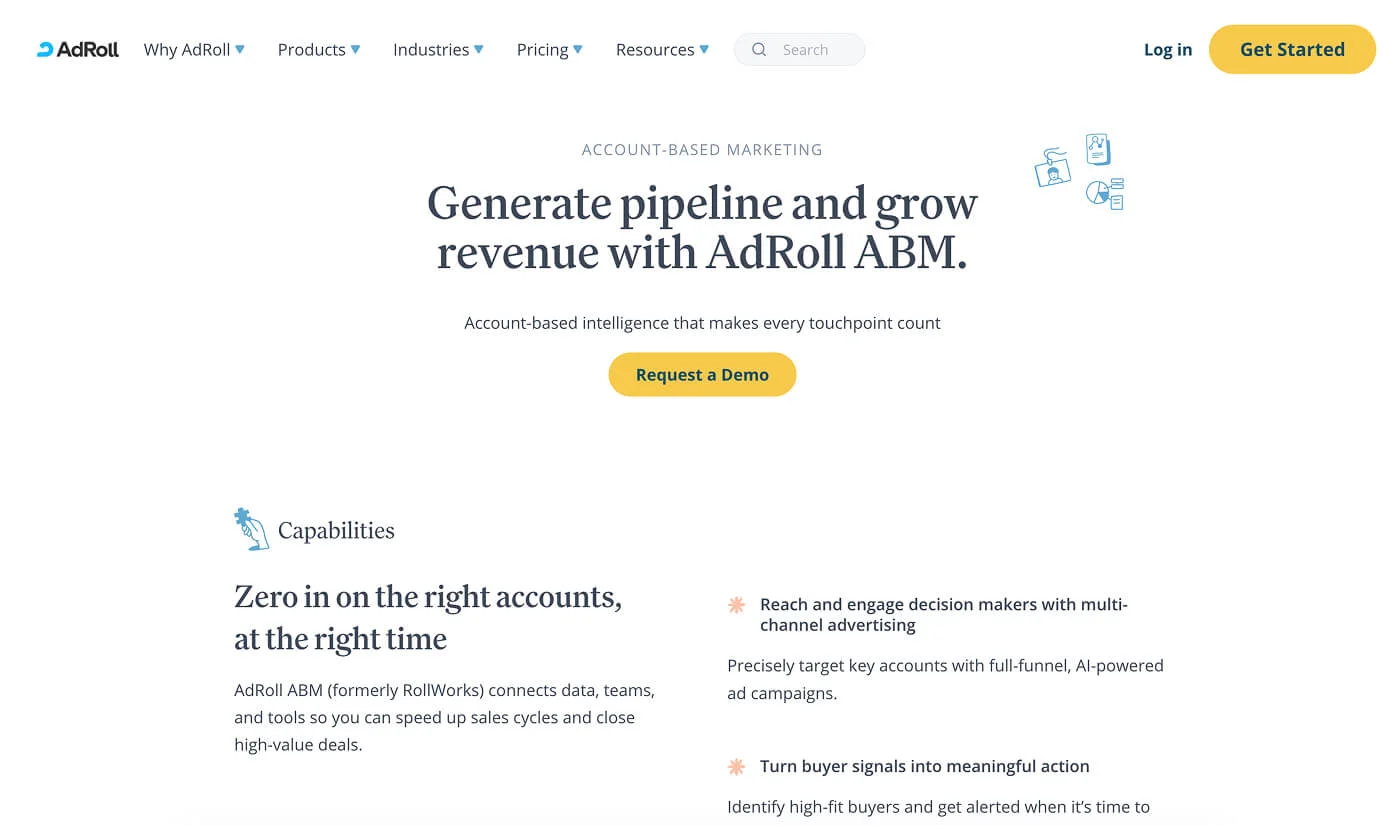
RollWorks (formerly AdRoll ABM) is an account-based marketing and advertising solution that connects data, teams, and tools to identify and engage high-value accounts. It combines B2B audience segmentation with multi-channel advertising to speed up sales cycles and drive pipeline growth.
The platform provides access to 2.6 billion digital identities and 92 million contacts, enabling precise targeting across web, apps, social media, and streaming channels. RollWorks' real-time Command Center gives teams visibility into buyer signals as they happen, allowing for immediate response to high-intent activity.
Key Features
- Buyer Signal Identification and Early Detection: Identifies accounts showing purchase intent early in their journey through website visits, content engagement, and research behavior.
- Proprietary AI-Powered ICP Definition: Uses artificial intelligence to analyze your best customers and automatically define your ideal customer profile for targeting.
- Access to 2.6 Billion Digital Identities: Reach decision-makers across a massive network of digital identities and 92 million verified B2B contacts.
- Real-Time Command Center: Monitor buyer signals and account engagement in real-time with a centralized dashboard that surfaces high-priority actions.
- Multi-Channel Advertising Campaigns: Run coordinated advertising across web, mobile apps, social media, and streaming platforms to reach accounts wherever they engage.
Pros
- 5X more ROI than other ABM platforms according to customer data
- 50% new opportunity rate with existing customers
- 16% more opportunities on average compared to non-ABM approaches
- Combines audience segmentation with demand-side platform capabilities
- Real-time buyer signal tracking enables immediate response
Cons
- Pricing not transparent; requires demo and sales contact
- No free plan available for testing
- Requires integration setup with existing tools
- Complex platform may have learning curve for new users
Pricing
RollWorks uses custom pricing based on your advertising spend and platform needs. Contact their sales team for a personalized quote.
- Enterprise: Contact for pricing
View pricing details
9. Madison Logic
Best for Enterprise ABM with proprietary intent signals
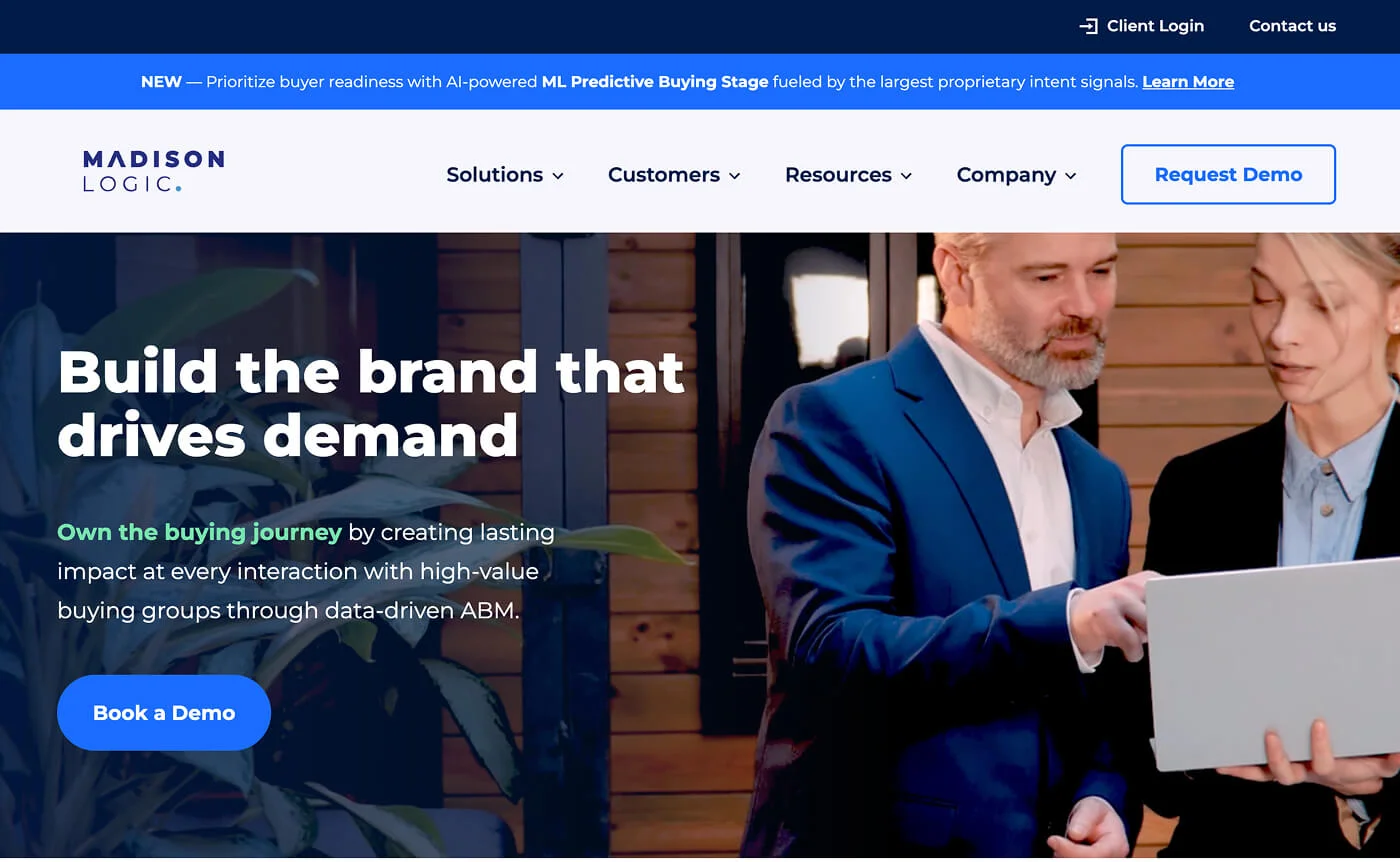
Madison Logic is an account-based marketing platform that uses AI and proprietary intent signals to identify and engage high-value buying groups across multiple channels. It enables brands to orchestrate targeted campaigns through content syndication, connected TV, display, audio, and social advertising to drive demand and accelerate pipeline velocity.
With the largest proprietary intent signals database in the industry, Madison Logic provides unique insights into account research behavior. The platform is trusted by over 500 leading brands and specializes in reaching entire buying committees with precision across both digital and traditional media channels.
Key Features
- AI-Powered ML Predictive Buying Stage: Uses machine learning to predict where accounts are in their buying journey and recommend optimal engagement strategies.
- ABM Content Syndication: Distribute your content to targeted accounts through a network of premium B2B publishers to generate qualified leads.
- ABM Connected TV Advertising: Reach decision-makers at home with targeted advertising on streaming TV platforms and connected TV devices.
- Multi-Channel Campaign Orchestration: Coordinate campaigns across display, audio, social, content syndication, and connected TV from a single platform.
- Buying Group Targeting: Identify and engage entire buying committees rather than individual contacts to accelerate deal velocity.
Pros
- Largest proprietary intent signals database in the industry
- Multi-channel campaign orchestration including connected TV
- AI-powered buyer readiness prioritization
- Reaches entire buying committees with precision
- Trusted by over 500 leading brands
Cons
- No pricing transparency; requires contacting sales
- Enterprise-focused; likely not suitable for small businesses
- Requires significant marketing sophistication to leverage effectively
- Limited information on specific integration capabilities
Pricing
Madison Logic uses custom enterprise pricing based on your campaign scope and channel requirements. Contact their sales team for a personalized quote.
- Enterprise: Contact for pricing
View pricing details
How to Choose
Selecting the ideal account-based marketing platform depends on your specific requirements, budget, and organizational maturity with ABM strategies. Consider these key factors:
- Budget and Pricing Model: ABM platforms range from $860/month to $100,000+ annually for enterprise solutions. Determine whether you need transparent pricing with self-service options or can commit to custom enterprise pricing with annual contracts. Platforms like N.Rich and UserGems offer clear pricing tiers, while Demandbase and Madison Logic require custom quotes.
- Data Quality and Intent Signal Sources: Evaluate whether the platform provides verified buyer intelligence (like DemandScience) or relies primarily on third-party intent data. Consider the size and accuracy of the contact database, especially if you need professional profiles like those offered by ZoomInfo's extensive B2B database.
- Channel Coverage and Orchestration Needs: Determine which channels are critical for reaching your target accounts. If you need connected TV and audio advertising, Madison Logic excels. For multi-channel digital advertising, consider RollWorks. If relationship-based selling through job change tracking is important, UserGems specializes in this approach.
- Integration with Existing Tech Stack: Assess how well the platform integrates with your CRM, marketing automation, and other tools. Most enterprise platforms offer robust integrations, but verify compatibility with your specific systems. Consider whether you need a unified platform that reduces MarTech sprawl or a specialized tool that complements existing solutions.
- Team Expertise and Support Requirements: If your team is new to ABM, platforms like Terminus that offer expert strategic support may be valuable. More experienced teams might prefer platforms with advanced AI capabilities like Demandbase or 6sense that provide sophisticated automation and predictive analytics.
Common Misconceptions: A common misconception is that all ABM platforms provide the same quality of intent data. In reality, data sources vary significantly—some platforms use proprietary intent signals from owned networks, while others aggregate third-party data.
Verified buyer intelligence typically delivers higher lead quality than intent signals alone, though it may come at a premium price point.
Industry Trends
The account-based marketing landscape continues to evolve rapidly as AI capabilities mature and buying committees grow more complex. Here are the key trends shaping ABM platforms in 2026:
- AI-Powered Buying Group Identification: Modern ABM platforms are moving beyond individual contact targeting to identify and map entire buying committees. AI algorithms analyze organizational structures, engagement patterns, and decision-making hierarchies to ensure marketing reaches all stakeholders involved in purchase decisions, not just a single champion.
- Predictive Buying Stage Intelligence: Platforms are increasingly using machine learning to predict not just which accounts show intent, but exactly where they are in their buying journey. This enables more precise timing of outreach and appropriate messaging for each stage, improving conversion rates and reducing wasted effort on accounts not yet ready to engage.
- Multi-Channel Orchestration Including Connected TV: ABM is expanding beyond traditional digital channels to include connected TV, streaming audio, and other emerging media. Platforms like Madison Logic now enable B2B marketers to reach decision-makers at home through targeted TV advertising, creating more touchpoints throughout the buyer journey.
- Verified Buyer Intelligence Over Intent Signals Alone: There's a growing emphasis on verified buyer data that confirms genuine purchase interest rather than relying solely on intent signals. Platforms are investing in proprietary data collection and verification processes to improve lead quality and reduce false positives from generic research activity.
Conclusion
Choosing the right account-based marketing platform depends on your organization's size, budget, and ABM maturity. Enterprise teams with complex buying committees should consider comprehensive platforms like Demandbase or 6sense that offer AI-powered buying group identification and predictive analytics.
Mid-market companies may find better value in N.Rich or UserGems, which provide focused ABM capabilities at more accessible price points. Regardless of which platform you choose, prioritize solutions that integrate seamlessly with your existing tech stack and provide the intent data quality needed to identify and engage your highest-value accounts effectively.