


Best AI CRM Platforms for Startup Founders (2026 Guide)
Discover the 12 best AI CRM platforms for startup founders in 2026. Compare features, monthly pricing, and automation tools to scale your customer relationships
Updated 17 min read

Discover the 12 best AI CRM platforms for startup founders in 2026. Compare features, monthly pricing, and automation tools to scale your customer relationships
Today’s AI-powered CRM platforms automatically score your leads, draft follow-up emails, predict deal outcomes, and integrate seamlessly with your existing tools.
For startup founders juggling multiple responsibilities, this automation isn’t just convenient. It’s essential for scaling efficiently.
The numbers tell a compelling story: 91% of companies with 10 or more employees use CRM software, and businesses using AI-powered CRMs see a 15% increase in repeat sales and customer retention.
With the global AI in CRM market projected to reach $48.4 billion by 2033, the question isn’t whether to adopt AI-powered CRM. It’s which platform will best serve your startup’s unique needs.
The startup landscape has never been more competitive. You’re not just competing against other startups; you’re competing against established companies with dedicated sales teams and unlimited resources. That’s where AI-powered CRM becomes your secret weapon.
Traditional CRMs require manual data entry, constant maintenance, and often become digital graveyards of outdated information. AI-powered CRMs, on the other hand, work continuously in the background. They analyze customer behavior patterns, predict which leads are most likely to convert, and even draft personalized outreach messages that sound authentically human.
Consider this: 80% of salespeople plan to use AI to maximize the value of their CRM platform over the next five years. More importantly for resource-constrained startups, 46% of businesses report increased revenue by utilizing AI CRM.
The key advantages for startups include:
We evaluated over 50 CRM platforms based on criteria specifically relevant to startup founders:
Each platform was tested with real startup scenarios, including lead qualification, email automation, sales forecasting, and customer onboarding workflows.
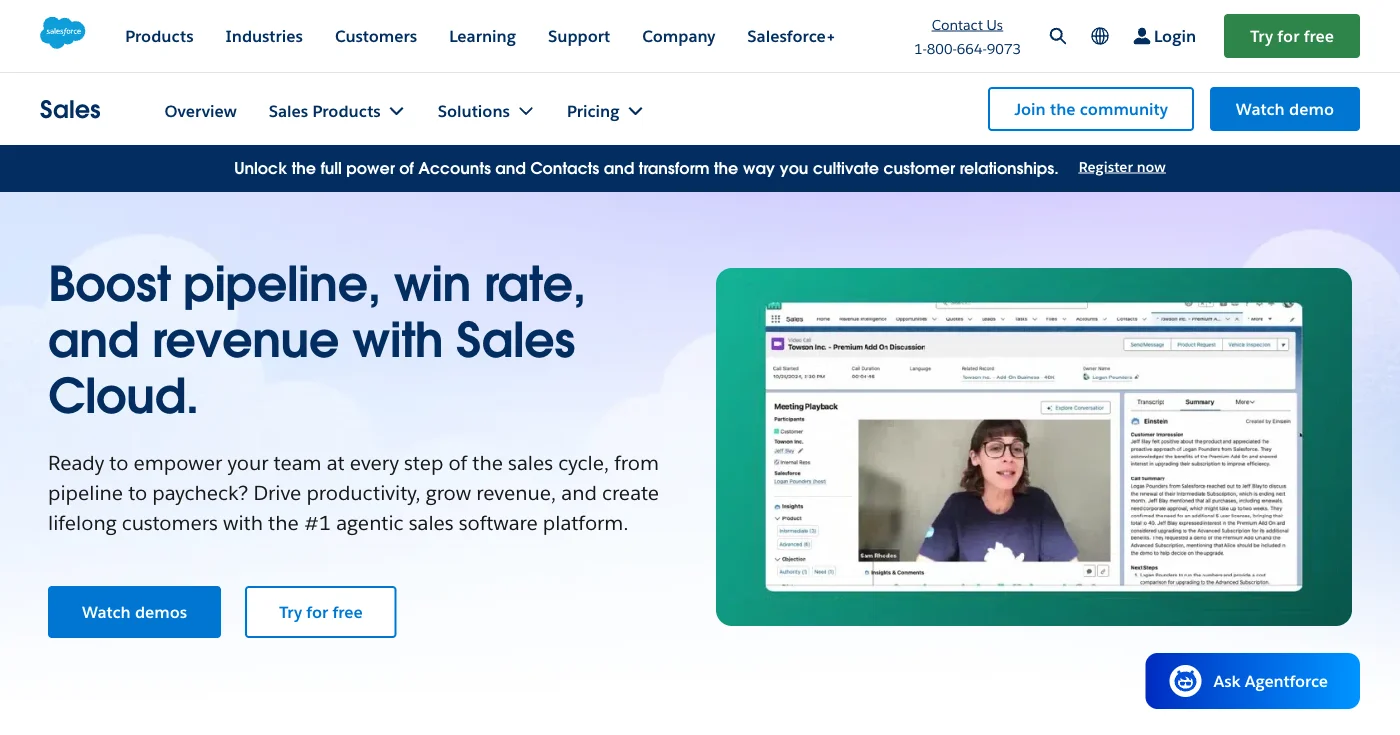
Starting Price: $25/user/month (Starter Suite)
Best For: Startups planning rapid scale and complex sales processes
Salesforce remains the gold standard in CRM, and their AI platform Einstein has matured significantly. The Starter Suite at $25/month provides essential CRM functionality with AI-powered features like lead scoring and opportunity insights.
Key AI Features:
Startup Advantages:
Considerations:
The Pro Suite at $100/user/month includes advanced AI features like conversation intelligence and enhanced forecasting, while the Enterprise tier at $165/user/month adds predictive AI and full automation capabilities.
Start your free Salesforce trial →
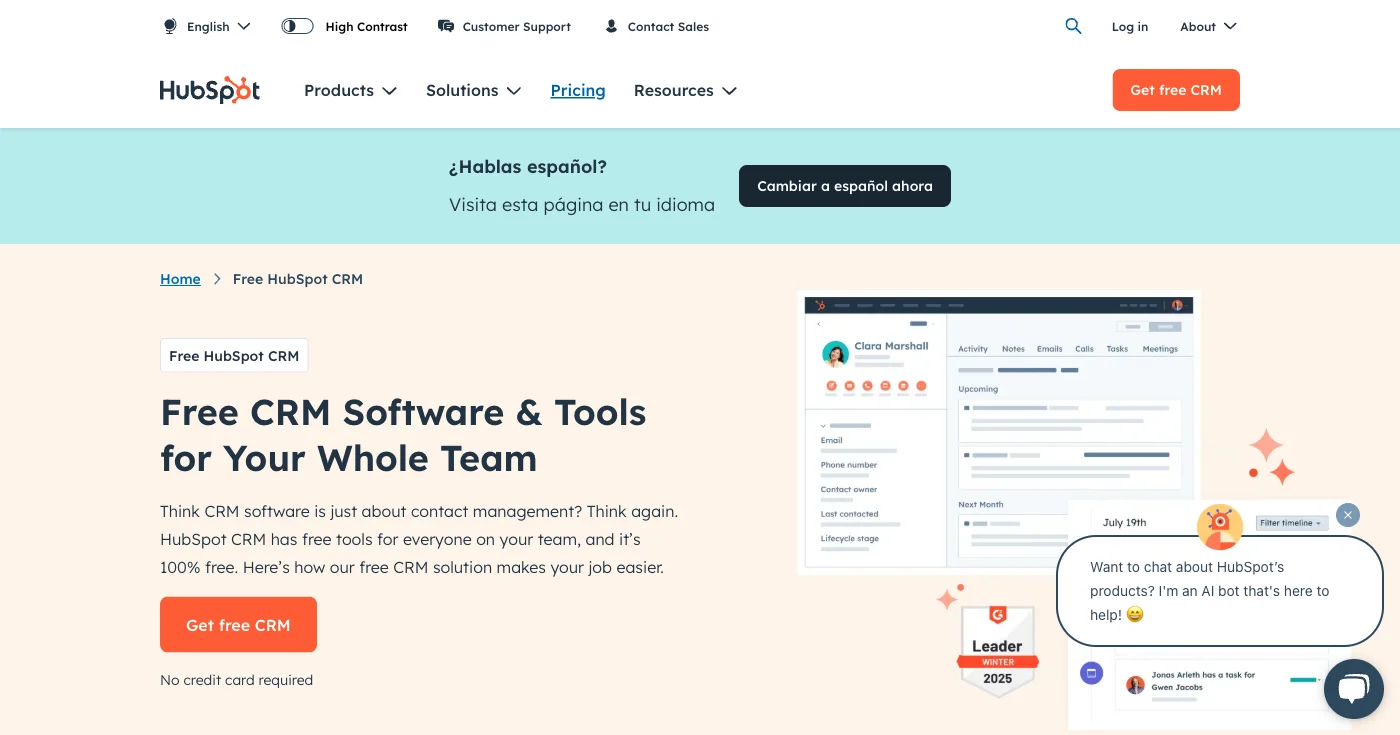
Starting Price: Free CRM, $20/user/month for Sales Hub Starter, $90/user/month for AI-powered Sales Hub Professional
Best For: Startups focused on inbound marketing and content-driven growth
HubSpot’s strength lies in its integrated marketing and sales approach. Their free CRM is genuinely useful, and the AI-powered Sales Hub Professional tier adds sophisticated automation and insights.
Key AI Features:
Startup Advantages:
Considerations:
If you’re exploring other options beyond HubSpot, check out our comprehensive guide to HubSpot alternatives for similar marketing and sales platforms.
The Enterprise tier at $150/user/month includes advanced permissions, custom objects, and enhanced conversation intelligence.
Get started with HubSpot’s free CRM →
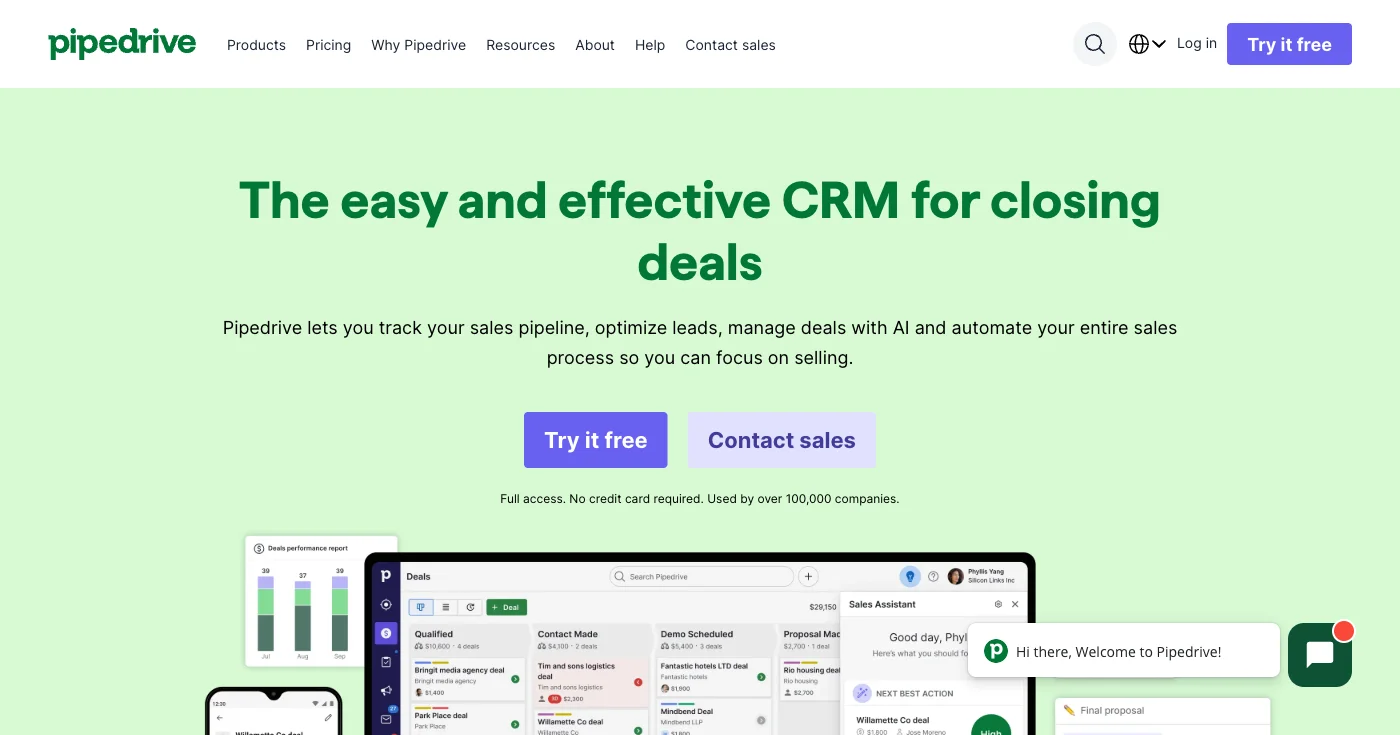
Starting Price: $14/user/month (Essential Plan, billed annually) or $24/month (monthly billing)
Best For: Startups with straightforward sales processes and deal-focused workflows
Pipedrive built their reputation on visual pipeline management, and their AI Sales Assistant adds intelligent automation without overwhelming complexity.
Key AI Features:
Startup Advantages:
Considerations:
Pipedrive’s Advanced plan at $39/user/month (billed annually) includes enhanced AI features and automation capabilities.
Try Pipedrive free for 14 days →
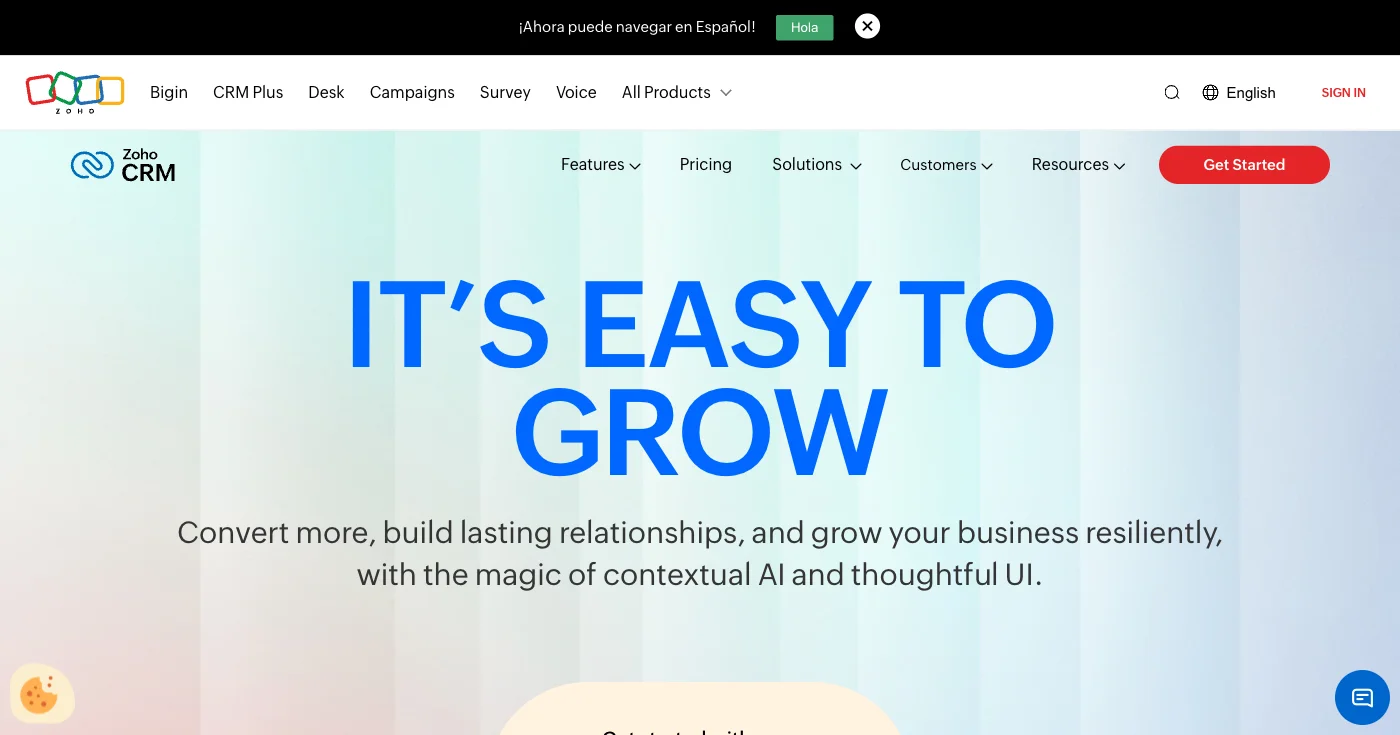
Starting Price: Free for up to 3 users, $12/user/month (Standard, billed annually) or $20/month (monthly billing)
Best For: Cost-conscious startups needing comprehensive functionality
Zoho CRM offers impressive AI capabilities through their Zia assistant, providing enterprise-level features at startup-friendly prices.
Key AI Features:
Startup Advantages:
Considerations:
For startups requiring highly customizable CRM solutions, explore our guide to the best customizable CRM software for more specialized options.
The Professional plan at $23/user/month (billed annually) includes advanced AI features and enhanced automation capabilities.
Start with Zoho CRM for free →
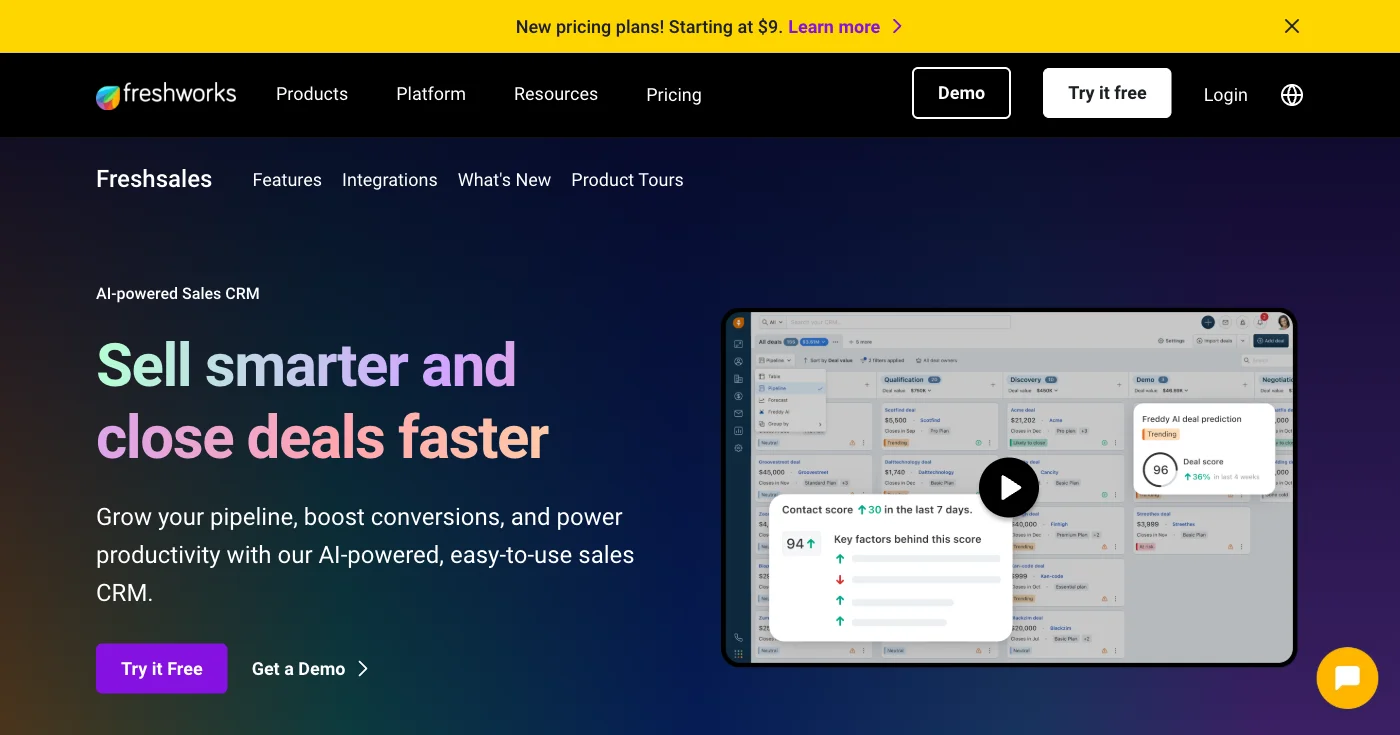
Starting Price: Free tier available, $18/user/month (Growth Plan)
Best For: Startups prioritizing ease of use and quick team adoption
Freshsales combines intuitive design with powerful AI features, making it an excellent choice for teams new to CRM systems.
Key AI Features:
Startup Advantages:
Considerations:
The Pro plan at $47/user/month includes advanced AI features and enhanced automation capabilities.
Try Freshsales free for 21 days →
Starting Price: $12/user/month (Plus Plan) + $10/user/month for AI features
Best For: Startups using Notion as their primary workspace and documentation hub
While not a traditional CRM, Notion’s database functionality combined with AI features creates a powerful, customizable customer management system.
Key AI Features:
Startup Advantages:
Considerations:
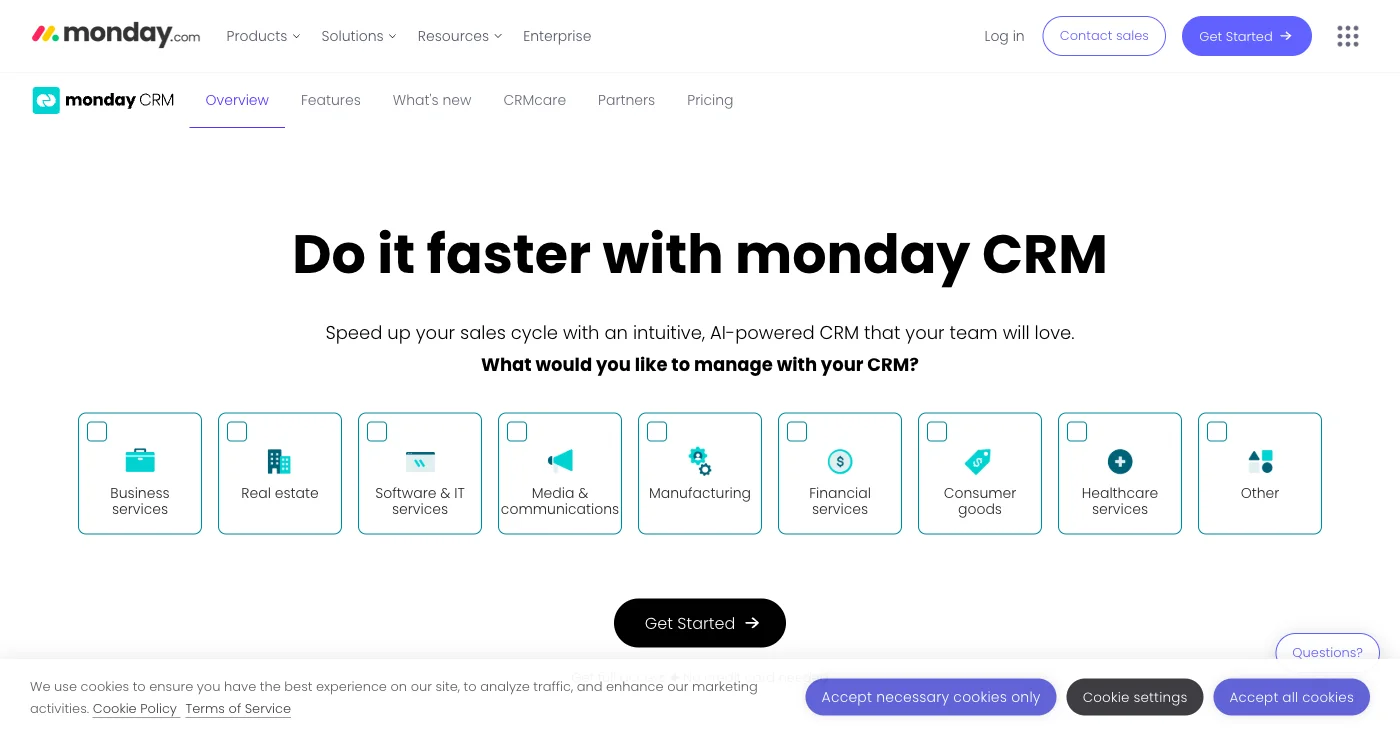
Starting Price: $12/user/month (Basic Plan)
Best For: Startups that prefer visual project management approaches to sales
Monday.com’s CRM offering brings their signature visual approach to sales pipeline management with AI-enhanced insights.
Key AI Features:
Startup Advantages:
Considerations:
The Standard plan at $17/user/month includes enhanced AI features and automation capabilities.
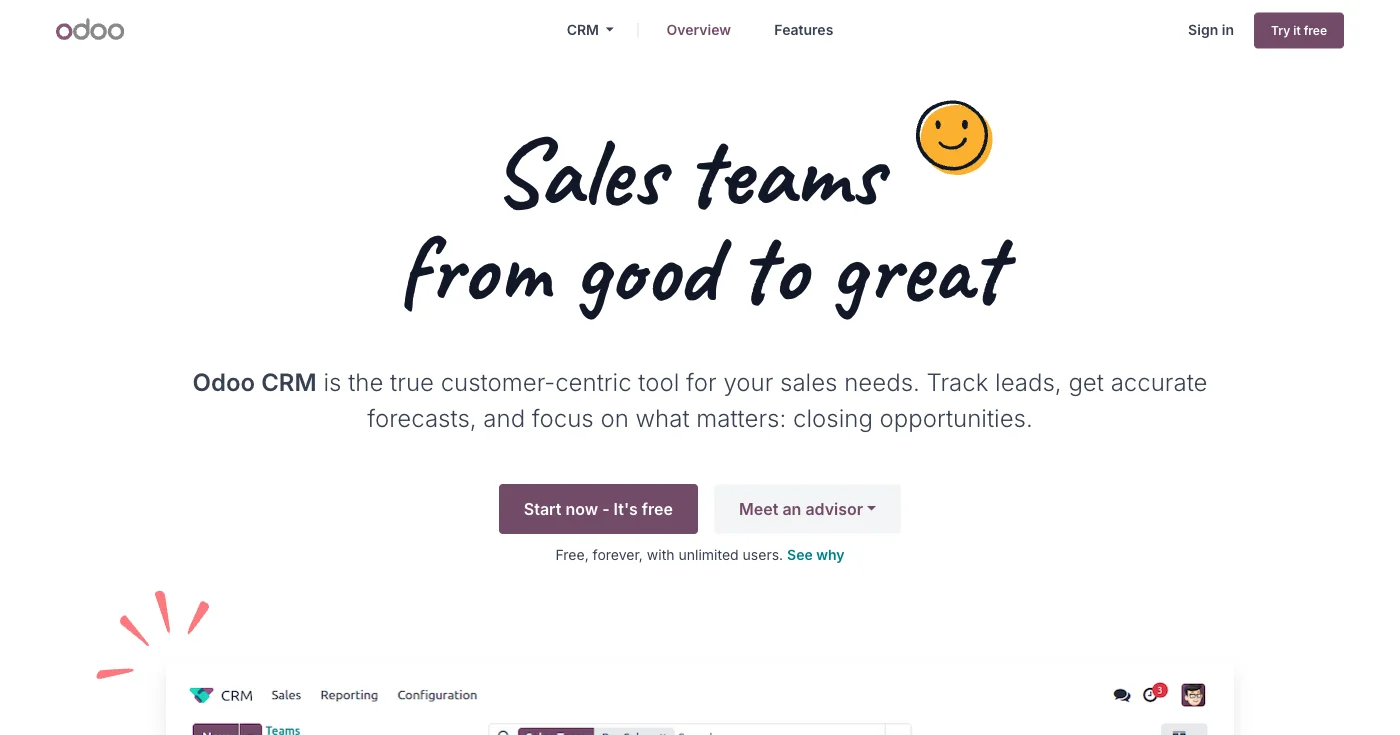
Starting Price: Free (Community Edition), $31/user/month (Enterprise with AI)
Best For: Tech-savvy startups comfortable with open-source solutions
Odoo offers a completely free, open-source CRM with the option to add AI features through their Enterprise edition or third-party modules.
Key AI Features:
Startup Advantages:
Considerations:
Download Odoo Community Edition →
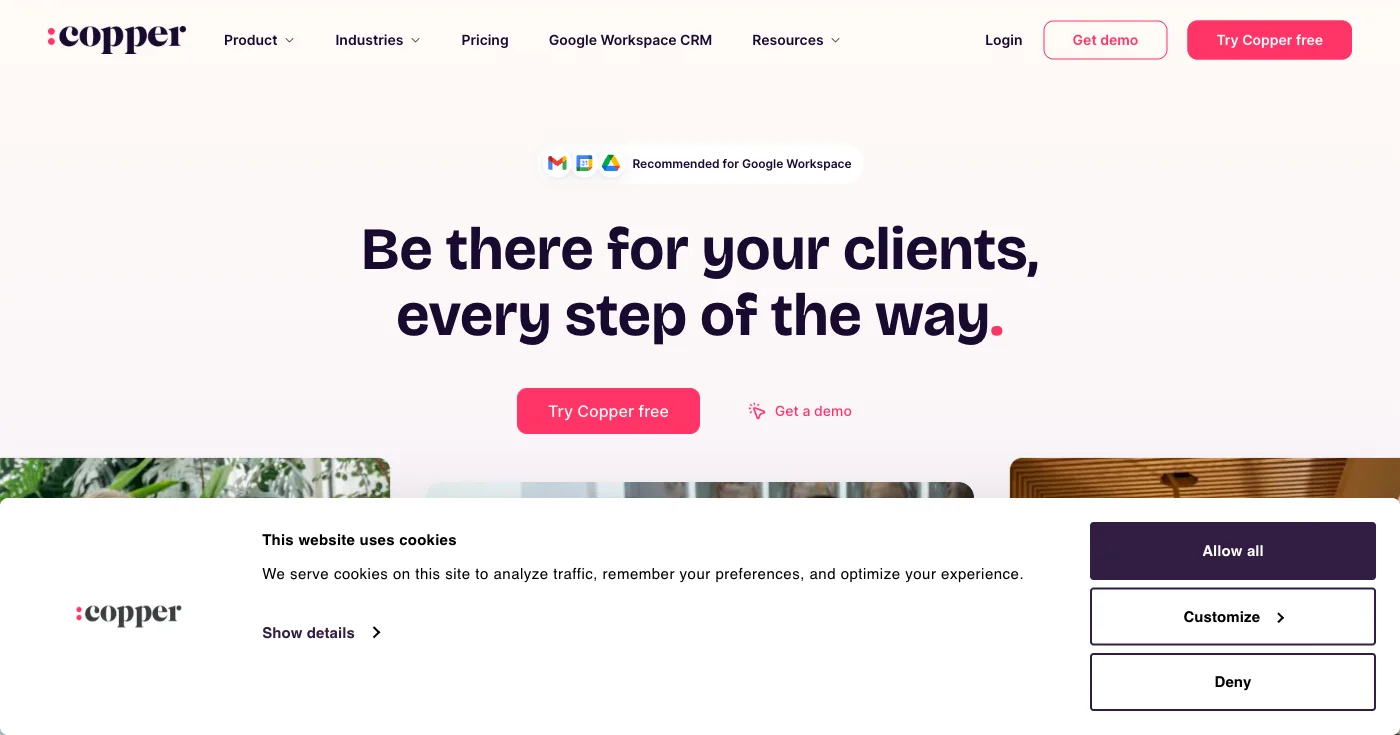
Starting Price: $29/user/month (Basic Plan)
Best For: Startups heavily invested in Google Workspace ecosystem
Copper is built specifically for Google Workspace users, offering seamless integration with Gmail, Google Calendar, and Google Drive.
Key AI Features:
Startup Advantages:
Considerations:
The Professional plan at $69/user/month includes advanced AI features and enhanced automation.
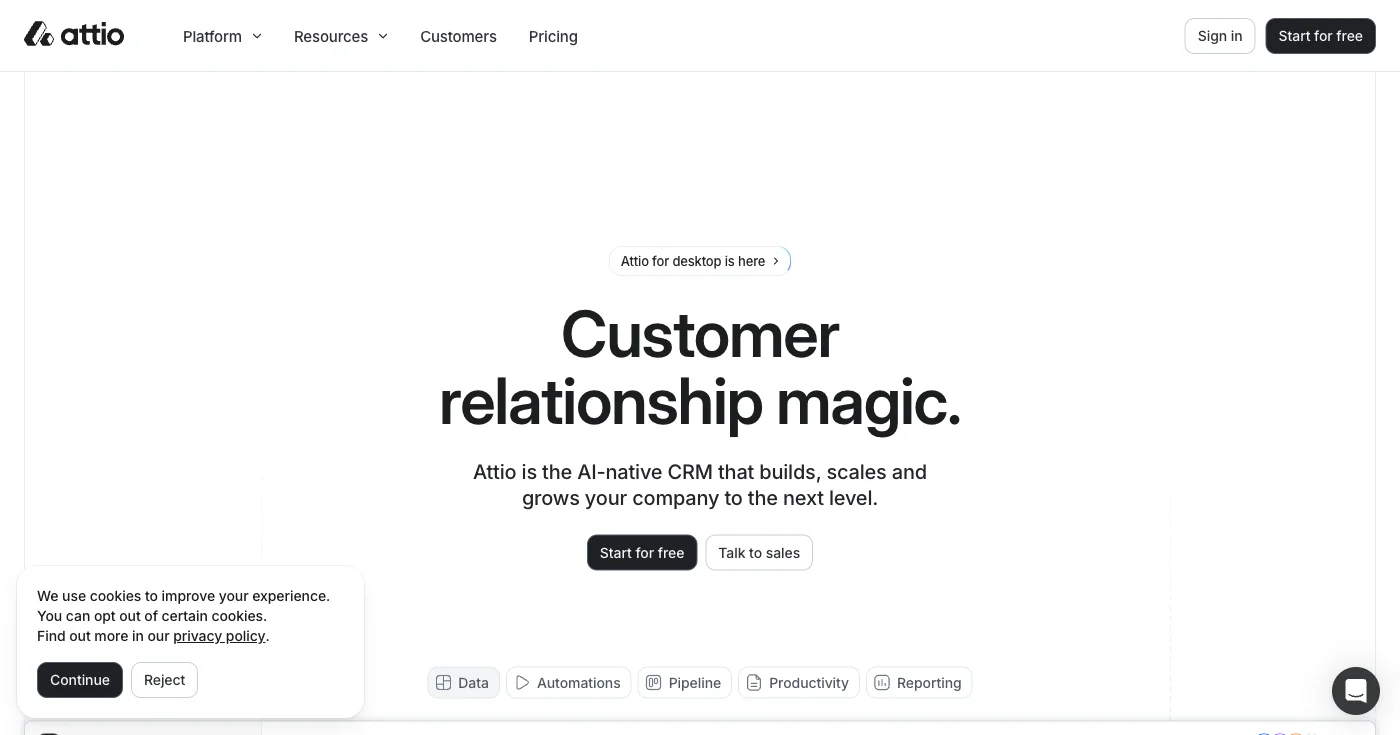
Starting Price: Free for up to 3 seats, $36/user/month (Plus Plan)
Best For: Startups prioritizing relationship intelligence and data-driven insights
Attio represents the new generation of CRM platforms, built from the ground up with AI and modern data practices in mind.
Key AI Features:
Startup Advantages:
Considerations:
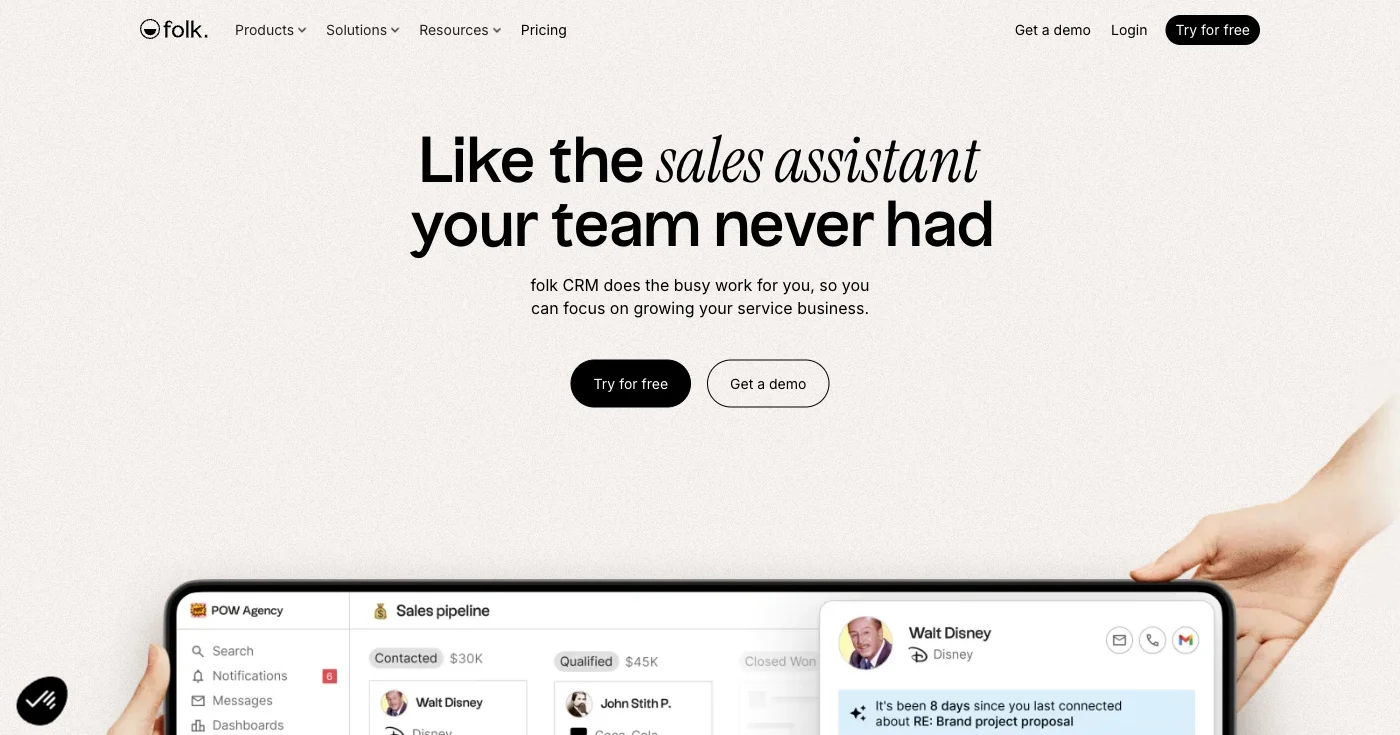
Starting Price: $25/member/month (Standard Plan)
Best For: Startups focused on relationship-driven sales and network effects
Folk takes a unique approach to CRM by emphasizing the network effects of your relationships and connections.
Key AI Features:
Startup Advantages:
Considerations:
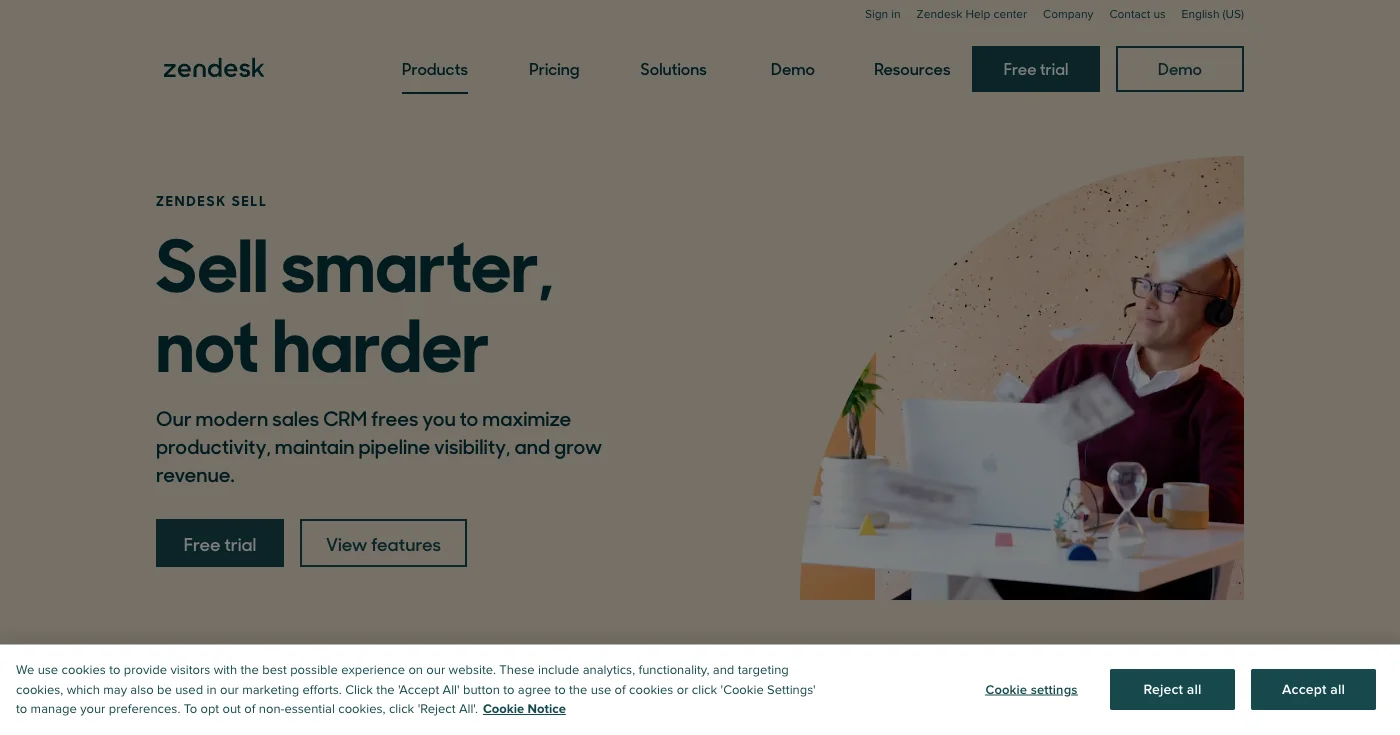
Starting Price: $25/user/month (Team Plan)
Best For: Startups prioritizing customer service integration and support-driven sales
Zendesk Sell (formerly Base CRM) excels at connecting sales and customer service, providing a unified view of the customer journey.
Key AI Features:
Startup Advantages:
Considerations:
The Growth plan at $59/user/month includes advanced AI features and enhanced automation.
Try Zendesk Sell free for 14 days →
When evaluating AI CRM platforms for your startup, prioritize these core capabilities. According to recent research, 79.1% of CRM users consider the use of AI in sales tools to be important, making these features critical for competitive advantage:
AI should automatically analyze your leads based on behavioral data, company information, and historical patterns. Look for systems that can explain their scoring rationale and continuously improve accuracy based on your outcomes.
Your CRM should automatically fill in missing contact information, company details, and social media profiles. This saves countless hours of manual research and ensures your data stays current.
AI should analyze your sales calls and emails to identify successful patterns, suggest improvements, and flag potential issues. This is particularly valuable for startup founders who need to quickly train new sales team members.
Look for AI that can predict deal outcomes, suggest next best actions, and identify at-risk opportunities. This helps you focus your limited time and resources on the highest-impact activities.
AI should help create personalized emails, proposals, and follow-up messages that adapt to each prospect’s industry, role, and engagement history. For advanced outbound campaigns, consider integrating your CRM with specialized cold email software to maximize prospecting effectiveness.
Budget-conscious founders should consider these pricing factors:
Free Tiers: HubSpot, Zoho, and Freshsales offer genuinely useful free versions that can support early-stage startups. However, AI features typically require paid plans. Note that only 50% of businesses with 10 or fewer employees use CRM, often due to cost concerns—free tiers help overcome this barrier.
Per-User Scaling: Most platforms charge per user per month. Consider your team growth plans—a $25/month platform becomes $2,500/month for a 100-person team.
Feature Gating: Advanced AI features are often locked behind higher-tier plans. Calculate the total cost of ownership including the features you’ll eventually need.
Annual Discounts: Most platforms offer 10-20% discounts for annual billing. This can provide significant savings as you scale.
Implementation Costs: Factor in onboarding, training, and potential consulting costs. Some platforms like Salesforce may require additional implementation investment.
Successfully implementing an AI CRM requires more than just signing up for a platform:
AI is only as good as the data you feed it. Before migrating to a new CRM, clean your existing contact lists, remove duplicates, and standardize formatting.
AI works best when it understands your sales methodology. Document your sales stages, qualification criteria, and typical deal progression before configuring your CRM.
Invest time in proper training. Even the most intuitive platforms require onboarding to maximize AI capabilities. Most vendors offer free training resources and certification programs.
Don’t try to implement every feature at once. Start with core CRM functionality, then gradually add AI features as your team becomes comfortable with the platform.
Track key metrics like lead conversion rates, sales cycle length, and user adoption. Use these insights to continuously optimize your AI CRM configuration.
Learn from other startups’ mistakes:
Over-Customization: Resist the urge to customize everything immediately. Use default configurations first, then customize based on actual usage patterns.
Ignoring Mobile: Your sales team will use mobile devices extensively. Ensure your chosen platform has a robust mobile app with offline capabilities.
Neglecting Integrations: Your CRM should connect with your email platform, calendar, accounting software, and other essential tools. Plan your integration strategy before committing to a platform.
Underestimating Training Time: Budget for training time and potential productivity dips during the transition period. Consider this when planning your implementation timeline.
Choosing Based on Features Alone: The most feature-rich platform isn’t necessarily the best choice. Prioritize ease of use, reliability, and vendor support over feature checklists.
The AI CRM landscape continues evolving rapidly. With the global CRM market projected to reach $262.74 billion by 2032 and mobile CRM growing from $28.43 billion in 2024 to $58.07 billion by 2034, emerging trends to watch include:
Conversational AI: Chatbots and voice assistants will become more sophisticated, handling complex customer interactions without human intervention.
Predictive Customer Service: AI will predict customer issues before they occur, enabling proactive support and retention strategies.
Advanced Personalization: AI will create hyper-personalized experiences across every customer touchpoint, adapting in real-time based on behavior and preferences.
Cross-Platform Intelligence: AI will unify insights across all your business tools, providing a complete view of customer interactions and business performance. For startups building comprehensive growth strategies, explore our guide to email drip campaign software to complement your CRM with automated nurturing sequences.
Choosing the right AI CRM for your startup comes down to three key factors:
The right AI CRM can transform your startup’s sales process, automating routine tasks while providing insights that drive better decision-making. With the global AI in CRM market projected to reach $48.4 billion by 2033, early adoption gives you a competitive advantage.
Start with a platform that matches your current needs and budget, but choose one that can scale with your growth. Whether you opt for the comprehensive power of Salesforce, the growth-focused approach of HubSpot, or the simplicity of Pipedrive, the key is to begin leveraging AI to enhance your customer relationships today.
The startups that thrive in 2026 and beyond will be those that effectively combine human intuition with artificial intelligence. Your CRM choice is a critical step in that journey.
Ready to transform your sales process? Start with free trials of your top 2-3 choices, test them with real data, and let your team’s feedback guide your final decision.