


10 Encharge Alternatives That Don't Gate Event Segments Behind a Paywall
Comparing Encharge alternatives for SaaS teams? Here are 10 tools ranked by event segmentation, billing model, and transactional email support for 2026.
Updated 16 min read


Comparing Encharge alternatives for SaaS teams? Here are 10 tools ranked by event segmentation, billing model, and transactional email support for 2026.
Customer.io covers enterprise PLG teams that need multi-channel lifecycle automation. Userlist targets B2B SaaS companies tracking lifecycle at the account level, and Loops suits early-stage teams who want marketing and transactional email in one lean interface. All three unlock event-based audience segments on every paid plan, which Encharge reserves for its Premium tier.
Most "Encharge alternatives" roundups also include e-commerce platforms like Klaviyo and Drip. Those tools don't support SaaS product-event triggers, trial conversion templates, or Stripe billing integration. Every tool below is filtered to SaaS-appropriate stacks, with pricing-model comparisons that show when per-subscriber billing flips more expensive than per-send at your actual list size.
For e-commerce-focused tools, see our Klaviyo alternatives guide. If you need broader email marketing context, the B2B email marketing software roundup covers the full category.
Encharge launched in 2019 as a behavior-based email automation platform built specifically for SaaS companies. It connects to product analytics via Segment, Firebase, and a JavaScript SDK, then triggers lifecycle emails from real user events. The visual flow builder is marketer-accessible without engineering help; Encharge averages 4.7 out of 5 on G2 across 374 reviews, above most direct competitors.
The tool earns its reputation. Three specific limitations push SaaS teams to look elsewhere.
Common reasons people look for Encharge alternatives:
Secondary friction points: no built-in transactional email, no company-level tracking for B2B SaaS, and Segment.com integration locked to Premium.
On r/Emailmarketing, a recurring complaint from teams evaluating the category is the assumption gap: behavioral automation tools are built for teams that already understand lifecycle marketing. Founders still learning onboarding flows, trial conversion sequences, and churn prevention playbooks often hit a wall before unlocking the tool's value.
Ordered by overall fit for SaaS lifecycle automation, from enterprise-grade to category-adjacent tools.
Alternative | Differentiator Tag | Best For | Event Segments | Transactional Email | Pricing (from) | Free Plan |
|---|---|---|---|---|---|---|
Upgrade pick | Enterprise PLG teams | All plans | Yes | ~$100/mo | 14-day trial | |
Best for B2B SaaS | Company-level lifecycle | All plans | Yes | ~$149/mo | No | |
Closest match | Early-stage SaaS | Limited | Yes | $49/mo | Yes (1K contacts) | |
Best for small teams | SaaS with live chat | All plans | Yes | $29/mo | 30-day trial | |
Best free option | Event-driven automation | All tiers | Via ESP | $0 / $39/mo | Yes (500 contacts) | |
Best for AI-native stacks | AI-generated sequences | All plans | Via ESP | $0 / $49/mo | Yes (2,500 emails/mo) | |
Most popular | Teams needing full CRM | Yes | Via integration | $15/mo | No | |
Budget pick | High-volume, low-frequency sends | No | Yes | $9/mo | Yes (300/day) | |
Best for developers | Developer-run stacks | All plans | Yes | $54/mo | No | |
Best for content-led SaaS | Content-driven acquisition | No | No | $10/mo | Yes (1K subs) |
All 10 Encharge alternatives compared by event segments, transactional email, pricing, and free plan
Best Encharge alternative for enterprise PLG teams
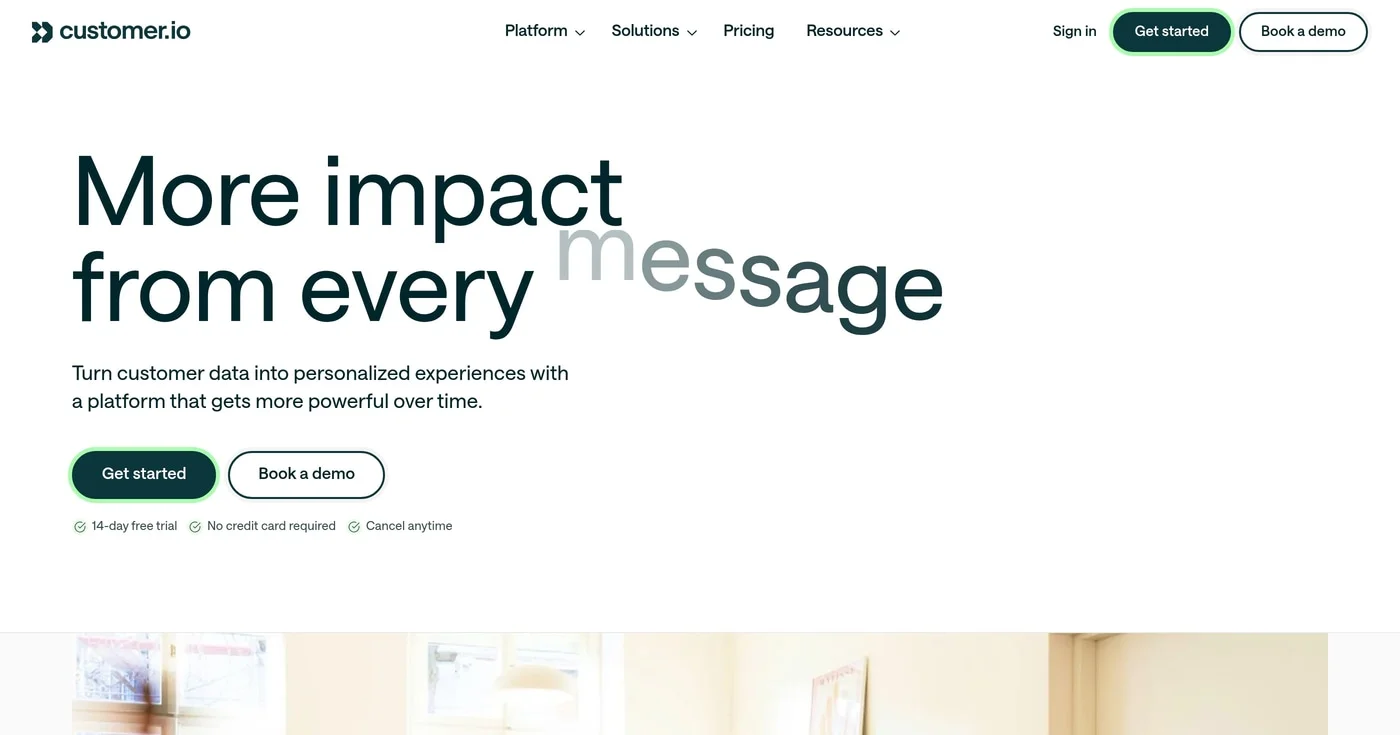
Customer.io is the most mature SaaS lifecycle platform in this category. It crossed $100M ARR in October 2025 (a 42.9% year-over-year increase from $70M) and raised a $29.9M Series A in March 2026. The platform handles email, push notifications, SMS, in-app messages, and WhatsApp from a single event-data source, serving roughly 2,900 customers at an average contract value near $34,500.
Customer.io requires more engineering to set up. Event instrumentation is API-first, which gives your team more control but means marketing can't go fully self-serve. Once configured, Customer.io's Liquid templating, multi-channel output, and Segment.com integration (available on all paid plans, not locked to Premium) go well beyond what Encharge offers.
Customer.io pricing starts at approximately $100/month for 5,000 profiles on the Essentials plan. Premium starts at $1,000+/month billed annually. A 14-day trial is available.
Best Encharge alternative for B2B SaaS teams
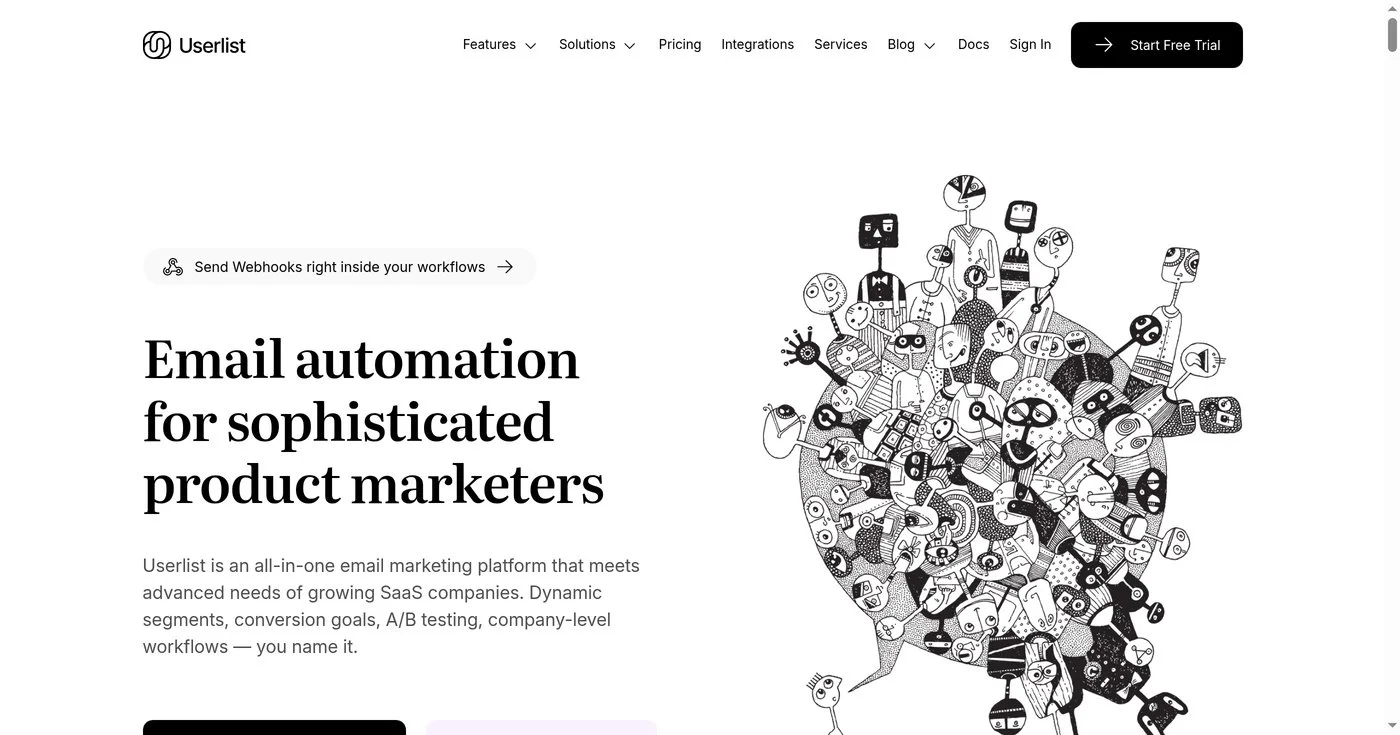
Of all the platforms in this category, only Userlist treats company-level tracking as a core primitive. Automations fire on both individual user actions and company attributes, including plan tier, team size, and industry. Bootstrapped to $1M ARR with a team of five, Userlist fills a gap that Encharge, Customer.io, and most others don't address: company-level lifecycle automation for B2B SaaS.
Encharge has no company-level tracking. If you sell to teams and need lifecycle automation that follows accounts (not just individual users), Userlist is the most direct solution available.
In-app messaging is included in all plans. Aaron Kassover at AgentMethods credited Userlist with a 25% churn reduction over three months after switching.
Userlist pricing is slider-based by active users. $149/month for 10,000 users on the Basic plan ($10/month for each additional 1,000 users). No free plan; a 14-day trial is available.
Closest Encharge alternative for early-stage SaaS
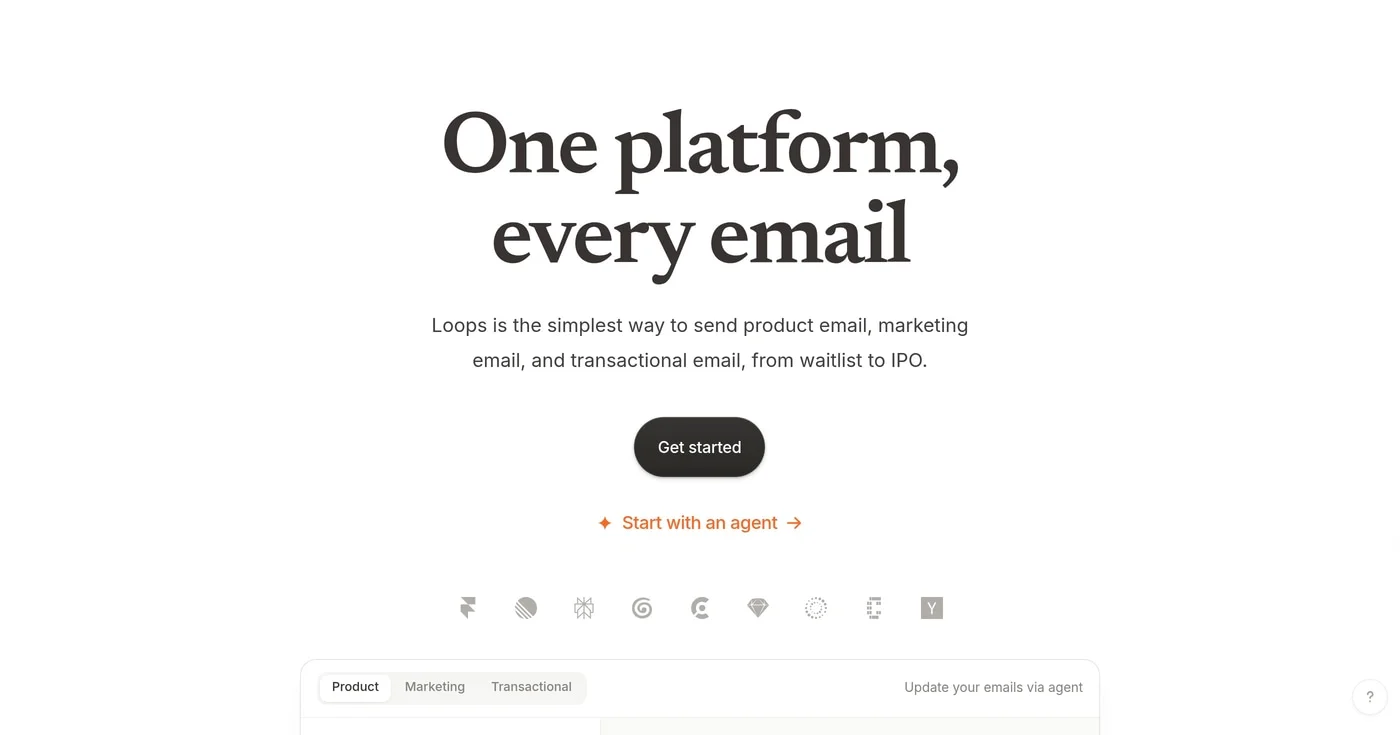
Loops was built from scratch for SaaS teams that want marketing email and transactional email in one interface without a complex deliverability setup. The Notion-style block editor is the cleanest in this list. Framer, Perplexity, Linear, and Replicate all run Loops; the company has three employees and reached $731K ARR in 2024 on a $3.2M seed round.
Loops is a simpler, cheaper tool without Encharge's visual automation canvas, lead scoring, or Segment.com integration. The meaningful win: transactional email is built in (Encharge requires a separate tool for transactional), and the free tier covers 1,000 subscribers and 4,000 sends per month. Loops pricing starts at $49/month for paid plans.
Loops pricing: Free (1,000 subscribers, 4,000 sends/month). Paid plans from $49/month. No published annual discount.
Best Encharge alternative for small SaaS teams
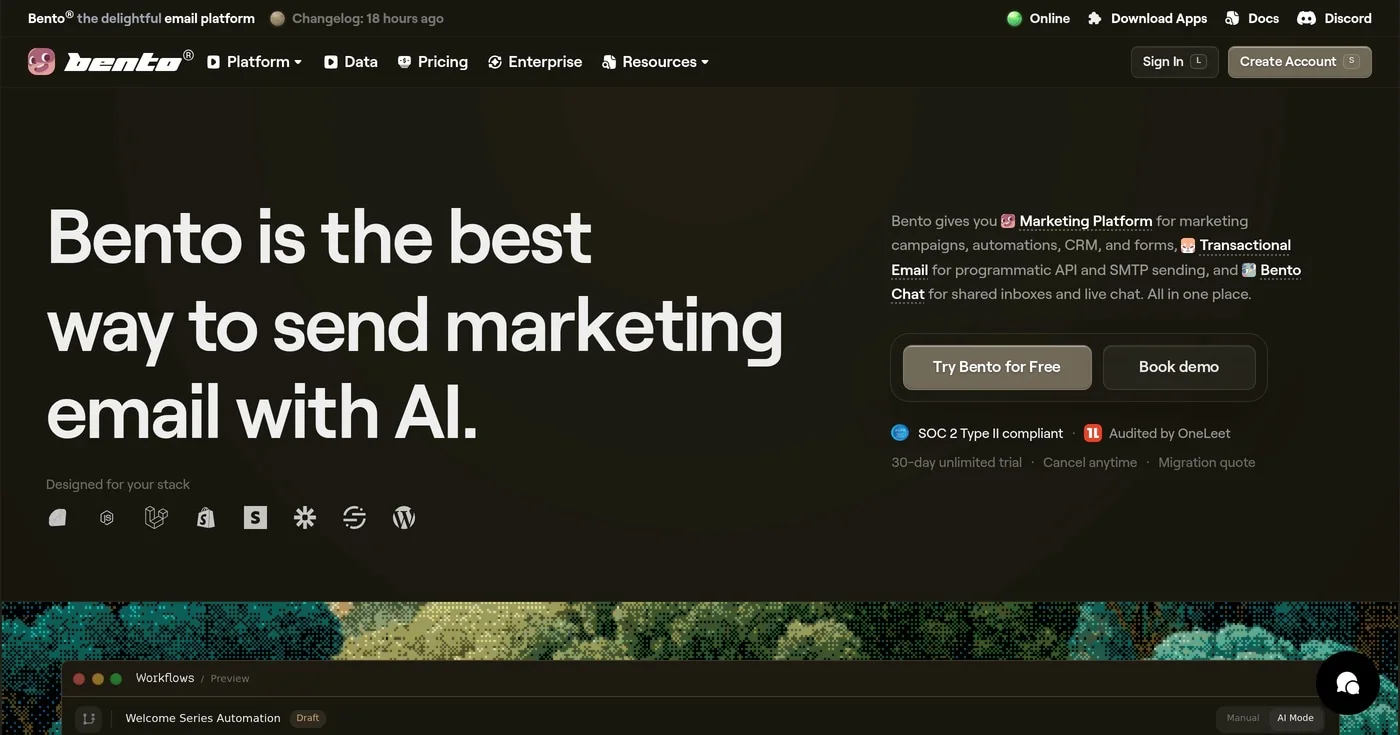
Bento combines behavioral email automation, transactional email, and live chat in one platform. Founder Jesse Hanley built Bento with SOC 2 Type II certification from the start. All paid plans include unlimited marketing sends.
G2 reviewers describe the support as "the best I've ever seen from any company, ever." For early-stage SaaS teams who also need a customer-facing chat tool, Bento consolidates three separate subscriptions into one.
Bento overlaps with Encharge on behavioral automation and adds live chat plus website visitor tracking. At $29/month for 5,000 active users with unlimited marketing sends, it costs less than a third of Encharge's $99/month floor. The 30-day free trial (no credit card) lets you test the complete stack before committing.
Bento pricing: from $29/month for up to 5,000 active users. 30-day trial, no credit card required.
Best free Encharge alternative
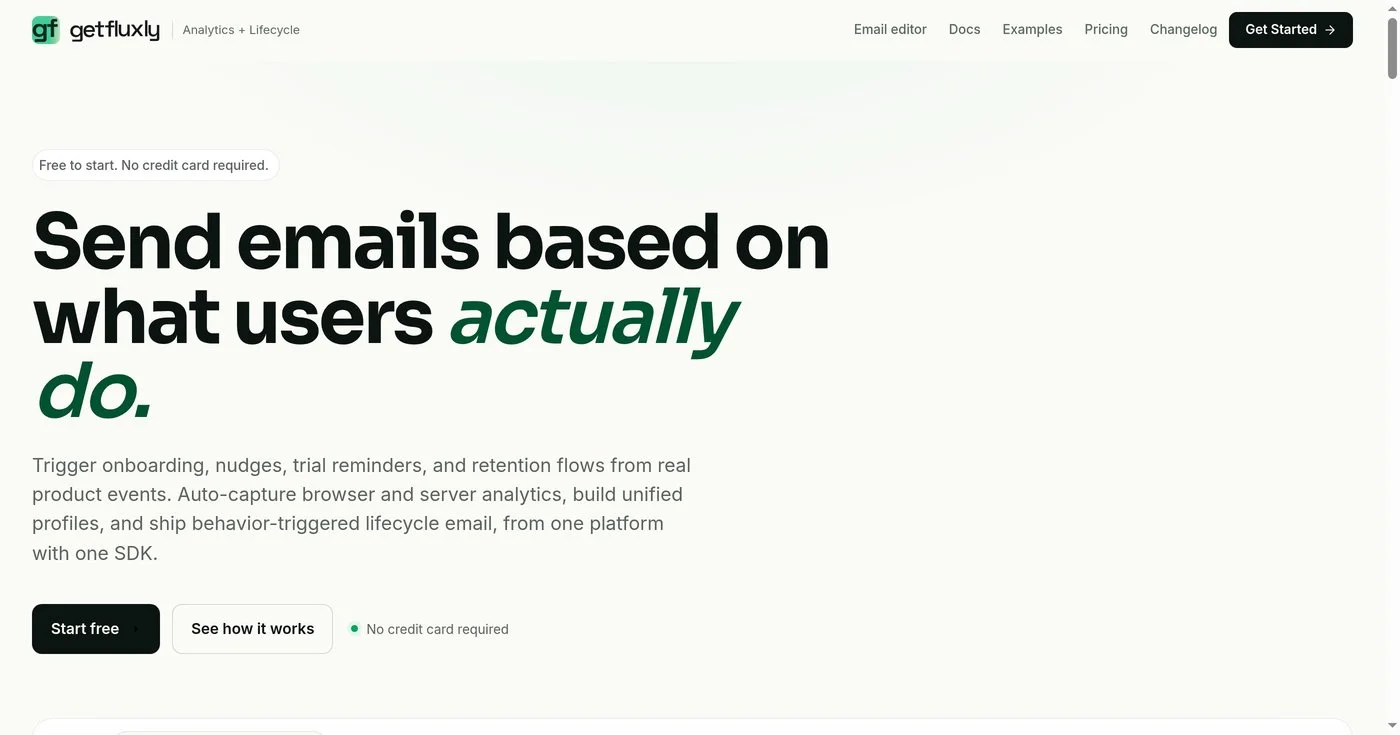
GetFluxly applies Encharge's event-trigger philosophy to a free-first pricing model. The free Hacker tier covers 500 contacts and 250,000 events per month. Event-based segment filtering is available on all tiers including free, addressing Encharge's most-cited switching trigger; GetFluxly routes sends through your existing ESP (Resend, Mailgun, AWS SES, or SMTP) rather than handling delivery natively.
GetFluxly removes the segment paywall that pushes Encharge Growth plan users toward Premium. A team that hit that ceiling can switch to GetFluxly's free tier and unlock the same feature at $0/month. Platform maturity is the tradeoff: GetFluxly is pre-revenue as of June 2026, with minimal third-party review data, and native email sending still in development.
GetFluxly pricing: Free Hacker tier (500 contacts, 250,000 events/month). Starter from $39/month. Annual pricing not published.
Best Encharge alternative for AI-native SaaS teams
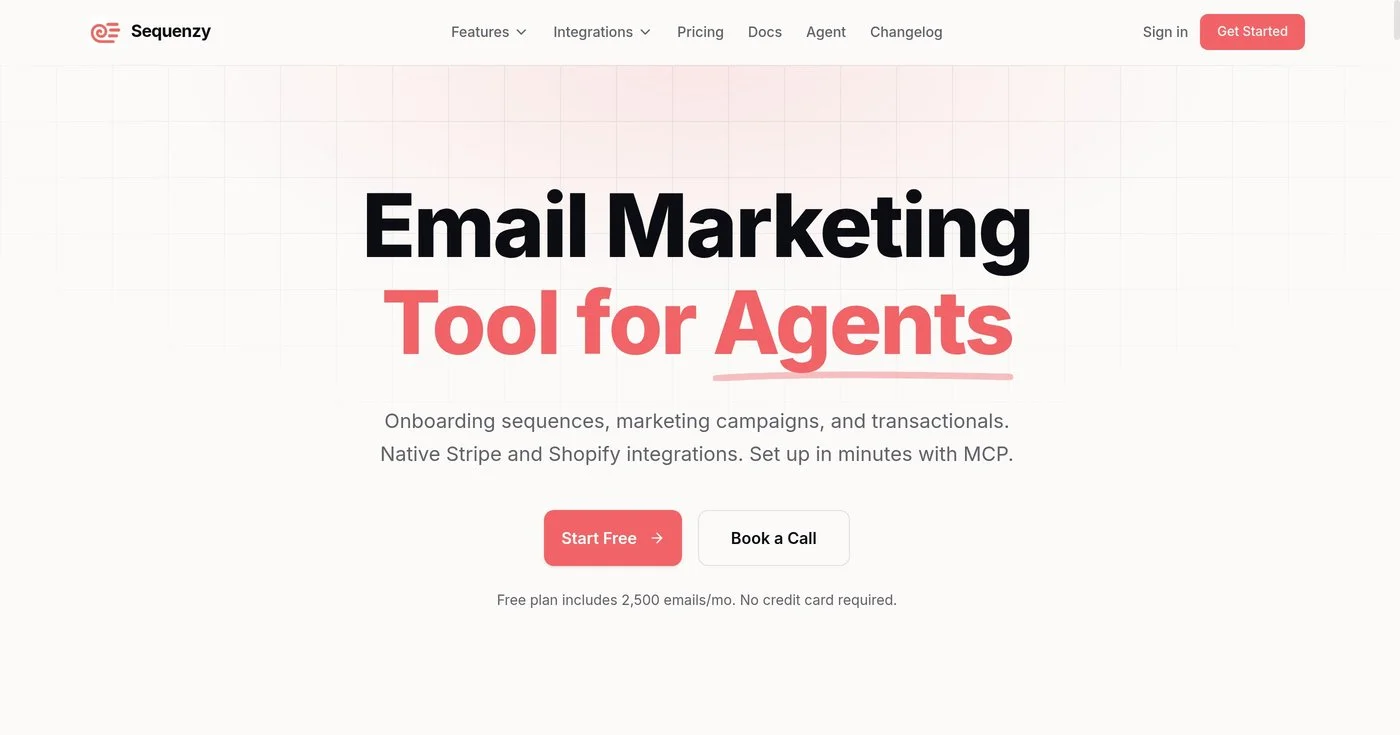
Sequenzy entered in 2025-2026 as an AI-native challenger. The platform generates complete email sequences from your product description using AI, reducing cold-start time for new users. Native Stripe, Paddle, and Chargebee integrations cover billing events without Zapier, on a volume billing model: 120,000 emails for $49/month regardless of list size.
Sequenzy is earlier-stage than Encharge, with less mature automation logic and a smaller user community. Event-based segments are available on all plans including the free tier. At 10,000 contacts sending four emails per month, Sequenzy costs $49/month versus Encharge's $159/month; the billing advantage compounds as list size grows without send frequency increasing.
Sequenzy pricing: Free (2,500 emails/month, unlimited contacts). From $49/month for 120,000 emails per month.
Most popular Encharge alternative
ActiveCampaign is the largest platform in this list by customer count: 145,000 customers, $290.5M revenue in 2024, and $360M in total funding. It covers email automation, SMS, WhatsApp, CRM, and site tracking in one platform. Active Intelligence, its AI suite for predictive sending and AI Agents that diagnose underperforming campaigns, launched March 2026 across all plan tiers.
SaaS lifecycle automation is not what ActiveCampaign was built for. It lacks native Stripe or billing event integrations and has no trial conversion templates built in. Its breadth makes it one of the most commonly cited Encharge alternatives for small businesses: 800+ pre-built automation templates and a built-in CRM reduce the number of tools a growing team needs.
ActiveCampaign pricing: Starter from $15/month (1,000 contacts, billed annually). Pro from $79/month (10,000 contacts, annually). No free plan.
Best budget Encharge alternative
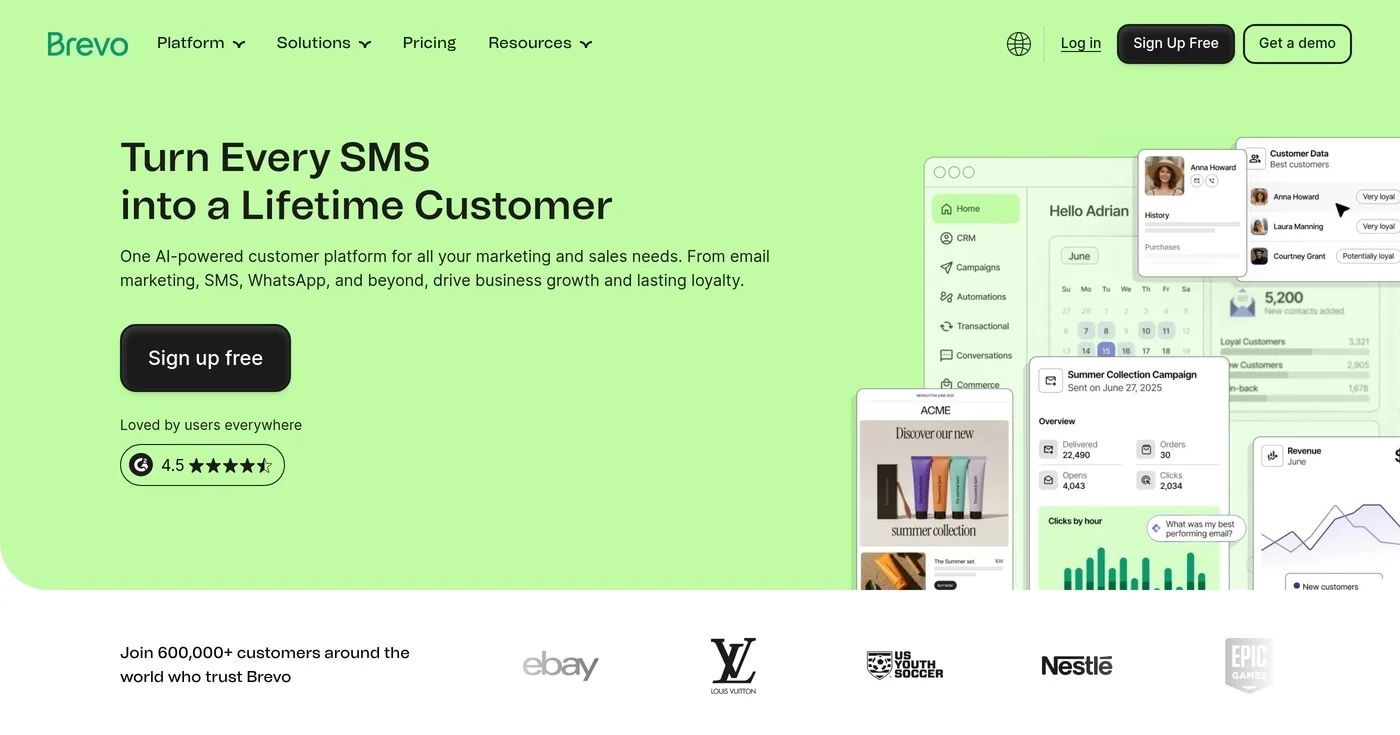
Brevo (formerly Sendinblue, founded 2012) prices by email volume rather than contact count. Unlimited contacts come on every tier; you pay for what you actually send. Transactional email, SMS, and CRM are included in the same subscription, and European customer data is hosted on OVHcloud for GDPR-sensitive teams.
Brevo lacks SaaS-specific features: no behavioral triggers from in-app events, no lead scoring, no Segment.com integration, and no trial conversion templates. Billing is the structural advantage: a 5,000-contact list with two sends per month (10,000 emails) costs $9/month on Brevo's Starter plan versus $99/month on Encharge's Growth plan. The crossover works in Brevo's favor whenever send frequency is low and list size is large.
Brevo pricing: Free (300 emails/day, unlimited contacts). Starter from $9/month for 5,000 emails/month. Standard from $18/month.
Best Encharge alternative for developers
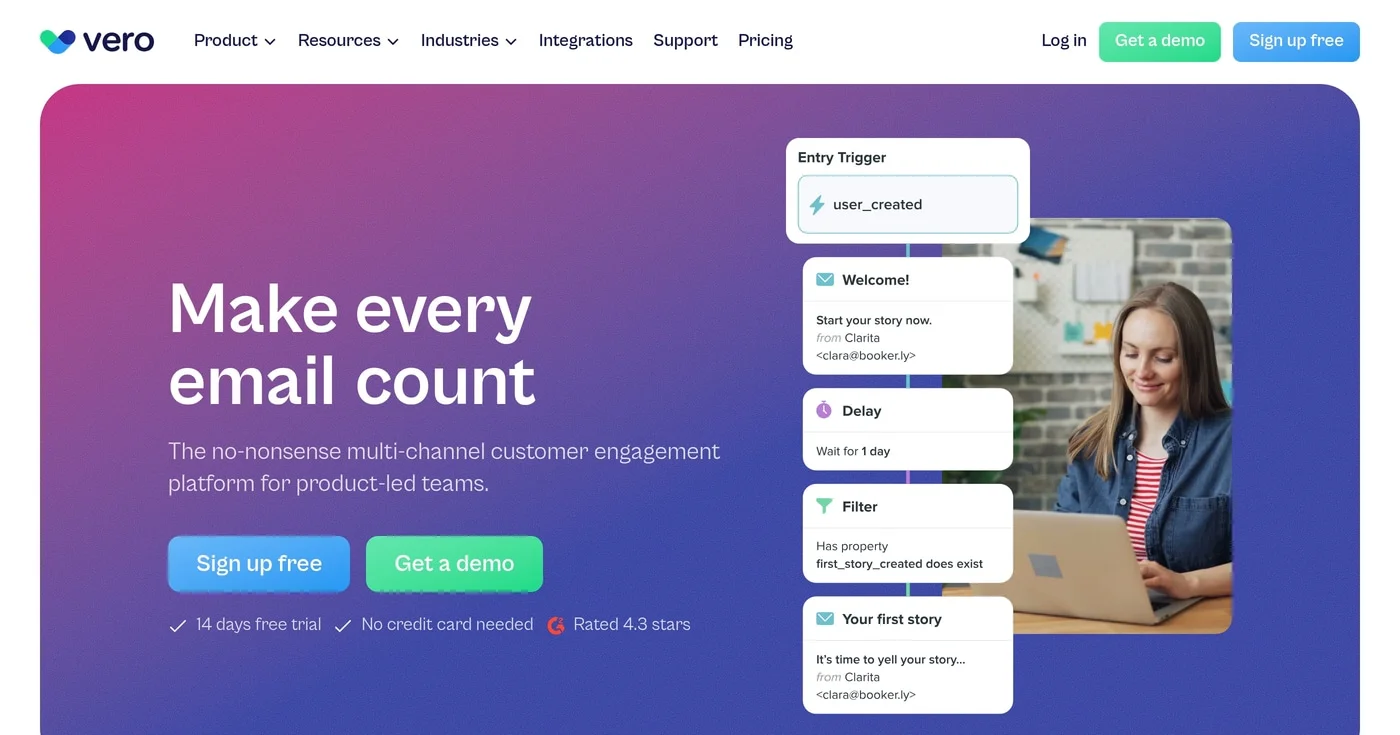
Vero has been processing event-driven email since 2012, with a 12-year track record uncommon in a category with significant startup turnover. Real-time event processing via API covers email, push, and SMS. The interface is less marketer-friendly than Encharge; Vero is built for engineering teams that want full programmatic control over every trigger and template.
Where Encharge aims for marketer self-service, Vero assumes developer involvement for most setup tasks. That investment pays off in control: event schemas are flexible, delivery rules are programmable, and the multi-channel output is unified. Non-technical marketers will find independent campaign building harder than with Encharge or Loops.
Vero pricing: Starter from $54/month for 5,000 profiles. Pro from $219/month. No free plan.
Best Encharge alternative for content-led SaaS
MailerLite is the simplest tool on this list, with over 1.2 million customers and $12M ARR bootstrapped without external funding. Automation logic is straightforward: time-based sequences, link-click triggers, and form completions. No product-event integration, no Stripe triggers, no behavioral segmentation, no lead scoring.
MailerLite is not a SaaS lifecycle automation platform. It belongs on this list for a specific type of SaaS company: one whose primary acquisition channel is content (blog, newsletter) and whose user activation happens inside the product rather than through email sequences. For that use case, MailerLite's free tier (1,000 subscribers, 12,000 emails/month) and clean template library are often enough and cost far less than Encharge's floor.
MailerLite pricing: Free (1,000 subscribers, 12,000 emails/month). Growing Business from $10/month.
Most pricing comparisons stop at the headline number. The figure that actually determines cost is your contacts-to-send-frequency ratio.
Three billing models appear across the tools above:
The crossover point varies by team: at low send frequency (under three sends per contact per month), volume-based billing saves money above roughly 3,000 contacts. At high send frequency (ten sends per contact per month), per-subscriber billing can be cheaper because you're paying for list size rather than message volume. Run your actual numbers before defaulting to what the incumbents charge.
Pre-Series A with a small engineering team: GetFluxly or Bento save you $70-$130/month versus Encharge while unlocking event segmentation without a tier upgrade. Post-Series A with multi-channel lifecycle needs: Customer.io's $29.9M Series A in March 2026 signals a roadmap built for where PLG goes next. The billing model question is separate: check your actual contacts-to-send ratio before assuming per-subscriber pricing is the norm for SaaS email.
For a broader view of the email marketing automation category, the SaaS marketing automation guide covers where email fits within the full marketing stack.
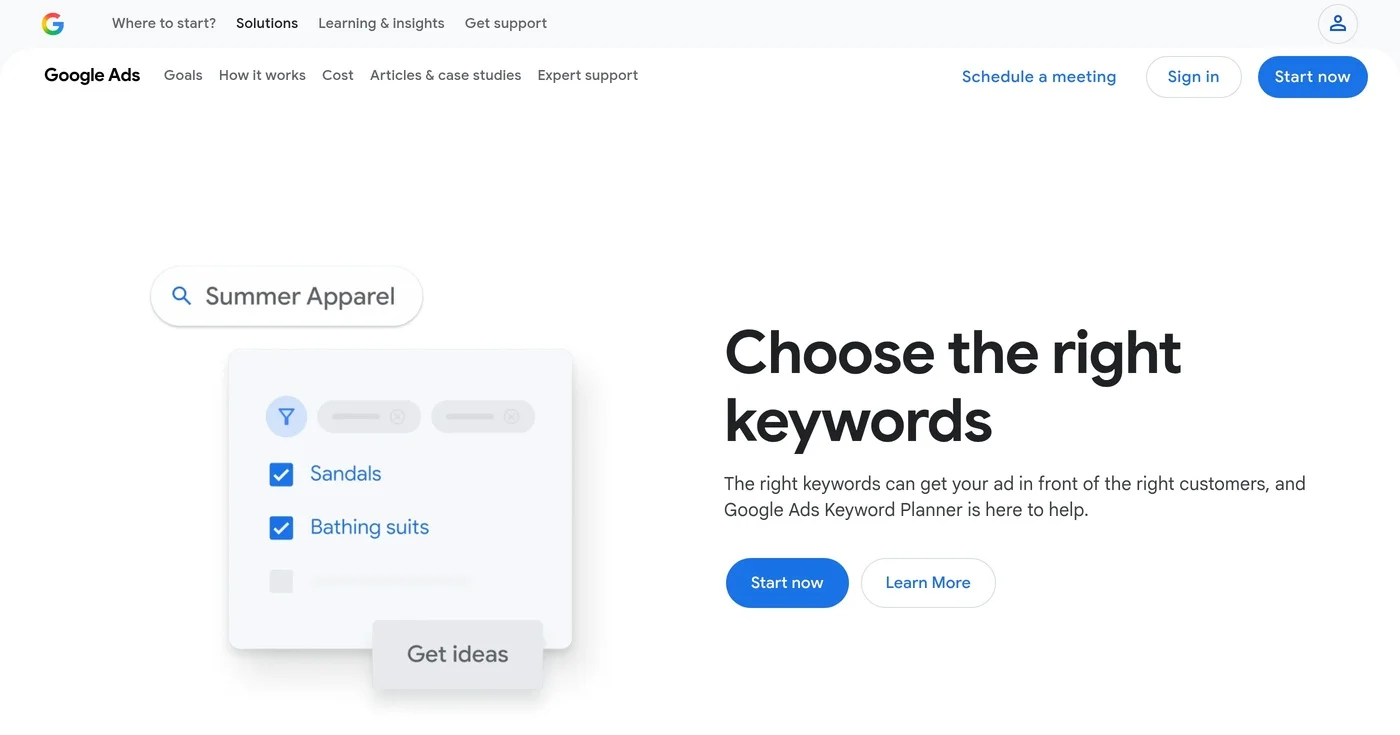
Open Google Keyword Planner without treating setup as running ads, then read volume, competition, and the two bid columns for what those numbers are not.
ZoomInfo alternatives have no public platform list price. Apollo publishes a seat price, Cognism covers EU phones, and Lusha starts at $49.90 a month.

HubSpot's pricing jumps from $0 to $890/month with no mid-tier. These 10 HubSpot alternatives are segmented by sales CRM, email automation, and agency use case
