


Omnisend vs. Klaviyo: Which is Easier to Learn?
Omnisend vs. Klaviyo in 2026: a learning-curve comparison for ecommerce teams. See how each platform handles products in emails, follow-ups, automations, and su
Updated 8 min read

Omnisend vs. Klaviyo in 2026: a learning-curve comparison for ecommerce teams. See how each platform handles products in emails, follow-ups, automations, and su
Omnisend and Klaviyo are both focused on providing ecommerce stores a platform to send emails, build automations, and increase revenue. Each ESP offers a wide range of valuable marketing features, but its approach to user experience differs.
Omnisend focuses on offering powerful features without the learning curve, all while maintaining the most important features and data a business needs. Klaviyo focuses on depth and control and provides you with more advanced tools, but they are also more difficult to master.
We’ll evaluate both platforms by comparing features that define how quickly you’ll be able to become productive. The main areas to be covered are: adding live products to campaigns, automatic campaign resending, automation workflow creation, customer support (especially for free plans), and the general learning curves of Omnisend and Klaviyo.
Omnisend features product blocks that let you quickly select a product from your integrated online store. It only takes a couple of clicks to import the desired products into your campaign, including the product name, image, description, price, and a CTA button.
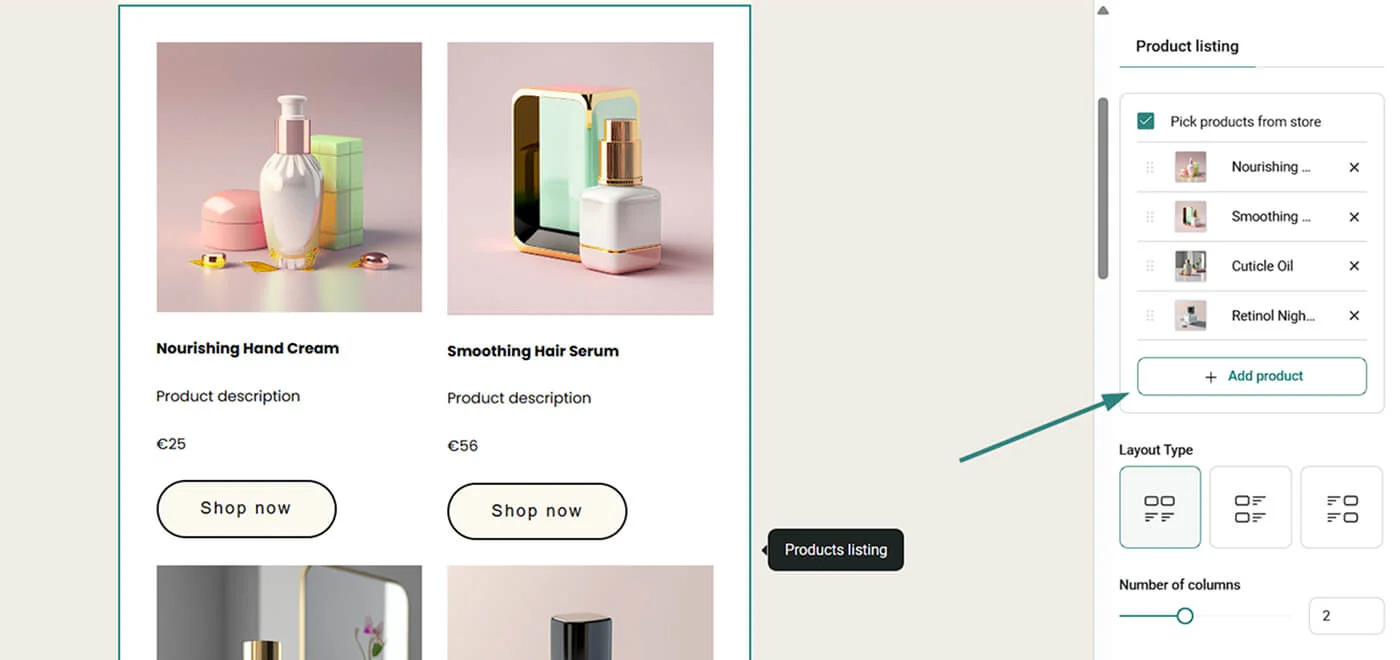
Image via Omnisend
You can also select between 3 layout types and adjust column numbers to make it fit your style. It’s easy to navigate, and you shouldn’t exceed 3 clicks to add any of those things.
Also, there’s an option for dynamic product blocks that put a placeholder in your campaign, and once it goes live, it automatically displays one of three options (depending on what you choose): your best-selling products, recently added items, or most viewed products.
Klaviyo’s product blocks work through dynamic feeds that you need to configure separately from the email editor. To create a product feed, you need to define which products to include, such as specific collections or categories. Then, you can optionally filter by price or stock status.
The product block can also be set to personalize the experience for the user, allowing you to choose between best-sellers, most-viewed products, new products, and more.
Additionally, you can experiment with the “Products a customer may also like” option, but you should proceed with caution. It should perform similarly to the “People also bought” or “You may also be interested in” CTAs you often see while shopping online, which are not always accurate as suggestions.
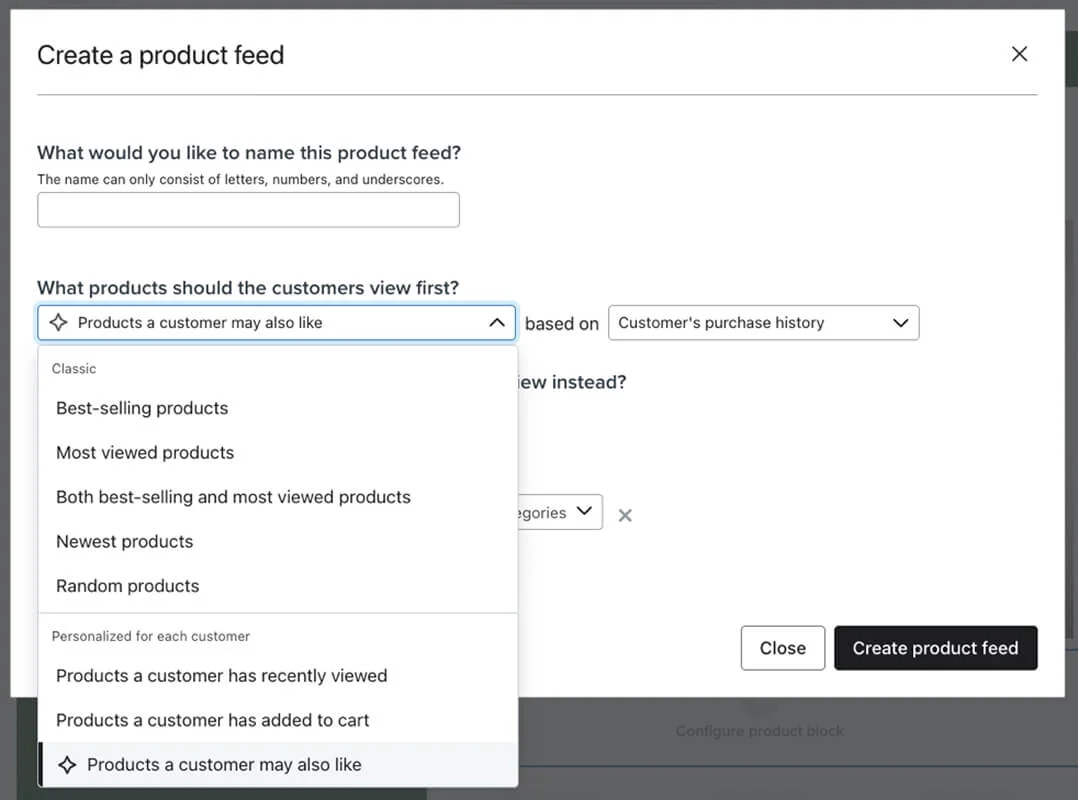
Image via Klaviyo
The main difference is accessibility vs. control. Omnisend lets you get started faster by removing unnecessary options, preventing analysis paralysis. Klaviyo offers more options, which is great, but the more choices you have, the more likely you are to start overthinking them, which can lead to prolonged or even unlaunched campaigns.
Omnisend includes a feature called “Campaign Booster” that lets you automatically resend an email campaign to subscribers who haven’t opened it or clicked a link.
You can toggle this setting in the final campaign-building section before launching the campaign. You can customize the subject line if you want to, and in 48 hours, the Booster will go out to non-opener or non-clicked inboxes automatically.
The setup takes seconds, since all you need to do is toggle the function. There’s no need to create separate workflows or nudge automations with additional conditions. A toggle bar is all it takes to generate more clicks
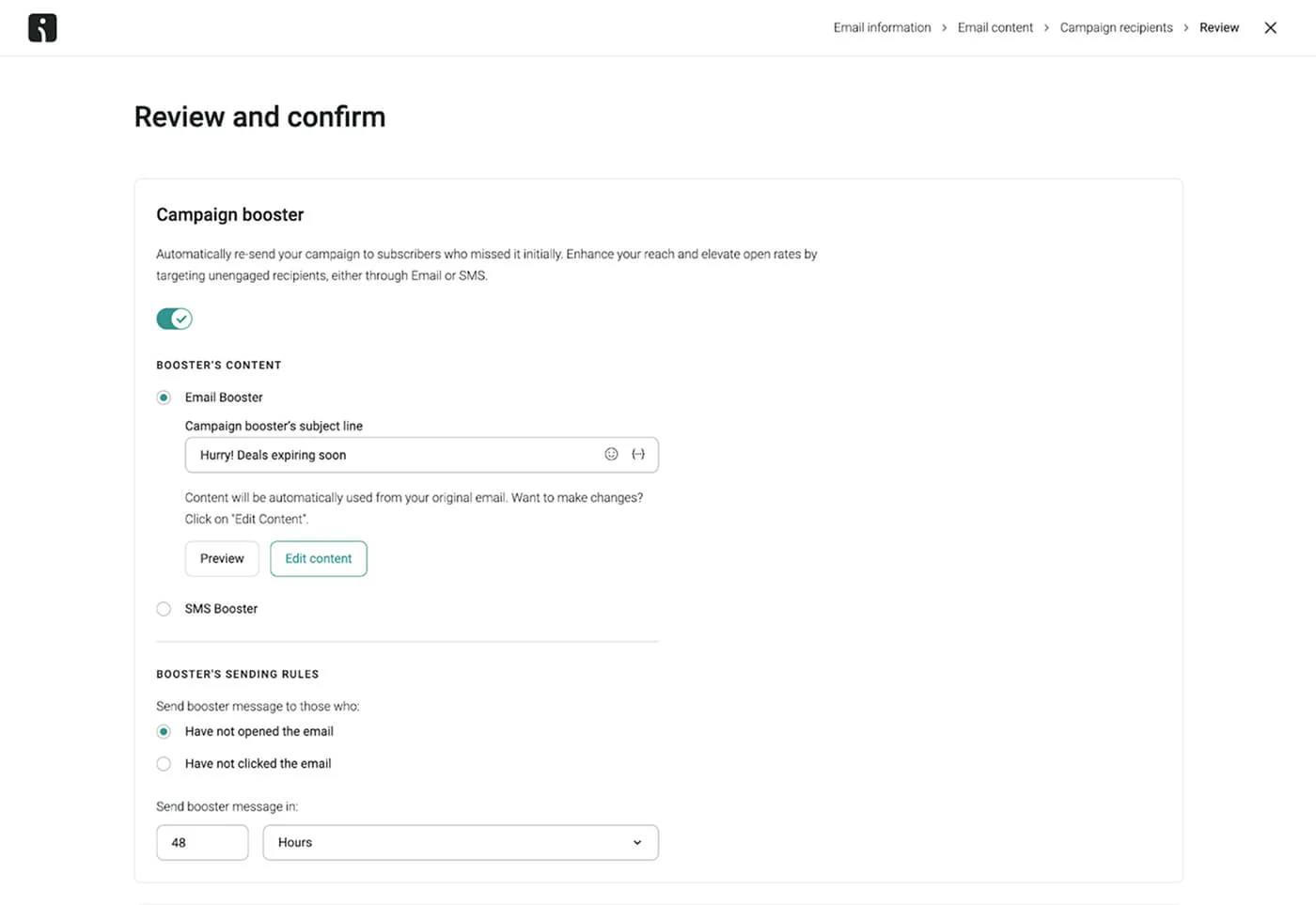
Image via Omnisend
Klaviyo also offers a native “Add a follow-up email” feature in the campaign interface that allows you to quickly set up a follow-up email to subscribers who haven’t opened it. You can’t, however, choose between non-openers and non-clickers as you could with Omnisend.
They also add excessive complexity by making you choose the engagement level of the profiles that will receive the email. For a beginner, it can be difficult to decide which audience to choose, whereas Omnisend doesn’t add unnecessary steps.
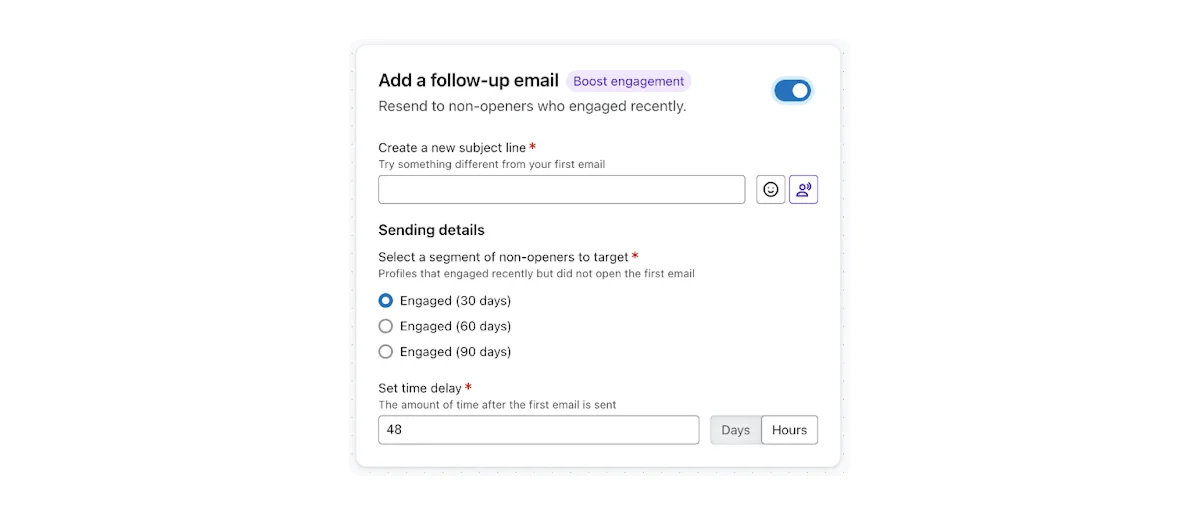
Image via Klaviyo
If you want an automatic resending function that’s as straightforward as can be, Omnisend is the better and more powerful choice. Klaviyo is a strong second, but the demanding and ambiguous “engagement” selection makes it more complex than it should be.
Omnisend offers a large library of pre-built workflows that you can use to cover most common ecommerce situations. You’ll find templates for welcome series, abandoned cart recovery, browse abandonment, post-purchase follow-ups, birthday campaigns, and more.
Each template comes with recommended delays between emails, trigger filters, and even ready-to-go marketing copy. You can set up and launch a workflow in a matter of minutes. If you want to customize the template, you can easily do so in the workflow and email editor interfaces.
The workflow builder displays all elements clearly in a visual flow chart. To add new actions or triggers, you need to either drag-and-drop the elements or set conditions in the sidebar. You can also easily add SMS, conditional splits, time delays, and more.
If you select the abandoned cart flow template, for example, Omnisend will open the workflow interface where you’ll have three emails with appropriate delays between them. The email content is prepared with headers, copy, and dynamic product blocks.
Additionally, Omnisend offers a free migration service for Klaviyo users, which sets up your Omnisend account in 3-5 business days. Once you buy any paid plan with them, they do the heavy-lifting and move your contacts, workflows, segments, templates, and more, so you don’t have to lift a finger.
Klaviyo also offers a wide selection of templates and includes workflows such as welcome series, abandoned cart reminders, price drop alerts, out-of-stock messages, and more. Each template includes a complete workflow: triggers, delays, and content. You can edit the workflows as you please with conditional splits, content changes, and logic adjustments.
Klaviyo’s conditional logic offers stronger capabilities than Omnisend’s, but demands more technical understanding and know-how. While it’s beneficial for hyper-personalized flows and end-game automation, the feature is overkill for most businesses.
In short, both platforms have excellent template libraries and automation capabilities. But since we’re focusing on which one is more intuitive, Omnisend is your better go-to solution for a simple but powerful ESP made for everyday marketers.
Omnisend provides 24/7 award-winning live chat and email support regardless of your plan, including the free tier. If you’re a new user and you’re stuck, click the icon in the corner, and a human support agent will be with you within minutes.
If your problem is more complex than a support agent can handle, they will escalate the issue to the tech team, who will then contact you via email to either ask for more details or confirm that the problem has been fixed.
In case you want to fix the problem yourself, there are hundreds of organized articles in Omnisend’s Help Center regarding onboarding, integrations, automation, segmentation, reporting, and more. There are also YouTube videos with clear demonstrations and step-by-step tutorials.
Klaviyo, on the other hand, restricts free-plan users to 60 days of email support, after which they are cut off. Also, account inactivity doesn’t pause the time period.
While you can access their Help Center anytime, not everyone wants to read articles to get help. Once your 60-day period ends, you’ll need to either purchase a plan or review the documentation to get help.
Paid Klaviyo plans include live chat and email support, but response times vary based on your plan. The lowest tiers have the lowest priority, so you could be stuck waiting for hours to get a response.
The support difference is a significant factor for the entire learning experience. Omnisend provides unrestricted support, even on free plans, so you never have to worry about being left without help. Klaviyo puts a time pressure on you to either learn the ropes within the first 60 days or pay for dedicated support agents.
Klaviyo’s learning curve is much steeper than Omnisend’s. The platform offers advanced capabilities but requires understanding complex concepts to fully leverage the benefits.
It may be more appealing to businesses that are looking forward to a future in which deep data experimentation becomes part of core business operations. It’s especially true when the price you pay with Klaviyo most likely doesn’t reflect the capabilities you utilize.
Omnisend, on the other hand, prioritizes power without being clunky. You still get the functionality you need to build personalized automations, launch campaigns, and more. The difference is that Omnisend doesn’t feel overcomplicated, has a lower learning curve, and better reflects your needs.
Omnisend doesn’t overwhelm you with excessive features you don’t use. Instead, it gives you unrestricted access to superior customer support, available 24/7 to help you resolve any issues or misunderstandings. With Klaviyo, there’s always a chance you’re overpaying.
In short, you can achieve the same results with both platforms, but Omnisend is more likely to get you there faster due to its simplified approach to email marketing.