
Social Media Management: How to Plan, Publish and Prove ROI in 2027
Learn how social media management works, from strategy and scheduling to community care and analytics, plus current tool pricing and 2026 survey data.
Updated 12 min read

Learn how social media management works, from strategy and scheduling to community care and analytics, plus current tool pricing and 2026 survey data.
Social media management is the ongoing process of creating, scheduling, publishing, and analyzing content across platforms to grow a brand's audience and drive business results. Kepios counts 5.66 billion active social media user identities worldwide. GWI data in the same DataReportal report puts the average online adult at 18 hours and 36 minutes a week on social and video feeds.
The work covers far more than posting: strategy, community management, analytics, paid campaigns, and increasingly, AI-assisted workflows.
This guide walks through the five phases of the work, the core components, the tools and what they cost today, and the mistakes that waste a social budget.
Social media management is the strategic process of overseeing and optimizing a brand's presence on platforms such as Instagram, TikTok, LinkedIn, X, and Facebook. It covers content creation, publishing, community engagement, analytics, and paid campaigns, all aimed at defined business goals.
A decade ago, social management meant writing a post and checking for likes. Today the role also means translating social data into business insights that matter to the whole organization, not just the marketing team.
Social platforms are no longer optional distribution channels. They are where your audience researches purchases, forms opinions about brands, and expects real-time responses.
In the 2025 Sprout Social Index, 73% of consumers said they will buy from a competitor if a brand doesn't respond on social. Social media also ranked as their number one source for keeping up with trends and cultural moments. Social is a primary touchpoint for brand relationships, not an amplification channel for press releases.
Social media management runs as a repeatable cycle. Each phase feeds the next, so skipping one leaves a gap the others can't cover.
Before creating a single post, you need a documented strategy. It is the most reliable way to keep messaging consistent and prove ROI when you run several channels at once.
Start by defining SMART goals tied directly to business outcomes: brand awareness (reach, impressions), lead generation (click-through rate, form fills), sales (conversion rate, social commerce revenue), or customer retention (engagement rate, response time). Choose which platforms to prioritize based on where your audience actually spends time, not where every brand has a presence.
Then audit your existing social accounts. Identify what content has performed, which platforms generate the most engagement relative to effort, and where your audience demographic aligns best with the platform.
Content planning is where strategy becomes execution. A content calendar is the operational backbone: it documents platform, publish date and time, content type, caption draft, visual assets, links, hashtags, and approval status for every planned post.
One planning heuristic is the 70-20-10 rule for content mix. In the version Findsome & Winmore describes, 70% is proven content that reliably engages, 20% is creative or niche experiments, and 10% is high-risk, high-reward moonshots.
Write for each platform. A post built for one platform's culture and format rarely works unchanged on another.
TikTok rewards entertainment and authenticity. LinkedIn favors professional insights. Instagram is built around visual storytelling, and X thrives on real-time commentary and news.
Consistency comes first. SocialBee's analysis of 9.3 million posts its customers published in 2025 found that the average brand manages 4.5 profiles at once. Almost half of all posts go out between Tuesday and Thursday, and afternoons are busiest, especially 2:00 PM to 5:00 PM.
Social media management tools handle scheduling at scale, freeing your team from manually logging into each platform. Several also recommend posting times based on your own audience, such as Later's Best Time to Post and Sprout Social's optimal send times.
Don't schedule everything. Reserve capacity for real-time content tied to trending moments, breaking news in your industry, or cultural events relevant to your brand.
Publishing content is only half the work. Community management (responding to comments, DMs, mentions, and reviews) is where brand loyalty is built or lost.
Sprout Social's Q3 2026 pulse survey of 2,250 consumers found that 68% expect a response within 24 hours, 24% expect one within 1 to 2 hours, and 14% within an hour. The same survey found 55% would rather send a brand a DM than complain publicly, and TikTok (50%) and Facebook (46%) lead as the first platforms people turn to for customer service.
Build a system for community management: clear ownership, response templates for common questions, and escalation paths for complaints. Social listening extends that work beyond your own posts by monitoring brand mentions, competitor activity, and industry conversations, so you catch product feedback and forming crises early.
Handle negative feedback transparently. A genuine, empathetic public response that acknowledges the issue and moves resolution to a private channel builds more trust than silence.
Without measurement, social media management is just activity. Your analytics need to connect platform metrics (engagement rate, reach, click-through rate) to business outcomes (revenue, leads, customer acquisition cost).
Proving that link is often harder than getting the results. UTM parameters on every link, social commerce tracking, and platform-native conversion data close most of the gap.
Review analytics weekly for optimization (what to post more of, what to stop) and monthly for strategy reviews (are you hitting business goals, does the platform mix need adjustment). Report to stakeholders using outcome metrics: revenue, leads, and customer retention. Not just impressions and follower count.
Seven core functions make up the work:
Component | What It Involves | Key Metric |
|---|---|---|
Content strategy | Planning what to post, where, and when based on audience and business goals | Content calendar adherence |
Content creation | Writing captions, designing visuals, editing video, sourcing UGC | Engagement rate per post |
Scheduling and publishing | Using tools to queue and auto-publish posts across platforms | Publishing consistency |
Community management | Responding to comments, DMs, mentions, and handling complaints | Response rate and time |
Social listening | Monitoring brand mentions, competitors, and industry conversations | Share of voice |
Analytics and reporting | Tracking KPIs and reporting business outcomes to stakeholders | Conversion rate, CAC |
Paid social | Managing social advertising campaigns alongside organic content | ROAS, CPM, CTR |
The right tool depends on your team size, platform mix, and whether your priority is publishing efficiency, analytics depth, or collaboration workflow. Prices below were checked on each vendor's pricing page on November 28, 2026.
Tool | Best For | Starting Price | Free Plan |
|---|---|---|---|
Solo creators and small teams | $5 per channel/mo (billed yearly) | Yes (3 channels) | |
Teams that want one message inbox plus brand and competitor monitoring | $99 per user/mo (billed annually) | No (14-day trial) | |
Visual-first brands on Instagram and TikTok | $18.75/mo (billed yearly) | No (14-day trial) | |
Agencies needing collaboration and approval workflows | $33 per workspace/mo (billed yearly) | First 50 posts free | |
Teams that need a consolidated inbox, monitoring and reporting | $79 per seat/mo (billed annually) | No (30-day trial) | |
Businesses already using Zoho CRM or Zoho Desk | $10/mo (billed annually) | Yes (1 brand, 6 channels) |
For solo creators or small businesses just getting started, Buffer's free plan connects up to 3 channels with 10 scheduled posts per channel and includes the AI Assistant. It's the lowest-friction entry point.
Teams that need multi-user collaboration and approval workflows should look at Planable. Its Basic plan is $33 per workspace a month billed yearly and includes unlimited users and two types of approval.
Larger teams with complex care and reporting needs usually compare two $399 tiers. Hootsuite Advanced (per user a month) adds content approvals and message routing. Sprout Social Advanced (per seat a month) adds the Sprout API and helpdesk integrations.
Gymshark is a useful case because its former social lead has described how the team was built. Elfried Samba, now CEO and co-founder of Butterfly Effect and formerly Global Head of Social at Gymshark, contributed to Hootsuite's December 2025 playbook on the discipline.
Samba writes that at Gymshark he worked with a team of almost 30 people spread across community, content, production, and disruption. The community function covered "not just reactive care, but proactive listening and insights," and the disruption group was tasked with innovating outside the brand's usual bubble.
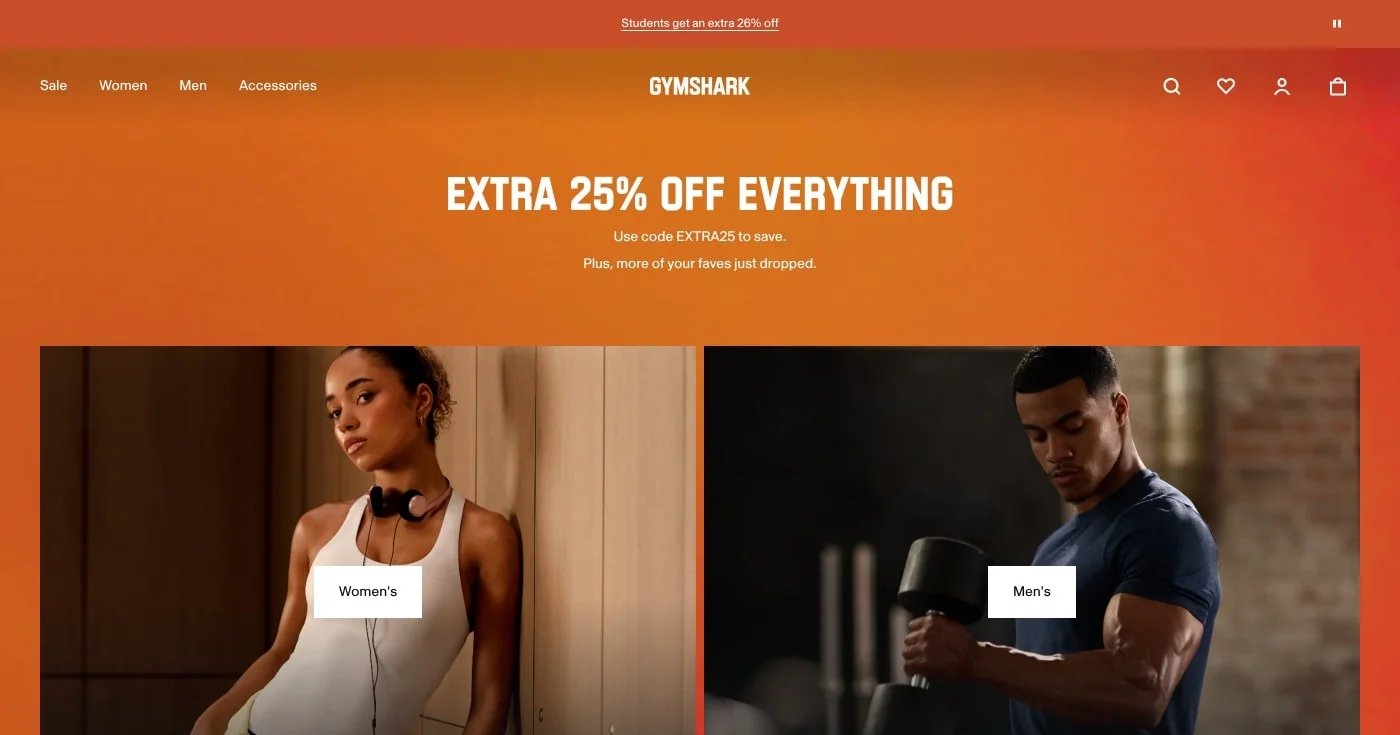
He treats comments as research: "One of the most valuable data sources for any brand is right in the comment section." His advice is to monitor brand sentiment and both tagged and untagged mentions. On staffing, he favors in-house teams for speed: "You've got a social media manager in the room checking your ideas in the moment."
Lessons for your brand:
Copying and pasting the same caption and image to every platform signals to algorithms and audiences that you don't understand the platform. A LinkedIn thought leadership post, a TikTok entertainment clip, and an Instagram Reel require fundamentally different scripts, formats, and tones. Adapt each piece of content for its destination.
Vanity metrics are easy to report and say little about the business. If your monthly social report leads with follower count and engagement rate but doesn't include click-through rate, conversion rate, or social commerce revenue, you're measuring activity instead of impact. Build reporting around the metrics your stakeholders care about.
Many brands share content whenever they remember to or whenever inspiration strikes. Inconsistent, goal-less publishing produces inconsistent results. A content calendar with goals, platform strategy, and content mix targets removes guesswork and creates accountability.
Deleting critical comments is one of the most damaging moves a brand can make on social. Audiences notice, screenshot, and share deleted responses.
A transparent, empathetic reply that moves resolution to a private channel works better than silence. In the 2025 Sprout Social Index, 73% of consumers said an unanswered brand loses their business to a competitor.
Paid social amplifies what's already working organically. Brands that run ads without a strong organic presence often have weak creative and low brand familiarity. Build the organic foundation first, then use paid to accelerate what's already resonating.
AI-assisted workflows are now standard. In the 2025 Sprout Social Index, 97% of marketing leaders said it is critical that their teams know how to use AI. AI is now listed on the pricing pages themselves: Buffer's AI Assistant, Later's AI content tools, Hootsuite's Wisdom and Sprout Social's Trellis agent.
Short-form video demands a platform-specific strategy. Reels, Shorts, and TikTok videos each have their own length norms, audio culture, and discovery surfaces. Repurposing the same video across platforms without adaptation is not a strategy.
Social search is part of discovery. TikTok, Instagram, and YouTube all have their own search, and people use it to find products and answers. Keywords in captions, on-screen text, and profile descriptions deserve the same care as SEO for website content.
Authenticity beats production value. In the same Sprout survey, 93% of consumers said it's important for brands to keep up with online culture, but a third called jumping on viral trends embarrassing. The most effective brand accounts feel human, specific, and responsive.
Private conversations supplement public posting. In Sprout's 2026 pulse survey, 55% of consumers would rather DM a brand than complain in public. Brands that build private communities (Discord servers, Facebook Groups, LinkedIn newsletters, WhatsApp channels) alongside their public presence build deeper audience relationships.
Social media management connects content strategy, community building, data analysis, and business outcomes. The brands that win on social are not those that post the most. They are the ones with a documented strategy, platform-native content, active community management, and a clear line between social activity and business results.
Start by documenting your goals and platform strategy. Build a content calendar, choose a scheduling tool that fits your team size, and measure what matters to your business, not just what's easy to track.
For a deeper look at specific components, compare the best scheduling tools, the social listening tools for monitoring conversations, and our guide to user-generated content.

How email marketing works: building an opt-in list, segmentation, automated flows, deliverability rules from Gmail and Yahoo, benchmarks, laws and tools.
How lead scoring works, which model fits your data, and how HubSpot, Salesforce and ActiveCampaign score leads, with a worked B2B example.

Set up, verify, and optimize your Google Business Profile: Google's verification methods, top local ranking factors, review benchmarks, and 2027 AI changes.
