


12 Data Enrichment Tools B2B Revenue Teams Use in 2026
Compare 12 B2B data enrichment tools by benchmark accuracy, real pricing, and use case. Includes waterfall enrichment explained, an archetype framework, and ind
Updated 20 min read

Compare 12 B2B data enrichment tools by benchmark accuracy, real pricing, and use case. Includes waterfall enrichment explained, an archetype framework, and ind
Clay, ZoomInfo, and Apollo.io lead every data enrichment comparison in 2026, but each serves a different workflow. Clay cascades 150+ providers for 85–98% email match rates on real B2B lists; ZoomInfo holds 500M+ proprietary contacts; Apollo runs the most generous free tier (100 credits/month) with built-in sequences. Before comparing pricing, know your enrichment archetype (form, CRM, API, or AI-agent): a tool optimized for one cannot handle the others.
In this guide, you'll explore the top 12 data enrichment tools for B2B teams in 2026, with independent benchmark data, real practitioner costs, and a use-case routing matrix.
Ordered by SERP frequency and use-case breadth across 10 independent sources evaluated in research.
Explorium's 2026 framework identifies four enrichment archetypes. Conflating them is the primary cause of failed implementations: a form enrichment tool cannot sustain AI-agent throughput, and a CRM batch tool cannot fire at form-submit speed.
Archetype | What it does | Speed requirement | Category leader |
|---|---|---|---|
Form enrichment | Auto-populates fields on form submit | <200ms response | Clearbit / Breeze Intelligence |
CRM enrichment | Batch or real-time sync of existing records | Scheduled; change detection | ZoomInfo, Apollo, Cognism |
API / developer enrichment | Programmatic primitive for engineering pipelines | High QPS; consistent JSON schema | PDL, Explorium |
AI-agent enrichment | Real-time data for autonomous agent workflows | 50–200 QPS; MCP support; synchronous | Explorium, ZoomInfo GTM AI |
Select your archetype first. Then compare vendors within that category.
Software | Best For | Key Features | Pricing | Free Plan | Platforms |
|---|---|---|---|---|---|
Enterprise US ABM | 500M+ contacts, GTM Studio waterfall, MCP | No | Web, API, Salesforce, HubSpot | ||
Custom waterfall | 150+ providers, Claygent AI, visual builder | 100 credits | Web | ||
SMB / free tier | 275M contacts, sequences, dialer, PLG signals | Free (100 credits/mo); paid tiers | Yes | Web, Chrome, API | |
EMEA outbound | Diamond Data phones, EU DNC checks, Sales Companion | Credit-based; contact for pricing | No | Web, API, Salesforce, HubSpot | |
HubSpot form enrichment | <200ms webhook, 100+ firmographic fields, 30-day refresh | HubSpot credits | HubSpot free plan | HubSpot only | |
LinkedIn prospecting | Chrome extension, 50M+ contacts, phone verification | Free (50 credits/mo); from $29/mo | Yes | Web, Chrome, API | |
Developer API pipeline | 3B+ records, 10+ data types, 300 QPS enterprise | API pricing; contact | Trial | API only | |
AI-agent workflows | Production MCP server, 50+ sources, pay-per-match | No | API, MCP | ||
Accuracy guarantee | 95% guarantee, real-time verification, credit refunds | Contact for pricing | Trial | Web, API | |
Email deliverability | 15+ provider waterfall, 98% tested accuracy | No | Web | ||
SMB campaigns | Email enrichment, drip sequences, built-in CRM | Free (50 credits/mo); from $39/mo | Yes | Web, Chrome, API | |
Domain email discovery | Domain search, verification, team accounts | Free (limited); from $49/mo | Yes | Web, Chrome, API |
12 best data enrichment tools compared: accuracy, pricing, free plan, and platforms
Best for enterprise US ABM teams with dedicated RevOps
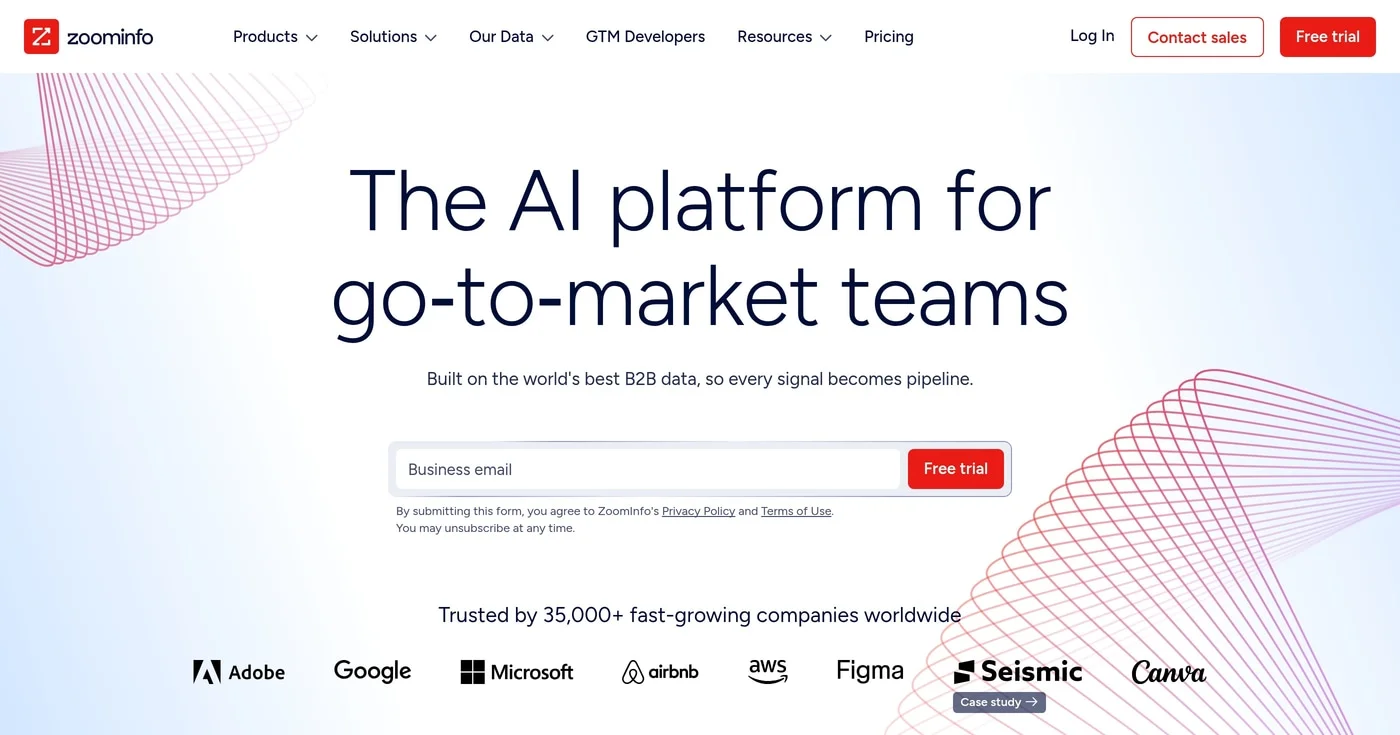
ZoomInfo runs the largest proprietary enrichment database in the category: 500–600M contacts, 100M companies, 120M direct-dial phones, and 200M+ verified emails across 30,000+ technographic signals. The company scans 28M domains daily via machine learning and supplements crawls with 300+ in-house researchers.
In May 2026, ZoomInfo rebranded its ticker to $GTM, signaling a shift from data vendor to GTM intelligence platform. The same month, it was named a native data foundation for OpenAI Codex for Work, with native integrations in Claude and ChatGPT. Teams building AI GTM agents can call ZoomInfo's MCP server directly; it is one of only two production MCP servers in the enrichment category as of June 2026, alongside Explorium.
The figure most comparison guides omit: the total cost of ownership can reach $110,000–$170,000 per year when engagement tools, deliverability suites, and enterprise seat counts are added to the $15K entry price. YouTube practitioners frame ZoomInfo as the right call for a small segment of buyers (those with enterprise budgets, ABM motions, and full RevOps support).
Best for RevOps teams building configurable waterfall enrichment
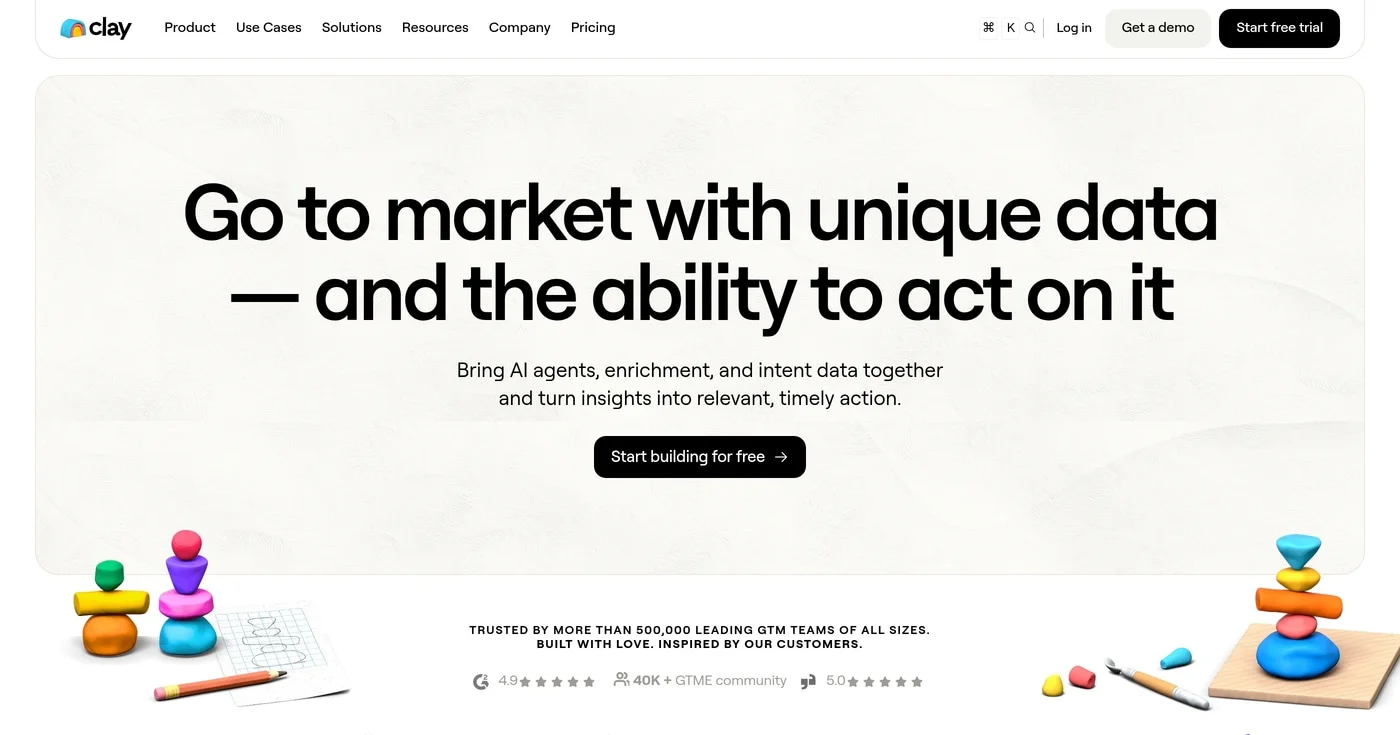
Clay doesn't operate a proprietary database. It orchestrates 150+ external data providers in a visual spreadsheet, each column calling a different enrichment source. You set the cascade logic: cheaper providers run first, and Clay queries each in sequence until it finds a verified match.
Will Aitken described the appeal in a 197,000-view Sales Feed video: "Enrich your leads with over 100 data providers."
The Claygent AI layer adds custom research steps, including scraping Glassdoor reviews, Google Maps ratings, or company-specific signals that no off-the-shelf provider delivers.
One detail most Clay comparisons miss: Clay's 2026 pricing locks CRM push to the Growth plan ($495/mo; $446/mo billed annually). Teams on Launch ($185/mo) can enrich data inside Clay but must export manually to their CRM. On r/sales, u/Firm_Phase392 documented the cost-control workaround: run selective field-level refreshes on signals that change (job titles, company moves, tech updates) rather than full-table sweeps.
Clay reached a $3.1B valuation on a $100M Series C led by CapitalG in August 2025.
Best for SMB teams wanting enrichment and outreach in one subscription
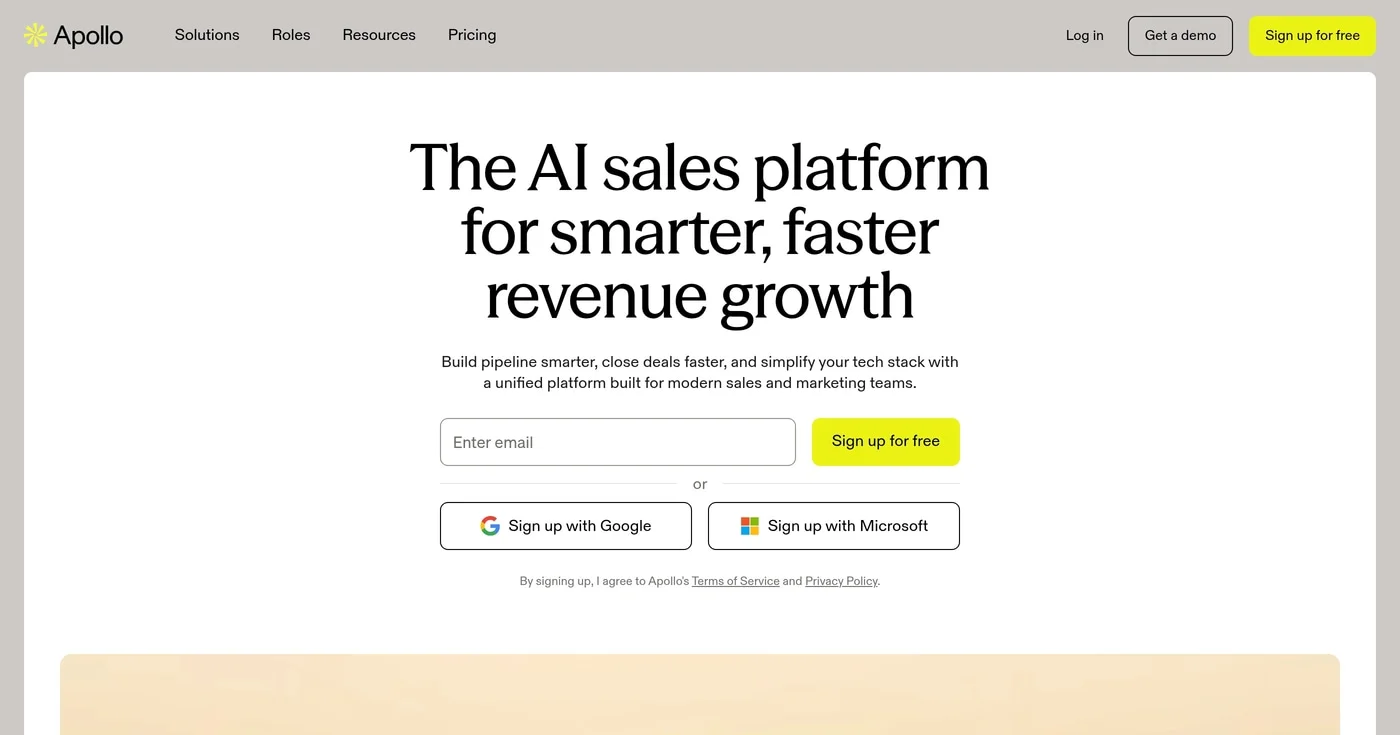
Apollo.io bundles 275M contacts, 30M companies, email sequence automation, a built-in dialer, and PLG signal tracking into one subscription. The free tier (100 credits per month, permanently) is the most generous in the category, ahead of Lusha (50 credits) and Snov.io (50 credits).
Apollo acquired Pocus in March 2026, adding product-led growth signal tracking to its enrichment layer. Enterprise accounts grew 400%+ year-over-year in the 12 months leading up to the acquisition; Apollo confirmed $150M ARR in 2025.
A finding most Apollo comparisons omit: email accuracy tested at 80% in the Cleanlist 500-record benchmark, with real-world bounce rates of 20–30%. The CUFinder 4,000-record benchmark scored Apollo 71.4/100; that 5–18 point gap versus waterfall tools (85–98%) matters for deliverability-constrained campaigns. Apollo handles outreach at scale; a verification or waterfall layer addresses the deliverability gap on priority accounts.
Best for EMEA outbound teams with a phone-first sales motion
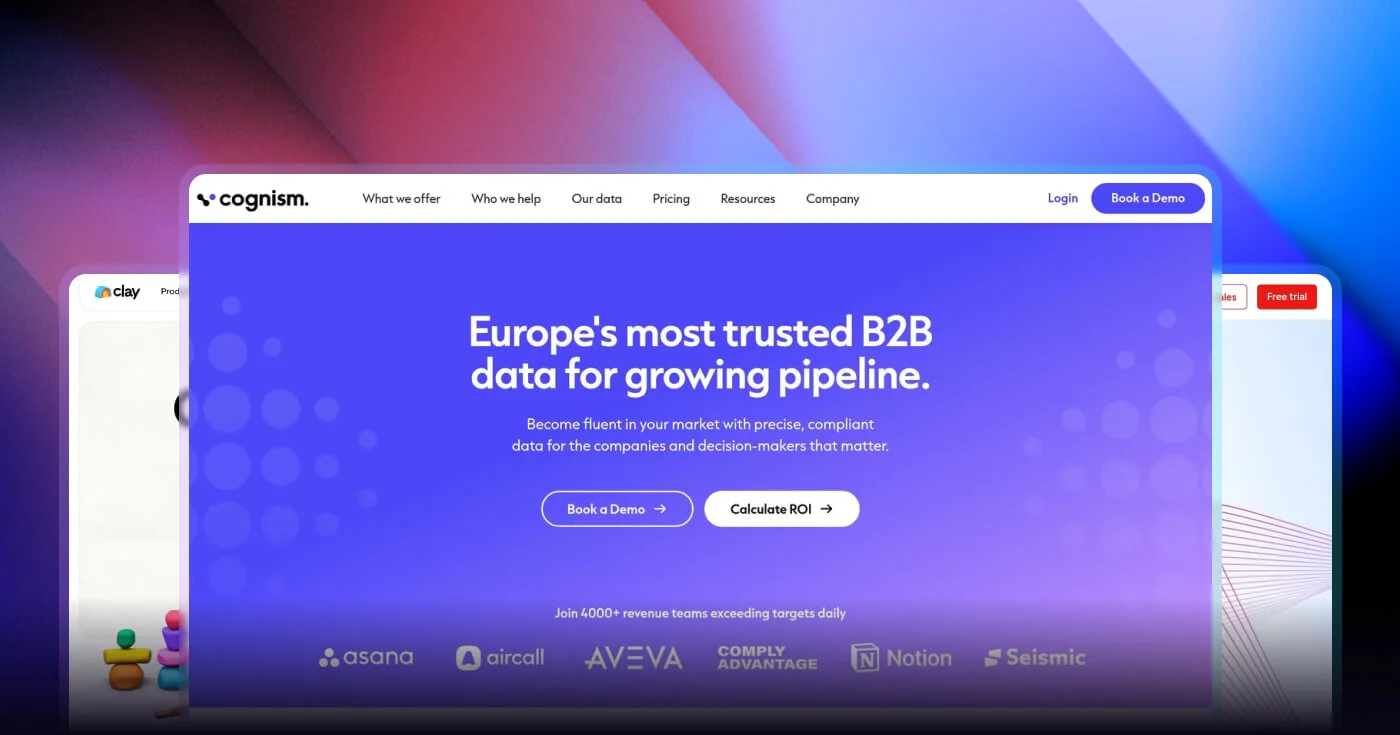
Cognism is the default choice for EU-facing revenue teams. Diamond Data (its flagship feature) means mobile phone numbers are verified by human agents before delivery, not just algorithmically validated. That process produced 87% email accuracy and 60% phone coverage in the Cleanlist 500-record benchmark, with the phone connect rate reflecting live verification rather than database claims.
GDPR compliance is built into Cognism's data architecture. The company systematically checks EU DNC (Do Not Call) registries before returning phone numbers; Cognism is the only major enrichment provider that does this for Germany, France, and the UK. Cognism launched Sales Companion in March 2026 as a compliance-first ZoomInfo challenger for European accounts.
Cognism's 2026 European research found that 75% of senior GTM leaders cite data quality, not model quality, as the #1 barrier to AI automation. A separate Cognism study found that half of all C-suite CRM data becomes inaccurate within two years; the average CMO spends fewer than 29 months in role. For EMEA accounts with high executive turnover, on-demand re-verification matters more than database scale.
Best for HubSpot teams enriching contacts at the point of form submission
HubSpot acquired Clearbit in November 2023 and relaunched the product as Breeze Intelligence in 2024. The core capability is unchanged: form enrichment at sub-200ms response time. When a visitor submits a form with only their email address, Breeze Intelligence auto-populates 100+ firmographic fields: company size, industry, revenue range, technology stack, auto-populated before the confirmation screen loads.
For HubSpot customers, this is a legitimate competitive advantage: no other tool matches the form-submit response time, and the 30-day auto-refresh keeps records current without manual CRM enrichment runs.
The trade-offs are equally real: Breeze Intelligence is HubSpot-native and operationally painful to use outside HubSpot. Phone coverage ranks weakest in the category; EMEA data quality lags Cognism substantially. Apollo and Clearbit address complementary use cases: Apollo handles outreach at scale, while Breeze Intelligence handles form enrichment at form-submit speed.
Best for LinkedIn-first prospecting via a Chrome extension
Lusha built its core experience on a Chrome extension that works across any web page: LinkedIn profiles, company websites, email signatures, surfacing verified emails and phone numbers without leaving the browser.
The free tier provides 50 credits per month; paid plans start at $29–37/user/month. In the Cleanlist 500-record benchmark, Lusha scored 82% email accuracy and 50% phone coverage. That's competitive for LinkedIn-driven prospecting at moderate volume; high-volume email campaigns need a waterfall tool.
Lusha reached a $1.5B unicorn valuation with $245M total funding and $64.4M ARR in 2025, then acquired Novacy (an AI conversation intelligence platform) in 2026. The acquisition extends Lusha's scope into sales coaching; in a June 2026 comparison thread, r/sales member u/LABigAus placed it among the reliable mid-market options after testing ZoomInfo, Apollo, Cognism, Clay, and 6sense.
Best for engineering teams building enrichment into products or data pipelines
People Data Labs operates the largest raw enrichment dataset available via API: 3B+ person records across 10+ data types including work history, education, social profiles, skills, and contact data. There is no UI. PDL is a developer primitive: you build on it, you don't use it as a practitioner tool.
Enterprise rate limits reach 300 QPS, which supports embedding enrichment into product onboarding flows, ML feature stores, or scoring pipelines at scale. RevOps practitioners who want a managed interface are not the target user. Engineering teams building enrichment as a first-class product capability are.
PDL publishes no independent accuracy benchmarks; the 3B+ record count is the largest in the category, but database size does not predict match accuracy on a specific ICP. On r/CRM, practitioners note that field mapping complexity and data drift matter as much as API quality once records enter a live CRM. PDL users face field mapping in its rawest form; no managed push layer exists, and PDL is not MCP-enabled as of June 2026.
Best for teams building AI GTM agents that require real-time enrichment
Purpose-built for the AI-agent enrichment archetype, Explorium ships a production-ready MCP (Model Context Protocol) server, one of only two in the category alongside ZoomInfo GTM AI. This lets AI agents call enrichment as a native tool without wrapping an HTTP API with custom retry logic.
The pricing model differs from every other tool on this list: you pay $0.04–$0.10 per verified, successful match. Failed lookups cost nothing. That consumption model aligns pricing directly with the accuracy of data returned, not the volume of queries fired.
Explorium aggregates 50+ sources with deterministic entity resolution, so the same company name maps to the same entity across all providers, eliminating the deduplication work that bulk-database tools require downstream. Explorium and ZoomInfo GTM AI are the only tools with production MCP servers in the category as of June 2026. Every other enrichment tool operates asynchronously or lacks MCP support, adding latency and maintenance overhead at AI-agent scale.
Best for teams that want an accuracy guarantee backed by automatic credit refunds
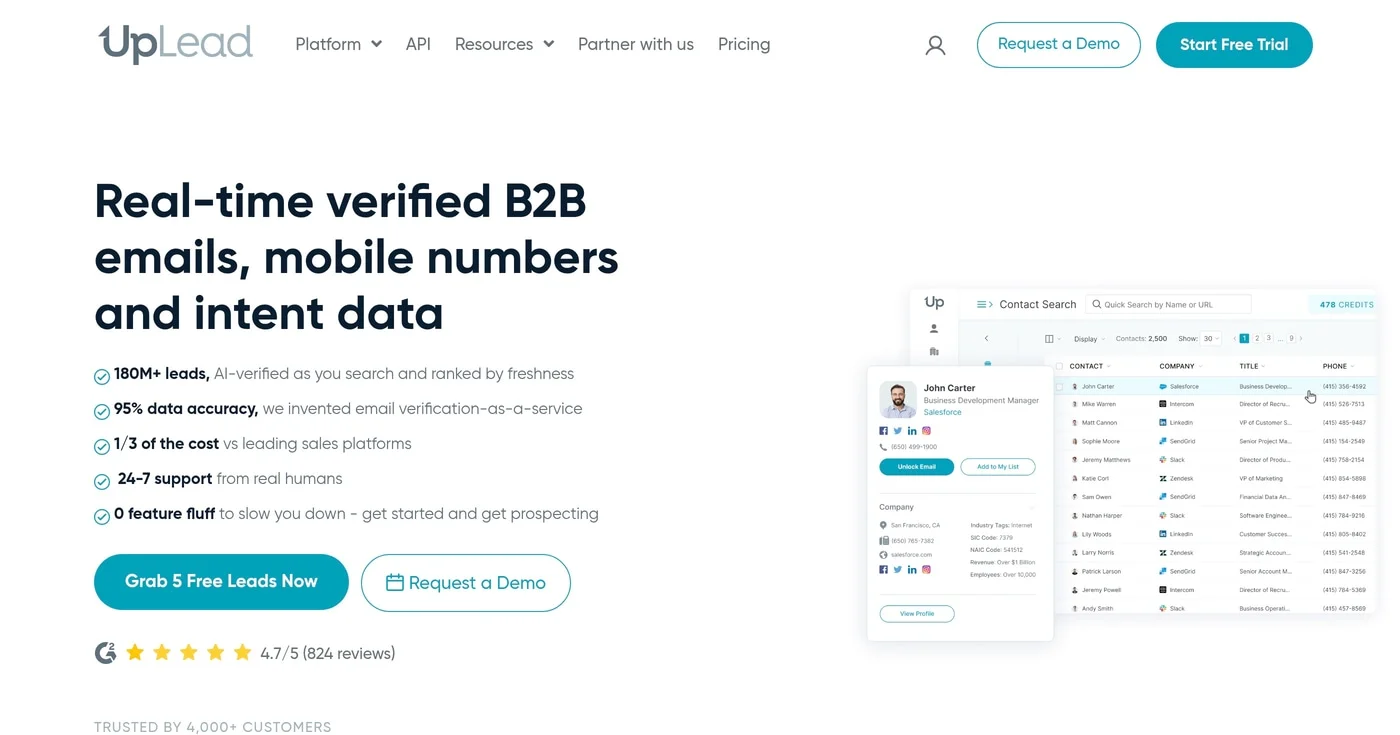
UpLead leads with a single differentiator: a 95% email accuracy guarantee backed by automatic credit refunds. If an email fails validation at the point of download, UpLead credits the lookup immediately. Verification is real-time: emails are checked against SMTP servers at the moment you pull the contact, not queued for batch validation hours later.
The database covers 155M contacts (smaller than Apollo (275M) or ZoomInfo (500M+)); UpLead's argument is accountability over volume. On r/CRM, u/dianesyntax framed the key question: what action will change because this data exists? In the CUFinder 4,000-record benchmark (self-commissioned; treat as directional), UpLead scored 78.5/100, ahead of Lusha (74.4) and Apollo (71.4).
UpLead operates as a bootstrapped company, which means no VC pressure to grow record counts at the expense of quality, and a business model that only works if the 95% guarantee holds.
Best for deliverability-focused teams where email bounce rate is the primary constraint
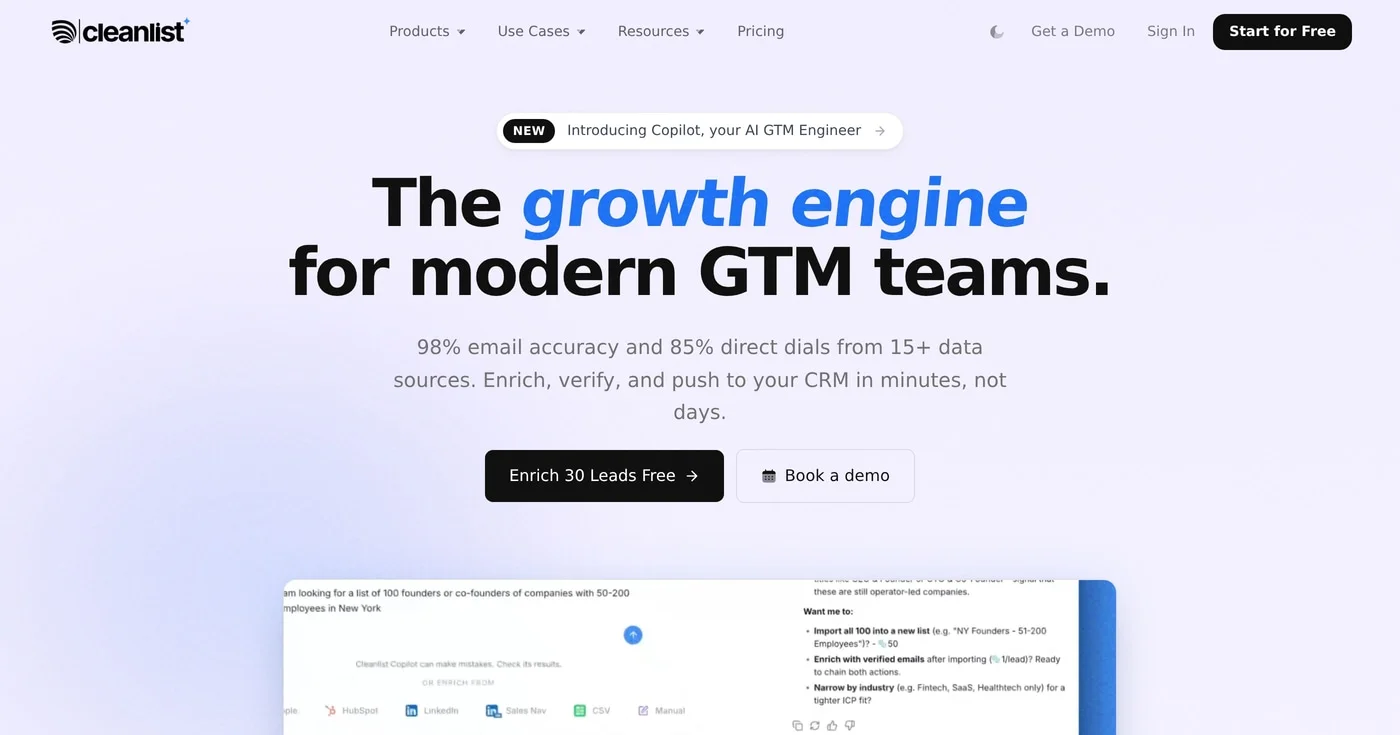
Cleanlist delivers the highest tested email accuracy in the category. In the Cleanlist 500-record benchmark (March 2026), the only published fixed-sample email accuracy test in the public domain, Cleanlist's 15+ provider waterfall returned 98% deliverable accuracy, 13–18 percentage points above single-source tools.
The verification mechanism goes further than a standard deliverability check: syntax validation, DNS record check, live SMTP ping, plus catch-all domain detection to filter addresses that accept all traffic regardless of validity. That last step catches a class of deliverability failures that passes a basic email validation entirely.
One gap worth flagging: the 98% figure comes from Cleanlist's own benchmark, not an independent replication. The methodology is documented at cleanlist.ai/blog; it is the best published, methodology-backed email accuracy claim in the category as of March 2026, but not independently peer-reviewed. Plans start at $29/month with no per-seat fees.
Best for SMB teams that need email enrichment and outreach sequences in one tool
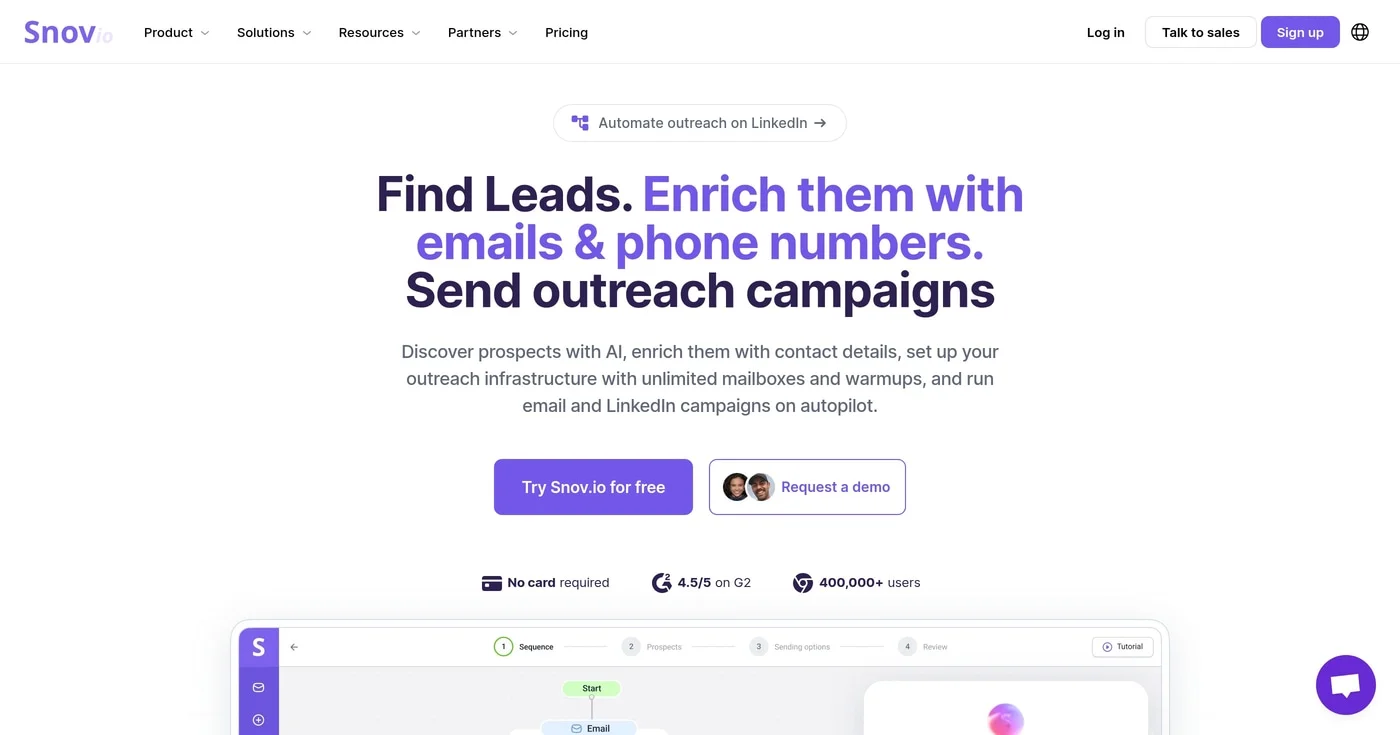
Snov.io targets the same buyer as Apollo but sits at a lower entry price point with a cleaner interface. The free tier offers 50 credits per month; paid plans begin at $39/month. The platform combines email enrichment, email verification (see also Marketful's guide to best email verification tools), drip campaign sequences, and a built-in CRM in a single subscription.
In the Cleanlist 500-record benchmark, Snov.io scored 81% email accuracy, essentially tied with Apollo (80%). For SMB teams comparing the two, the decision is typically interface preference and workflow: Snov.io's CRM and email sequence builder are tighter and more self-contained; Apollo has greater depth in dialer and PLG signal features.
Snov.io reached $22.7M ARR as a bootstrapped company, which means the $39/mo entry is the real commercial model, not a loss-leader. No enterprise contract is required; monthly billing is available, which suits early-stage teams that want to avoid the 12-month commitments that ZoomInfo and Cognism require.
Best for finding every professional email address at a target company by domain
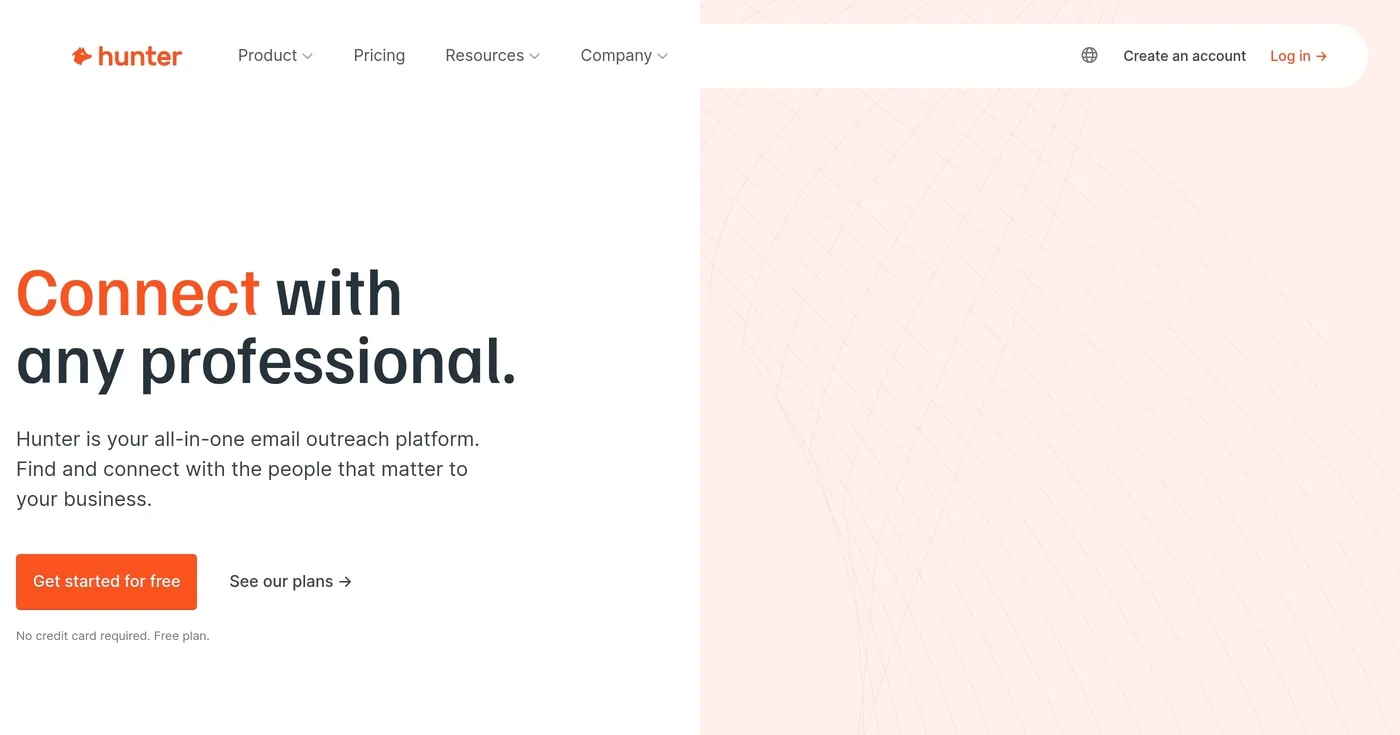
Hunter.io does one thing: domain email discovery. Enter a company domain and Hunter returns every professional email associated with it, with confidence scores, source references, and verification status for each result.
That narrowness is both the limitation and the value: Hunter returns no phone numbers, firmographics, or intent data. The domain search index specializes in publicly visible email patterns; the free tier covers most one-off lookups without a subscription, and paid plans start at $49/month. Hunter reached $8M ARR as a bootstrapped company, a signal of a sustainable niche rather than a platform scaling toward enterprise.
The canonical use case: export LinkedIn connections, enrich to email addresses, build sequences without cold intros. Hunter fits as the email verification layer in that workflow: confirmation that the address found is valid before the sequence fires.
No enrichment tool fixes a CRM that contains duplicates. u/Waste-Poem3997 on r/CRM documented the failure pattern that practitioners describe repeatedly:
"Fancy enrichment tools on top of garbage data is just expensive garbage. The duplicate issue alone kills everything downstream. Clay doesn't know it's enriching the same person twice, Apollo pulls from a contact list that has 4 versions of the same VP, and then your reporting looks like you have 3x the pipeline you actually do."
u/Waste-Poem3997 in r/CRM (June 2026)
Before you deploy any enrichment tool, complete three steps:
On r/CRM, u/dianesyntax framed it precisely: "The real test is: what action will change because this data exists? If there's no clear trigger tied to it, it usually ends up as expensive decoration."
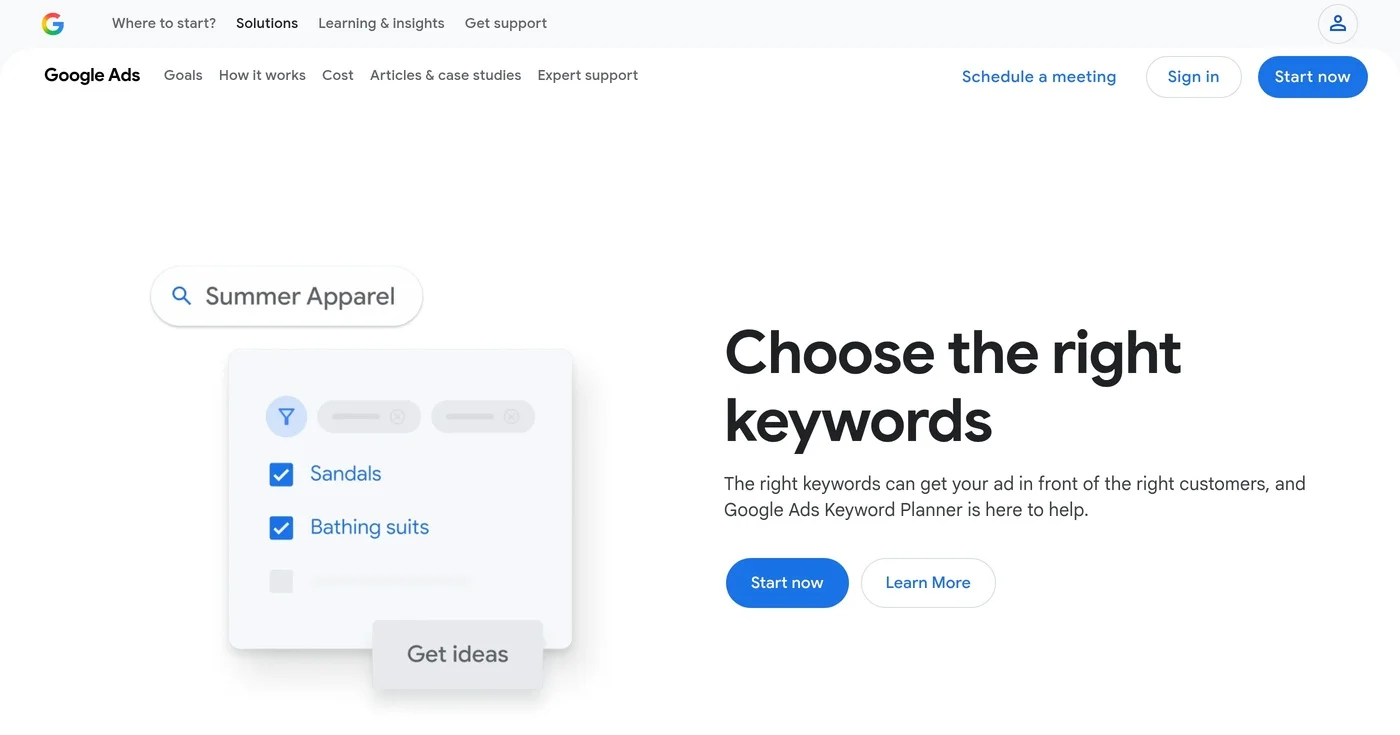
Open Google Keyword Planner without treating setup as running ads, then read volume, competition, and the two bid columns for what those numbers are not.
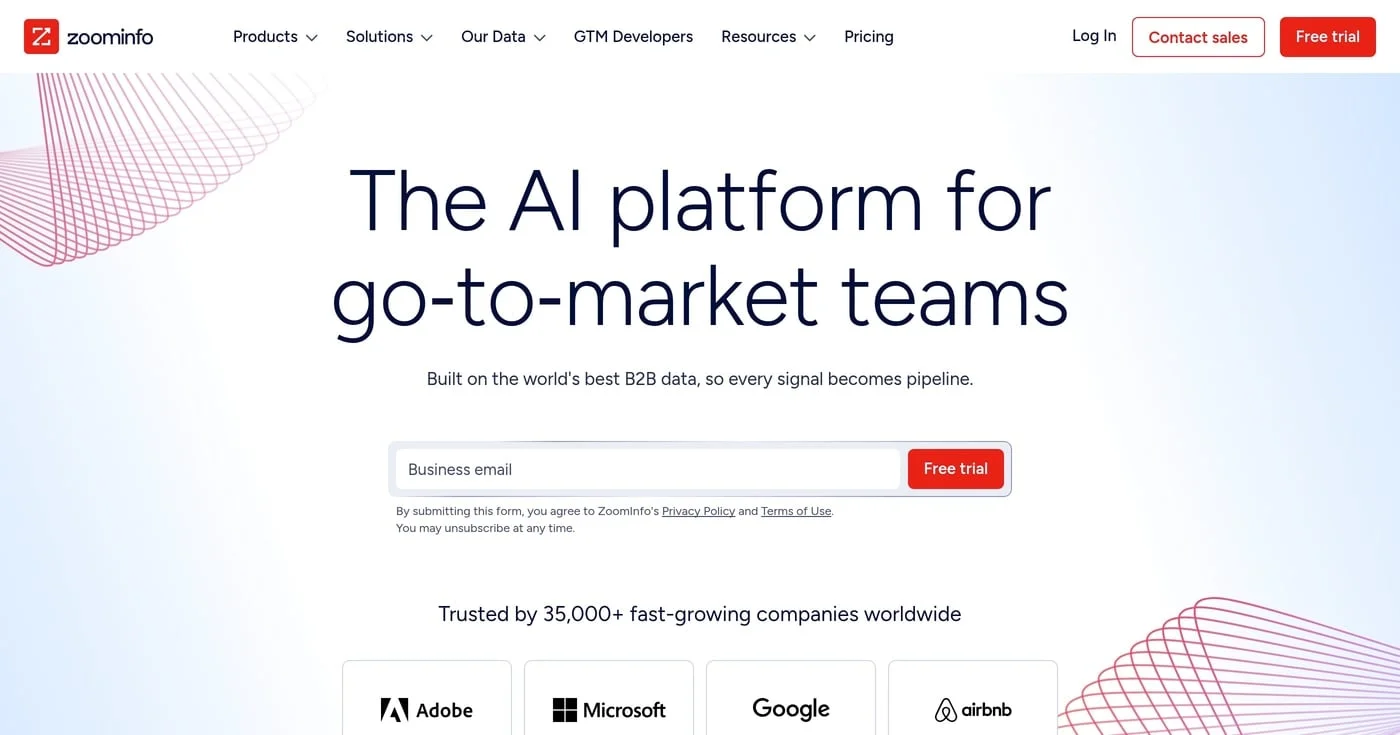
ZoomInfo alternatives have no public platform list price. Apollo publishes a seat price, Cognism covers EU phones, and Lusha starts at $49.90 a month.

HubSpot's pricing jumps from $0 to $890/month with no mid-tier. These 10 HubSpot alternatives are segmented by sales CRM, email automation, and agency use case
